
What is Direct Work?
Purposeful, planned, and therapeutic engagement to support child well-being.
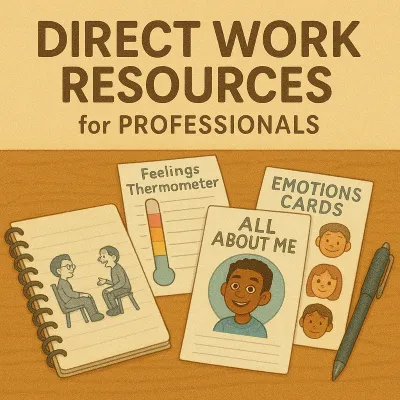
Direct work refers to activities where adults engage with children in a purposeful and therapeutic manner. It aims to understand a child's needs and help them achieve positive outcomes.
- Life story work
- Social skills training
- Targeted risk assessment
The Goals of Direct Work
Understand Their World
Gain the child's perspective to see their lived experiences through their eyes.
Build Solid Relationships
Establish the trust and rapport necessary for a child to feel safe opening up.
Facilitate Communication
Use play and art to help children express emotions they cannot articulate verbally.
Direct Work Resource Toolkit

Icebreakers
Games like "Two Truths and a Lie" or "Would You Rather" to ease into conversation.
Shared Activities
Colouring or building blocks to create a relaxed, non-threatening atmosphere.
Strengths and Difficulties Questionnaire: A behavioral screening tool for ages 3–16.
Boxall Profile: An evidence-based tool for assessing emotional development in schools.

Helping children label emotions through visual aids and frameworks is the first step toward self-regulation.
🚦 Zones of Regulation
Categorises emotions into Blue, Green, Yellow, and Red zones to help children manage their internal states.

Sand Tray Therapy
A non-verbal approach where children create scenes to externalise complex emotions.
TF-CBT
Trauma-Focused Cognitive Behavioural Therapy for children processing significant trauma.
Creative Arts
Using music, drama, and dance for children who struggle with verbal communication.
Animal-Assisted
Reducing stress and improving social-emotional development through animal interaction.

Mark Else
My experience ranges from running playgroups for pre-schoolers to managing complex safeguarding caseloads within both mainstream and SEMH provisions. In addition to having worked within the education sector since 2018, I am currently studying for a Level 6 Youth Work degree.
References
- Direct Work with Vulnerable Children: A Practical Guide for Social Work Professionals by Audrey Tait and Helen Wosu
- Creative Play Therapy with Children by Judith A. Rubin
- Helping Troubled Children Through Expressive Arts Therapy by Margot Sunderland
- Social Work Practice with Children and Families by Bob Lonne, Maria Harries, and Bridget Featherstone
- NSPCC Tools to Support Direct Work with Children
- The Children’s Society: Resources for Professionals Working with Children