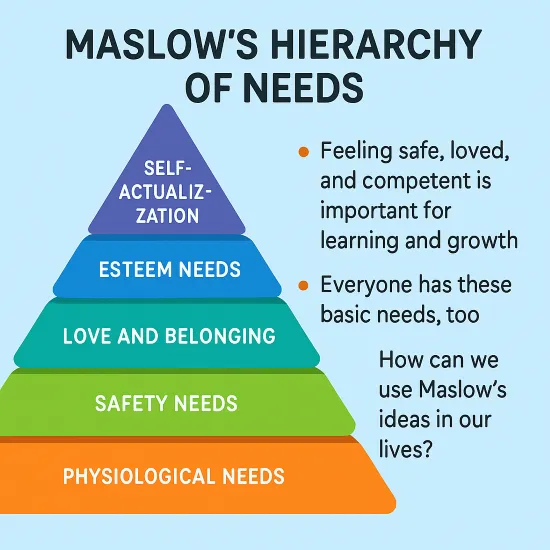
Understanding Maslow’s Hierarchy of Needs
A guide for young people on what we need to grow, learn, and thrive.
A long time ago, a psychologist called Abraham Maslow came up with an idea to show the things people need to feel good about themselves. He called it the "Hierarchy of Needs."
Maslow believed that before we can focus on big dreams—like becoming confident or helping others—we first need our basic needs met, such as food, safety, and love.
The Five Levels of Need
The Bottom Layers
1. Physiological Needs: The basics for survival—food, water, sleep, and warmth. Without these, it is hard to think about anything else.
2. Safety Needs: Feeling protected and trusting the people around you. This means having a stable home and a calm school environment.
3. Love and Belonging
The need to feel accepted by friends, family, and your community. It’s easier to be yourself when you belong.
4. Esteem Needs
Feeling proud of who you are. This builds when people notice your hard work or give you responsibility.
5. Self-Actualisation
Reaching your full potential. This is about following your dreams and doing what makes you feel unique and purposeful.
Maslow in the Classroom
Have you ever tried to do schoolwork while hungry or tired? It’s almost impossible. Maslow’s theory explains that when our basic needs are missing, our brains spend all their energy trying to fix them, leaving nothing left for learning.
The "Non-Linear" Pyramid
Moving Down
Real life isn't a one-way staircase. If you feel safe but then get sick or move house, you might "move down" the pyramid for a while. That is normal.
Cultural Shifts
While everyone has the same needs, how we meet them varies. Some find belonging in small clubs; others find it through their entire extended family.
Changing Needs
As we grow, we need more independence and achievement. Old needs might return during big changes, like starting a new school.
Final Takeaways
Understanding needs helps us be patient with ourselves and kinder to others. When you see a friend struggling, remember they might just be missing a layer of their pyramid.

Mark Else
My experience ranges from running playgroups for pre-schoolers to managing complex safeguarding caseloads within both mainstream and SEMH provisions. In addition to having worked within the education sector since 2018, I am currently studying for a Level 6 Youth Work degree.