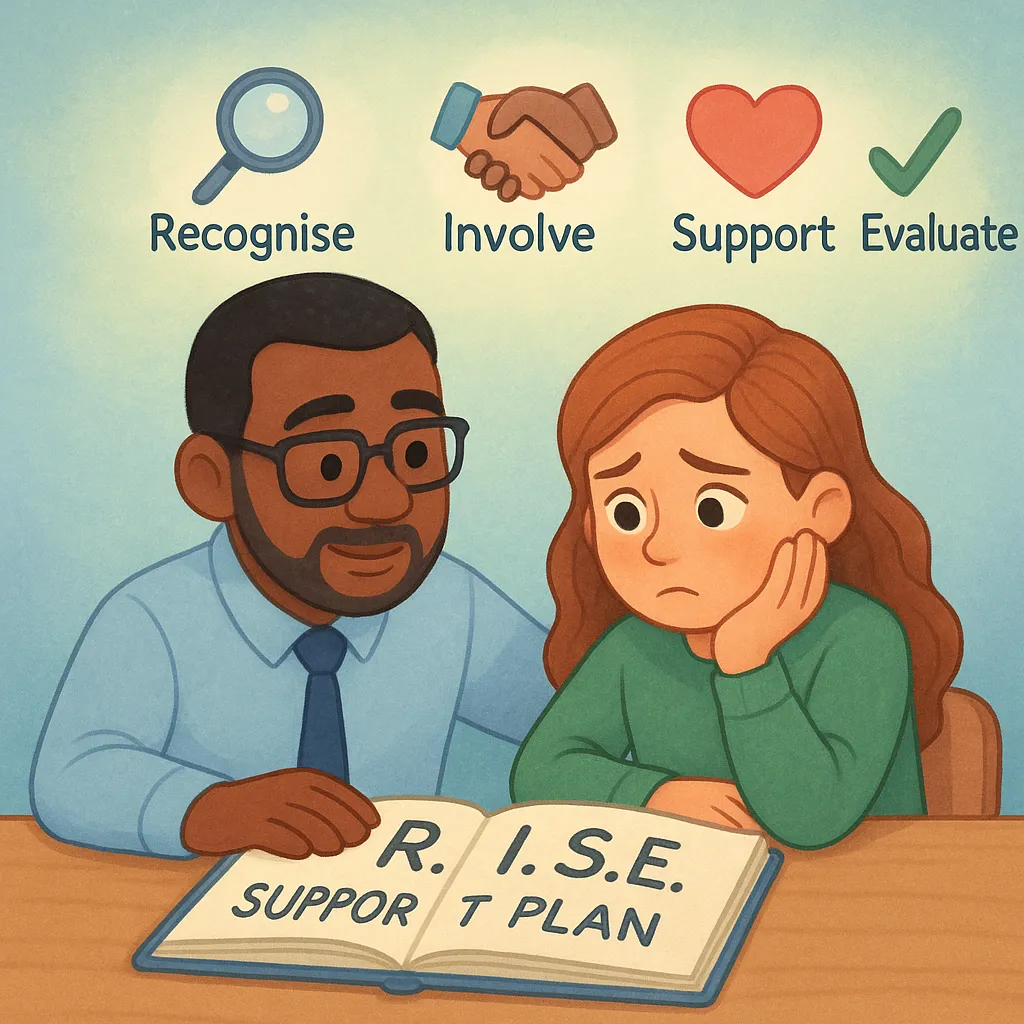
EBSA Support Plan: The R.I.S.E. Framework
A structured, collaborative approach to re-engaging pupils through trust and resilience.
Emotionally Based School Avoidance (EBSA) can deeply affect a young person’s learning, relationships, and well-being. Supporting families through this journey requires a clear, structured plan that recognises individual needs while building trust.
The R.I.S.E. framework offers a practical way for schools and families to work together, ensuring early identification and collaborative strategies that keep the child at the centre.
)
The Four Pillars of R.I.S.E.
Recognise
Spot early warning signs and understand the root causes of distress.
Involve
Work with pupils, parents, and staff to co-create solutions.
Support
Implement tailored strategies and environmental adjustments.
Evaluate
Review progress regularly and adapt the plan as needed.
Why Use This Framework?
)
- ● Provides a trauma-informed approach that prioritises safety.
- ● Encourages meaningful pupil and parent voice in decision-making.
- ● Builds consistency across staff teams and external agencies.
- ● Helps track progress and identifies what works for the individual.
Access the Support Plan
This resource can be used flexibly in schools, alternative provisions, and at home to create a personalised re-engagement strategy.
Collaboration for Re-engagement
By following the R.I.S.E. cycle, we ensure that every action is intentional, evidence-based, and focused on the child's long-term emotional and educational flourishing.

Mark Else
My experience ranges from running playgroups for pre-schoolers to managing complex safeguarding caseloads within both mainstream and SEMH provisions. In addition to having worked within the education sector since 2018, I am currently studying for a Level 6 Youth Work degree.