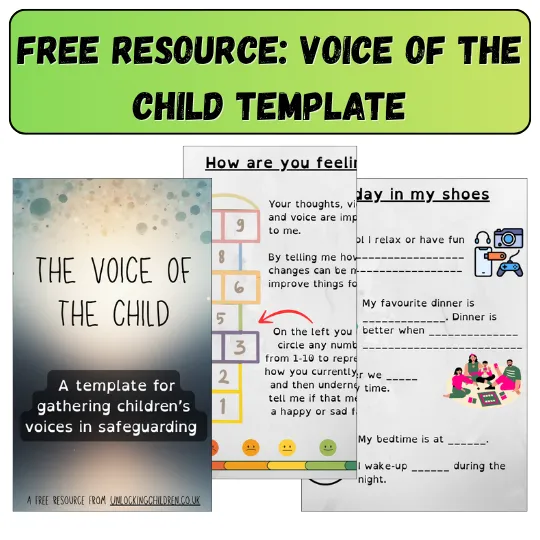
Capturing the Voice of the Child
A practical framework for gathering a child’s views, wishes, and feelings.
"Every child has a voice and a story to tell—sometimes through words, sometimes through the small details of daily life."
As professionals and caregivers, it is our duty to understand what children are communicating, even if it isn’t spoken aloud. Listening is the cornerstone of rights-respecting practice and essential for effective safeguarding and education.
The Participation Imperative
Authentic Insight
In safeguarding, decisions are often made about children but not always with them. Recognising their right to be heard ensures that interventions are based on their lived experience, increasing trust and engagement in solutions that meet their actual needs.
Building Trust
When children feel listened to, they are more likely to share worries early, preventing concerns from escalating into crises.
Trauma-Informed
Validating a child's perspective restores a sense of agency and safety, especially for those who have experienced powerlessness.
The Reflection Tool
Guided Sections Include:
- ● How are you feeling today? Scaling emotional states.
- ● What is good? Mapping safety and happiness.
- ● What could be better? Identifying areas for change.
- ● Does anything scare you? Space for fears or worries.
- ● A day in my shoes: Describing daily routines.
- ● People in my life: Identifying trusted adults.
How to Facilitate
Preparation
Ensure the child understands why you are asking and that their views have the power to influence positive changes.
Facilitation
Use open-ended questions and comfortable silence. Let the child lead the pace and direction of the conversation.
Next Steps
Agree together on what will happen next. Transparency about how their voice will be used is essential for maintaining trust.
📄 Download Free Template
This child-friendly reflection tool is licensed under Creative Commons (CC BY-NC 4.0). You may freely share or adapt it for non-commercial use with attribution.
Bridging the Gap
When we pause and observe the child's world through their eyes, we do more than complete a form—we foster the foundations of empowerment and connection.

Mark Else
My experience ranges from running playgroups for pre-schoolers to managing complex safeguarding caseloads within both mainstream and SEMH provisions. In addition to having worked within the education sector since 2018, I am currently studying for a Level 6 Youth Work degree.