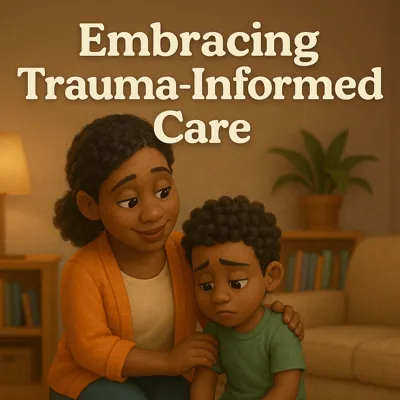
Understanding Trauma-Informed Care
Shifting from "What is wrong with you?" to "What happened to you?"
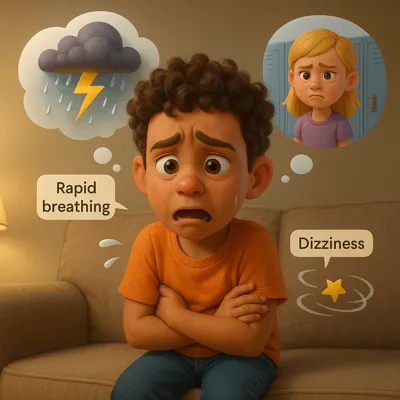
Trauma is a multifaceted response to distressing experiences. These can be prolonged events, such as child abuse or neglect, or one-off incidents, such as witnessing a fatal accident or a natural disaster.
The Impact of Trauma
Trauma affects everyone differently. A child's response depends on their age, genetic factors, previously learnt coping mechanisms, and the support network available to them.
It is not the event itself that defines trauma, but the individual's perception of it.
What is Trauma-Informed Care?
TIC is an approach that acknowledges the pervasive impact of trauma and integrates this understanding into all aspects of support. It aims to create environments that promote healing and resilience while strictly avoiding re-traumatisation.

The 10 Core Principles of TIC
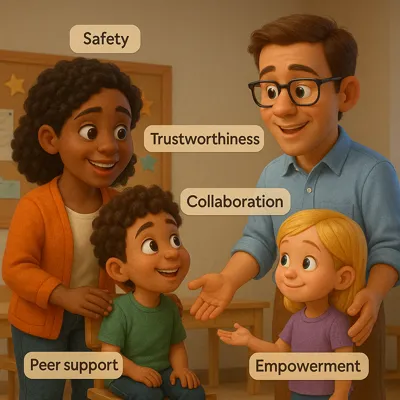
1 Physical & Emotional Safety
Ensuring the environment is secure and the child feels protected from emotional harm.
2 Trust & Transparency
Building relationships based on open and honest communication.
3 Peer Support
Leveraging shared experiences to enhance the healing process.
4 Collaboration
Shared decision-making that respects the child's autonomy.
5 Empowerment & Choice
Supporting children to make informed decisions about their own care.
6 Cultural Consideration
Moving past bias to offer inclusive, culturally sensitive care.
7 Understanding Effects
Recognising that "behaviour is communication" of past trauma.
8 Resilience & Recovery
Focusing on growth and the belief in positive change.
9 Avoiding Re-Traumatisation
Being mindful of triggers that could re-activate past traumatic memories.
10 Integrated Care
Coordinating with therapists, teachers, and doctors for holistic support.
The Healing Process
TIC can decrease symptoms of PTSD, anxiety, and depression by addressing the root cause of distress rather than just the behaviour.
Get Started
Implementing TIC is an ongoing process that requires dedicated training and empathy.

Healing Through Understanding
By adopting a trauma-informed approach, we stop looking at "bad behaviour" and start looking at an "injured child." This perspective is what allows us to foster genuine resilience and lasting recovery.

Mark Else
My experience ranges from running playgroups for pre-schoolers to managing complex safeguarding caseloads within both mainstream and SEMH provisions. In addition to having worked within the education sector since 2018, I am currently studying for a Level 6 Youth Work degree.
References
- Working definition of trauma-informed practice - GOV.UK
- Trauma-informed practice: learning from experience - GOV.UK
- Trauma Informed Care and Trauma Responsive Practice - Suffolk County Council
- Trauma Informed - Aberdeen City Council
- Trauma Informed Care - Health & Care Portsmouth
- Training: Trauma informed care and professional curiosity - St Helens Borough Council
- Trauma Informed Care | Health and social care - Hampshire County Council
- Thrive LDN's trauma-informed practice training | Westminster City Council