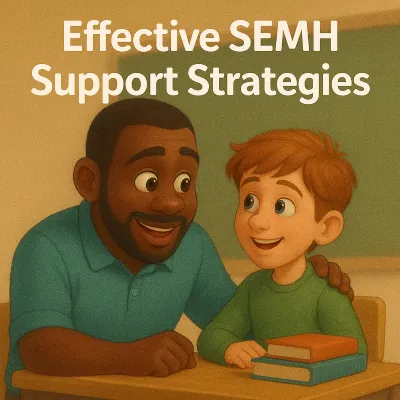
Supporting Children and Young People with SEMH Needs
Practical, relationship-based strategies for foster safety, growth, and resilience.
Supporting SEMH needs can feel complex when behaviours are challenging or emotions become overwhelming. However, with the right strategies, we can create environments where every child feels safe, seen, and supported.
This article builds on foundational knowledge by exploring practical strategies tailored to individual needs, both in educational settings and at home.
Build Strong, Trusting Relationships
Relationships are essential. Children thrive when they know a consistent, calm adult is present who genuinely listens and cares.
Predictable & Supportive Environments
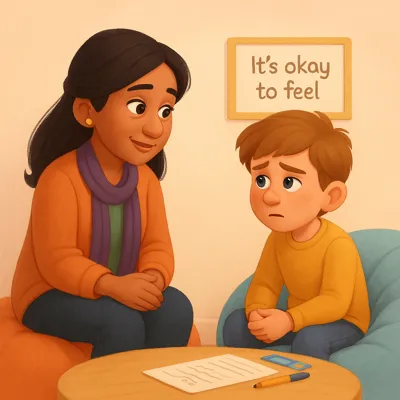
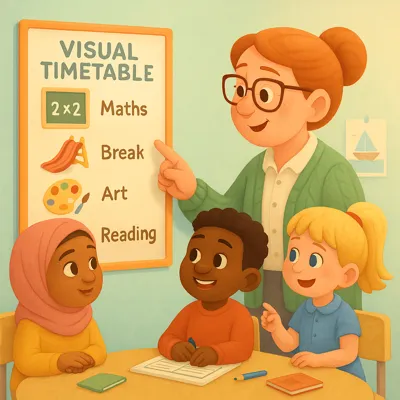
Children who feel emotionally safe are better able to engage. A structured environment reduces triggers and provides a sense of control.
Emotional Literacy & Regulation
Explicit Teaching
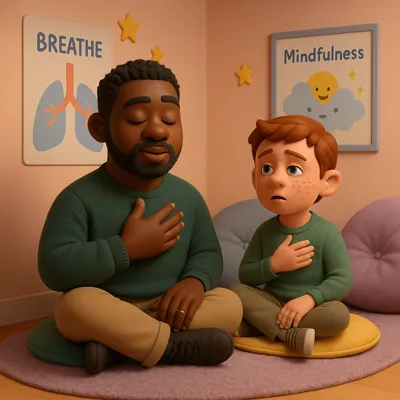
Teach emotional vocabulary using wheels or charts. Identify triggers and practice coping mechanisms like deep breathing during calm moments, not just during meltdowns.
Co-Regulation
When a child is dysregulated, focus on calming them first. Use "we" language: "Let’s take a deep breath together." This fosters trust and safety.
Plan Support Around Strengths
While acknowledging challenges, focusing on a child’s strengths builds confidence and self-worth.
- Personalised Learning: Set goals that leverage unique interests.
- Success Celebration: Regularly acknowledge even the smallest achievements.
- Engaging Projects: Incorporate talents like art or movement into tasks.
- Asset-Based Feedback: Focus on what the child did well and how to build on it.
Work in Partnership
No one knows a child better than their family. Ensure school strategies are reinforced at home through open communication and collaborative planning.
Adult Wellbeing
Supporting SEMH is emotionally demanding. Adults need space, mentorship, and peer support to remain effective and resilient practitioners.
Nurturing the Whole Person
Supporting SEMH needs is about being present and consistent. When we focus on connection before correction, we create the space necessary for healing, growth, and long-term success.

Mark Else
My experience ranges from running playgroups for pre-schoolers to managing complex safeguarding caseloads within both mainstream and SEMH provisions. In addition to having worked within the education sector since 2018, I am currently studying for a Level 6 Youth Work degree.
References
- Bowlby, J. (1988). A Secure Base.
- Goleman, D. (1995). Emotional Intelligence.
- Hughes & Golding (2012). Creating Loving Attachments.
- Kuypers (2011). The Zones of Regulation.
- Perry (2006). The Neurosequential Model of Therapeutics.
- Seligman (2002). Authentic Happiness.
- Saleebey (1996). The Strengths Perspective.
- SEND Code of Practice (2015).
- Public Health England (2019).
- National Autistic Society (2023).
- NICE (2018).
- Epstein (2001). School, Family, and Community Partnerships.
- CASEL (2024).
- Siegel (2013). The Whole-Brain Child.