What is Social, Emotional and Mental Health (SEMH)?
Moving beyond behaviour management to understand the communication of unmet needs.
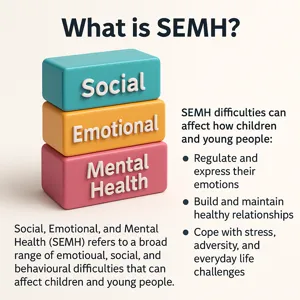
Social, Emotional, and Mental Health (SEMH) refers to a broad range of difficulties introduced in the 2014 SEND Code of Practice. The shift away from terms like "Behavioural, Emotional and Social Development" was intentional: it moved focus away from the disruption and toward behaviour as a form of communication.
SEMH impacts how young people regulate emotions, maintain relationships, and cope with adversity.
How SEMH Presents
Emotional & Social Signs
- ● Frequent mood swings or outbursts.
- ● Difficulty reading social cues or boundaries.
- ● Withdrawal and self-isolation.
- ● High anxiety or persistent hopelessness.
Mental Health Indicators
- ● Self-harm or risk-taking behaviours.
- ● Sleep disturbances and appetite changes.
- ● Obsessive thoughts or repetitive actions.
Communication, Not Naughtiness
Dysregulated behaviours like defiance or physical aggression are often signals of unmet needs. A trauma-informed approach responds with empathy and consistency rather than just discipline.
What Causes SEMH?
Biological & Psychological
- • Genetic predisposition.
- • Neurodevelopment (ADHD, Autism).
- • Attachment difficulties (Bowlby).
- • Adverse Childhood Experiences (ACEs).
Social & Cultural
- • Poverty and housing instability.
- • Academic pressure or undiagnosed needs.
- • Marginalisation and discrimination.
- • School exclusion or lack of belonging.
Effective Support Strategies
Relationships
Connect before you correct. Be a safe, reliable, non-judgemental adult even when behaviour is challenging.
Structure
Predictable routines, visual schedules, and simple instructions help children feel secure and reduce anxiety.
Literacy
Use emotion wheels and calm corners to help children name and understand their feelings in real-time.
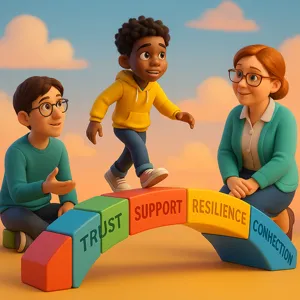
Outcomes & Resilience
Without Support
- • Educational exclusion and low achievement.
- • Adult anxiety, depression, or substance misuse.
- • Employment instability and financial insecurity.
- • Difficulties with trust and conflict in adult life.
With Early Intervention
- • Re-engagement with learning and qualifications.
- • Strong emotional literacy and coping skills.
- • Stable, trusting friendships and partnerships.
- • Positive contribution to the wider community.
Conclusion
Every child with SEMH needs deserves to be understood and supported. By working together, listening deeply, and responding with empathy, we can create the safe environments children need to grow into capable adults.

Mark Else
My experience ranges from running playgroups for pre-schoolers to managing complex safeguarding caseloads within both mainstream and SEMH provisions. In addition to having worked within the education sector since 2018, I am currently studying for a Level 6 Youth Work degree.
References
- Goodman, R. (1997). _The Strengths and Difficulties Questionnaire: A Research Note._ Journal of Child Psychology and Psychiatry, 38(5), 581–586. (You mention the SDQ.)
- Bowlby, J. (1969). _Attachment and Loss: Volume I. Attachment_. New York: Basic Books.
- Department for Education and Department of Health (2015). _Special Educational Needs and Disability Code of Practice: 0 to 25 years_. London: DfE/DoH.
- Public Health England (2021). _Promoting children and young people’s emotional health and wellbeing: A whole school and college approach._ London: PHE.
- NICE (2013). _Social and Emotional Wellbeing: Early years._ (NICE guidelines \[PH40\]). (General SEMH framework.)