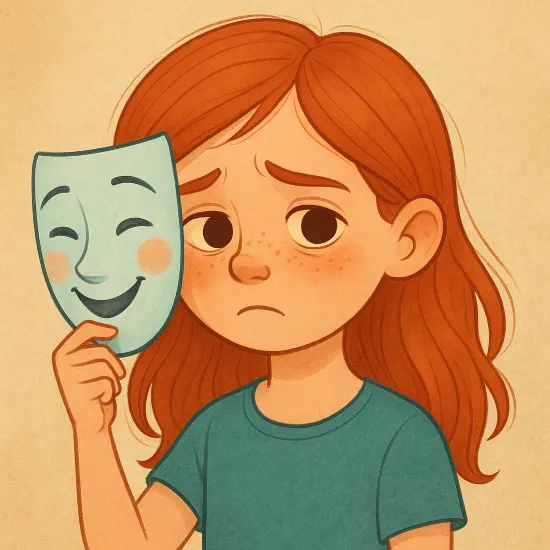
The Girl Underneath the Mask
An exploration of neurodivergent masking, exhaustion, and the courage to be seen.
Author Note: Inspired by the real voices and lived experiences of neurodivergent girls who shared their stories of masking, exhaustion, and self-discovery.
"You see the version of me I’ve learnt to show. But you don’t see the real me — the one underneath the mask."
I’m the one who always looks fine—maybe even happy. I smile when you talk to me; I laugh when everyone else laughs. I say I’m okay even when I feel like I’m breaking inside.
Learning to Survive
The Rules of the Game
I thought everyone felt like this—that loud noises made their chest hurt, that lights felt like knives. I watched other girls and copied their faces, their voices, their hands. That’s how I learnt to blend in.
The Cost
My hands ache from clenching to stop them from stimming. I rehearse every word before I speak, terrified of saying it wrong.
After-School Meltdown
The crying and anger only come out at home when the door is shut. It’s the only time I can finally breathe.
Hidden in Plain Sight
Common Mislabels
- ● "Just Shy": Dismissing deep social anxiety and processing needs.
- ● "Perfectionist": Missing the terror of making a social mistake.
- ● "Mature": Praising the hyper-vigilance used to mimic adults.
"Adults talk about 'autistic boys' who struggle with behaviour. But I was the quiet girl in the corner who never caused trouble. So no one thought I could be autistic. Because I didn’t look like it."
What True Visibility Feels Like
Things changed when one teacher noticed the small signs: the way I flinched, the way I copied others, the way I smiled too quickly. She didn’t tell me to try harder. She said, "You don’t have to hold it all in here."
A Note to Adults
- • Don't assume a quiet girl is "fine."
- • Look closer at tired eyes and rehearsed answers.
- • Ask how she really feels and believe her.
)
The Journey to Self
Unmasking isn’t about suddenly being free; it’s about slowly learning it’s okay to be different. It’s about trusting that the right people won’t make you feel weird for hand-flapping when you're excited or needing quiet time after socialising.
"You’re not broken. You’re not dramatic. You’re doing your best in a world that often misunderstands you. You deserve to exist without acting."
Final Reflection
Masking helped me survive, but it also made me disappear. Being myself—even when it’s messy or misunderstood—is the bravest thing I can do.

Mark Else
My experience ranges from running playgroups for pre-schoolers to managing complex safeguarding caseloads within both mainstream and SEMH provisions. In addition to having worked within the education sector since 2018, I am currently studying for a Level 6 Youth Work degree.