What Makes a Good Safeguarding Referral?
A step-by-step guide to writing clear, child-centred reports for Children's Social Care.
Remember: If there is an immediate risk to the child, call 999.
An effective referral provides detailed and accurate information promptly. A well-written report enables quicker intervention, while a poorly written one can lead to delays in support and further risk to the child.
Each local authority uses slightly different templates, but the core requirements remain consistent. Check your local Children’s Safeguarding Partnership for specific forms.
01. Basic Information (The Minimum)
As a minimum, the Multi-Agency Safeguarding Hub (MASH) needs enough data to locate the child on their database.
- ✓
Child's Details: Name, DOB, school, and medical info.
- ✓
Sibling Details: Names and ages of any brothers or sisters.
- ✓
Household Members: Details of anyone living in or frequenting the home.
02. Reasons for Concern
Context is Everything
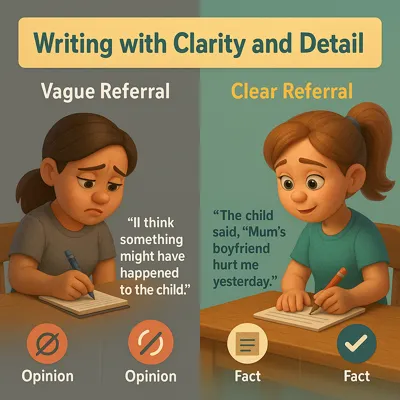
The MASH reader likely knows nothing about the family. You must "spell it out" with factual accuracy rather than opinion.
Avoid (Generalisations)
"Mum looked like she had been beaten up."
Try (Factual Observation)
"The teacher observed a fresh bruise and small cut over the left-eye socket; Mum walked off when asked if she was OK."
Refer to your local Threshold of Needs document to align your concern with statutory criteria.
03. Voice & History
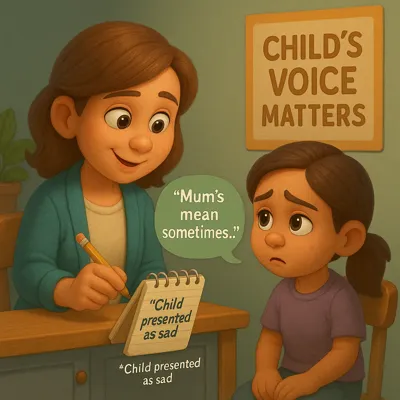
The Child's Voice
Record words verbatim, including slang or offensive language. Describe how the situation is impacting them (e.g., "appears withdrawn every Monday morning").
Current Interventions
List any support already offered. Detail meetings held, parental reactions (e.g., genuinely concerned vs. dismissive), and any progress made.
04. Professional Judgement
Offer Your Expertise
Social care values your opinion as the person who knows the child best. State clearly what will happen if intervention doesn't occur.
05. Aims & Consent
Consent Status
Best practice is to seek parent consent first unless doing so puts the child at greater risk. If consent is overridden, document exactly why.
Referral Aim
State your goal. Do you recommend a Level 3 Child in Need plan or an immediate Strategy Meeting?
Things to Avoid
Avoid Jargon & Acronyms
If using a medical diagnosis, explain exactly how it impacts the child's daily life.
Vague Statements
"The children are not being looked after."
Instead: "The children arrived late 5 times this month without breakfast and reported toothache with no dentist appointment booked."
Final Thought
A referral is more than a form; it is a child's pathway to safety. By focusing on facts, the child's voice, and your professional judgement, you ensure their needs meet the necessary threshold for support.

Mark Else
My experience ranges from running playgroups for pre-schoolers to managing complex safeguarding caseloads within both mainstream and SEMH provisions. In addition to having worked within the education sector since 2018, I am currently studying for a Level 6 Youth Work degree.
References
- How to make a ‘good’ referral - Enfield Council
- Referring to children's social care: advice and examples
- Making Effective Referrals: A guide for DSLs
- What makes a good assessment? | Practice points - NSPCC Learning
- Referrals to Children’s Social Care – Safeguarding Network
- Guidance on Making a Good Request for Help & Support /Referral to Children's Social Care