

Please Enter Your Email ID
Table of Contents
A Child Friendly Guide to ACEs
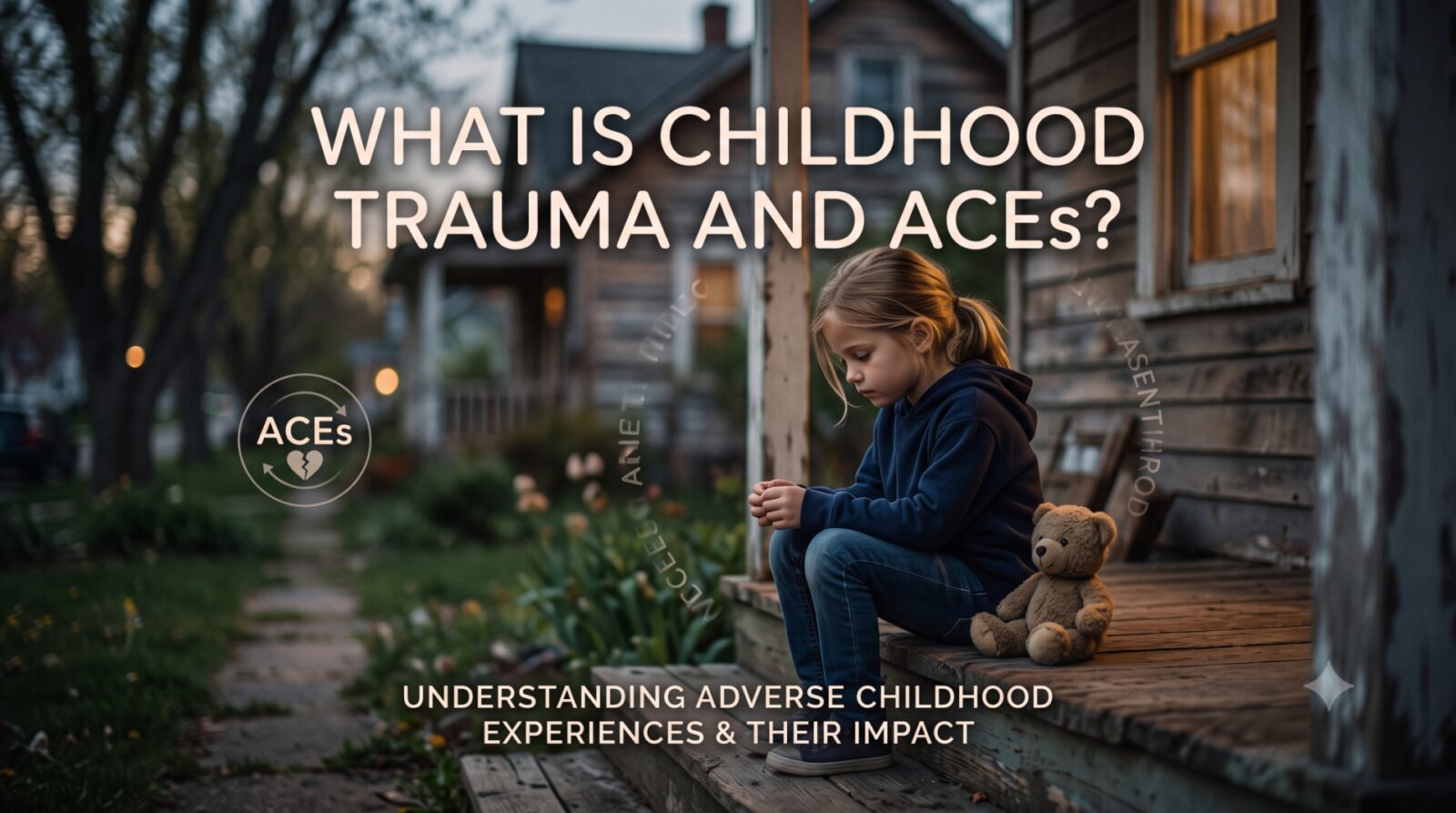
ACEs stands for Adverse Childhood Experiences. These are difficult things that can happen when you’re growing up, they might also be referred to as traumatic experiences.
Some examples include:
- Your parents arguing a lot or separating
- Feeling unsafe or unloved at home
- Someone close to you having big health problems (in their body or their mind)
- Being treated unfairly, hurt, or shouted at too much
- Seeing or hearing scary things like violence or shouting
These experiences are not your fault, and you didn’t do anything to deserve them.
How Does Childhood Trauma Affect You?
When tough things happen in childhood, they can leave behind feelings that are hard to understand.
You might:
- Feel anxious, angry, or really sad
- Find it hard to sleep or concentrate
- Get poorly more often
- Feel like you can’t trust people
- Blame yourself for things that aren’t your fault
These are all normal reactions to difficult experiences.
Do Children Manage to Overcome Trauma?
Yes. Even if life has been really hard, things can improve. Talking about what’s going on and getting support makes a big difference.
You might find it helpful to:
- Talk to a trusted adult (like a teacher, family member, or youth worker)
- Use creative outlets like drawing, writing, or music to express yourself
- Take care of your body with rest, food, and movement
- Ask for help when you’re struggling – that’s brave, not weak
You are not broken. You are not to blame. You are doing the best you can – and that’s more than enough.
What is the difference between a bad day and trauma?
A bad day is like a rainy afternoon—it feels grey and frustrating, but the sun comes back out, and you feel like yourself again soon. Trauma is more like a major storm that frightens you so much that even after the rain stops, you keep worrying another storm is coming. It is a very big, scary feeling that stays in your body and mind for a long time, making it hard to feel completely safe.
Is having an ACE my fault?
No, absolutely not. Nothing you did, said, or thought caused these difficult things to happen. ACEs are adult challenges and life events that happen around you. You are completely innocent, and you deserve to feel safe, loved, and protected at all times.
Why does my body feel tummy aches or worry when I think about scary things?
Our brains have a built-in alarm system (like a smoke alarm) designed to keep us safe. When you experience a scary event, that alarm goes off. Sometimes, even after the scary event is over, the alarm stays extra sensitive. It can make your heart beat fast, give you a butterfly feeling in your tummy, or make your muscles tight. This is just your body trying its best to protect you, but talking to a trusted adult can help turn that loud alarm system back down.
Who can I talk to if I am feeling overwhelmed?
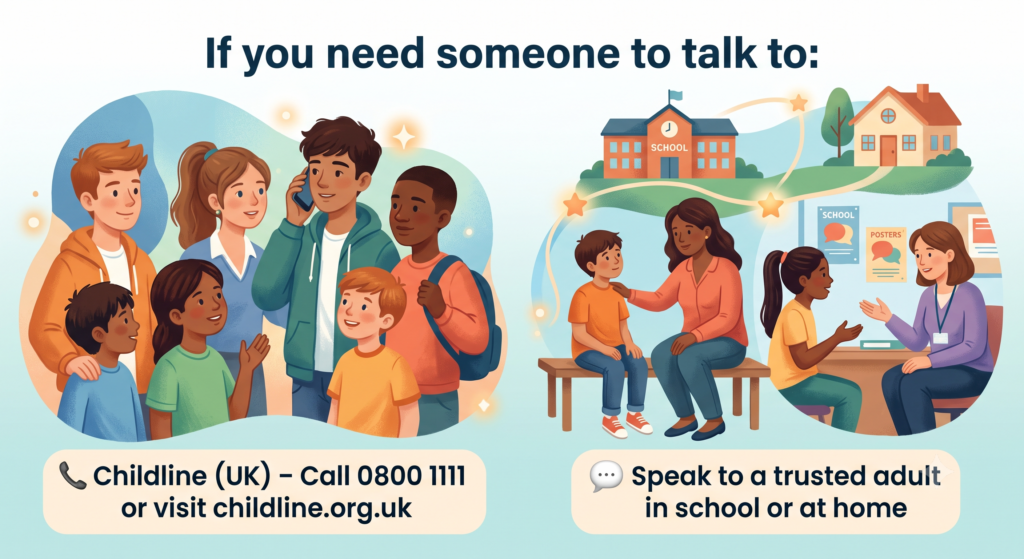
You never have to carry big feelings all by yourself. You can talk to any trusted adult in your life. This might be:
-A teacher or teaching assistant at your school
-A youth worker or school nurse
-A family member who makes you feel safe
-A trusted friend’s parent
If you want to talk to someone anonymously, you can also call Childline for free on 0800 1111 (in the UK) to speak to someone whose job it is to listen and help.