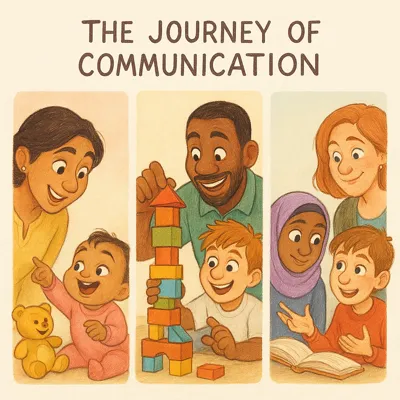
How Children Learn to Communicate
From first breaths to complex debates: exploring the marvel of language acquisition.
Communication is a complex system of skills and the cornerstone of all human interaction. It is the bedrock for building relationships and expressing our deepest emotions.
While adults often take communication for granted, it is an awe-inspiring process that begins before birth. Children are born with an innate ability to acquire language, yet their environment heavily influences the speed and depth of these skills.
Nature & Nurture
🧠 Biological Readiness
Neural networks in the brain are specifically dedicated to language. These networks decipher sounds and assign meaning, creating a neurological "blueprint."
👪 Social Instinct
Humans are inherently social. From infancy, babies instinctively seek out faces and voices, driven by a deep-rooted drive for connection.
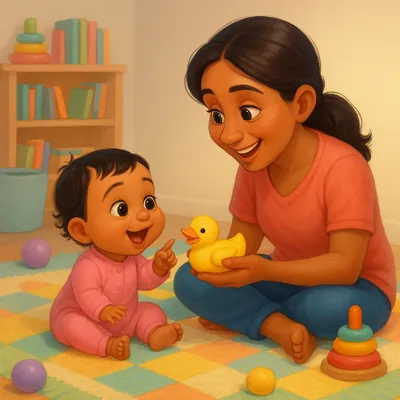
Environmental Influence
While biology provides the capacity, nurture provides the content. Language immersion through stories, songs, and "back-and-forth" exchanges with caregivers is what the brain thrives on.
Stages of Development (0-5+ Years)
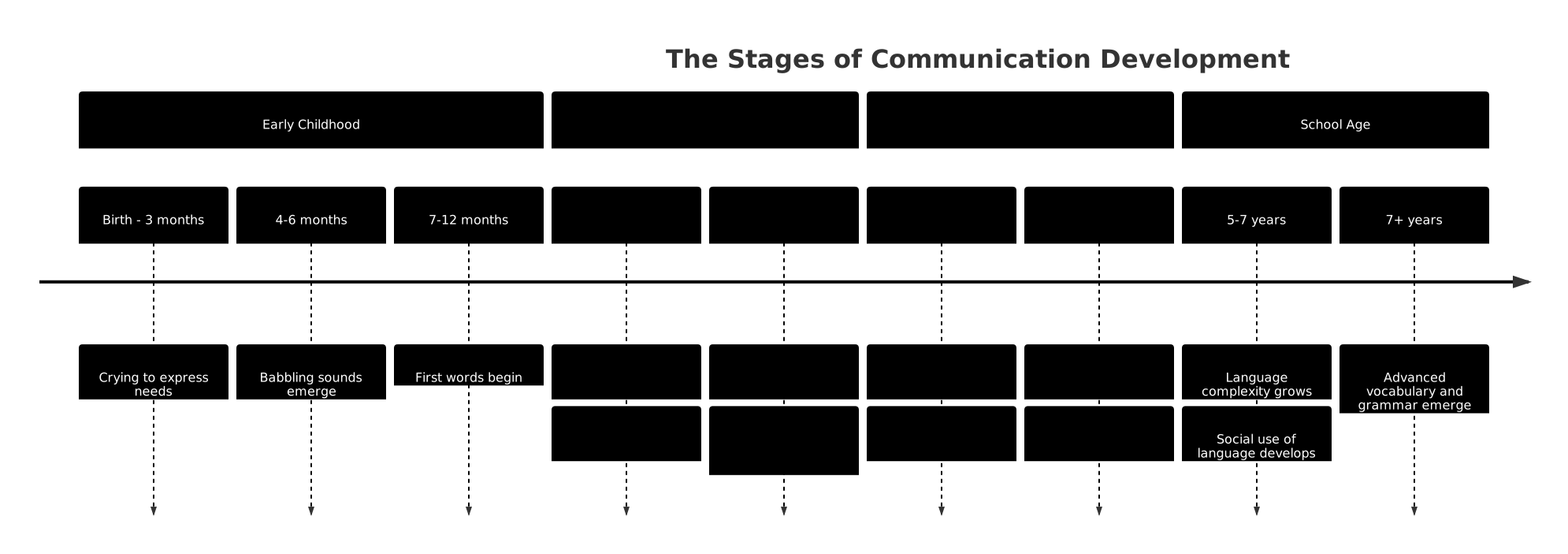
Pre-linguistic Phase
Communication is non-verbal. Coos, cries, and babbles lay the foundation for future speech.
Early Language
First words appear, followed by two-word phrases ("want toy"). Understanding of simple instructions begins.
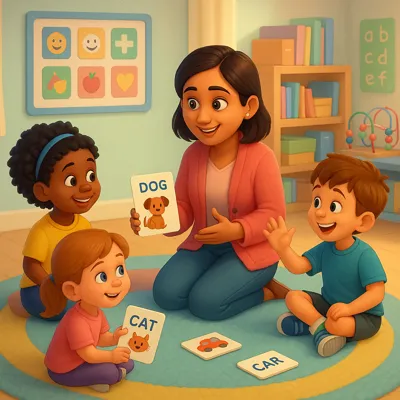
Developing Language
Vocabulary explodes from ~1,000 words to ~10,000. Children ask "why" and begin to engage in imaginative play.
School Age & Beyond
Mastery of nuanced forms like humour, sarcasm, and abstract critical thinking begins.
A Shared Responsibility
🗣️ Meaningful Conversation
Talk to children from day one. Narrate your day ("Mummy is baking") and ask open-ended questions to invite them into the dialogue.
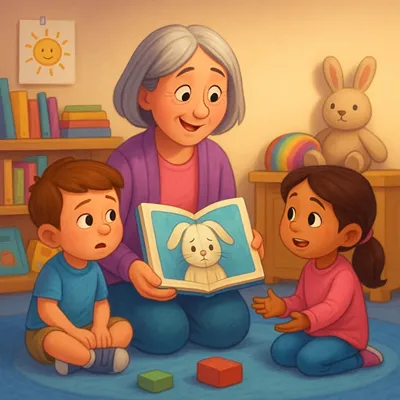
Active Listening
Respond enthusiastically to every attempt—whether it's a babble, smile, or word—to show their voice matters.
Literacy-Rich Spaces
Surround them with books and writing materials. Visit libraries to foster a lifelong love of language.
Balanced Technology
E-books are useful, but they cannot replace the face-to-face eye contact of human interaction.
Final Thoughts
Language development is a journey of patience. While children follow a general timeline, they each move at their own pace. By responding to every gesture and providing a rich environment, we empower them to find their voice.
Child Development Series • Part 18

Mark Else
My experience ranges from running playgroups for pre-schoolers to managing complex safeguarding caseloads within both mainstream and SEMH provisions. In addition to having worked within the education sector since 2018, I am currently studying for a Level 6 Youth Work degree.
References
- Kuhl, P. K. (2004). Early language acquisition: Cracking the speech code. Nature Reviews Neuroscience, 5(11), 831-843.
- Hoff, E. (2006). How social contexts support and shape language development. Developmental Review, 26(1), 55-88.
- Tomasello, M. (2003). Constructing a language: A usage-based theory of language acquisition. Harvard University Press.
- Vygotsky, L. S. (1978). Mind in society: The development of higher psychological processes. Harvard University Press.
- Bruner, J. S. (1983). Child's talk: Learning to use language. Norton.