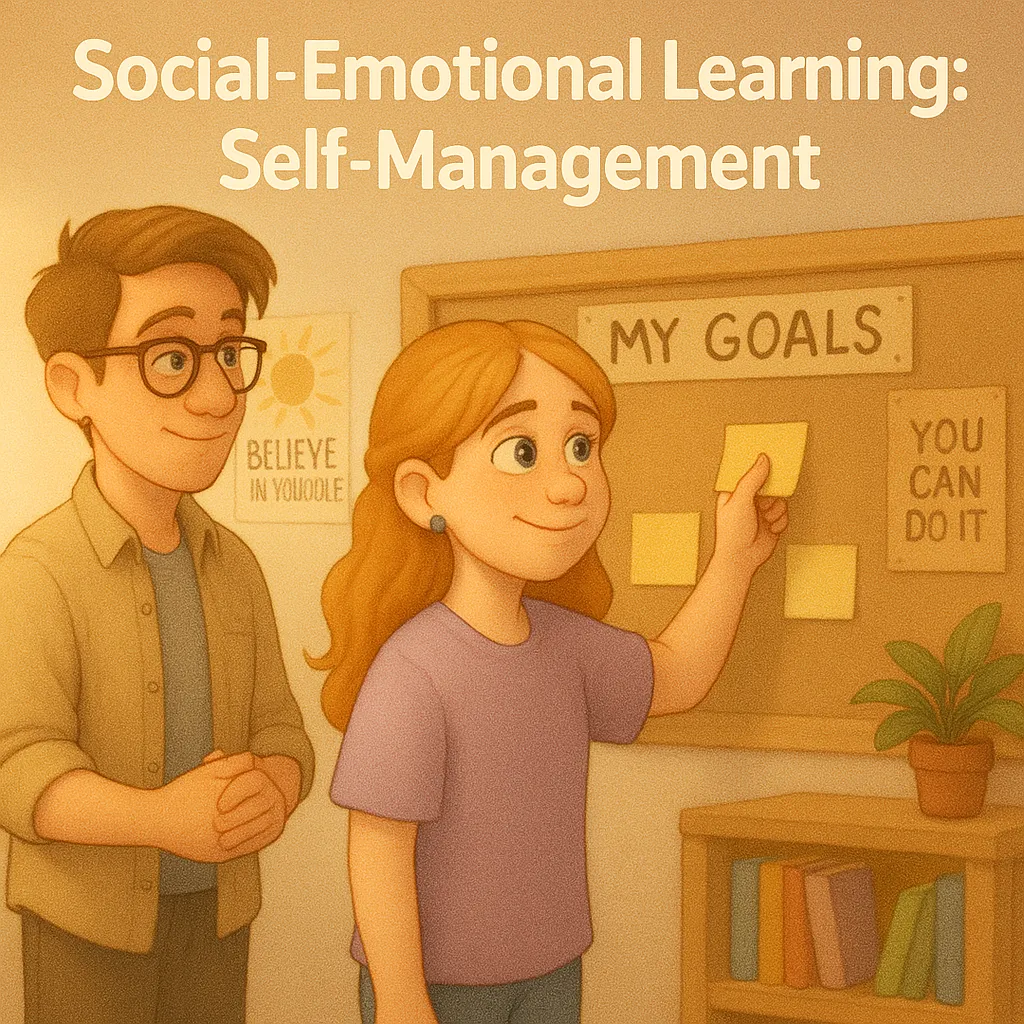
Mastering Self-Management in SEL
Empowering children to regulate thoughts, emotions, and behaviours for lifelong resilience.
Self-management is the key to regulating one’s thoughts, emotions, and behaviours across various situations.
By mastering these skills, children develop the resilience and adaptability crucial for academic success and personal well-being. This guide explores the four core components: Emotional Regulation, Impulse Control, Stress Management, and Self-Discipline.
The Self-Management Toolkit
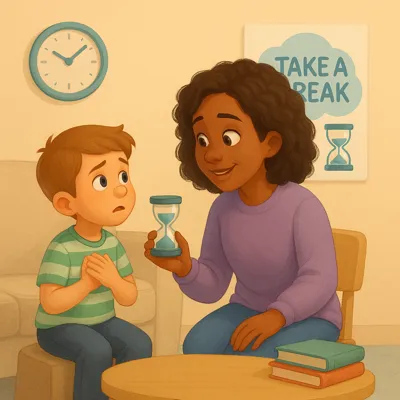
The 4 Stages of Emotional Regulation
Children gain control over their reactions by learning to identify their feelings and using specific techniques to maintain balance.
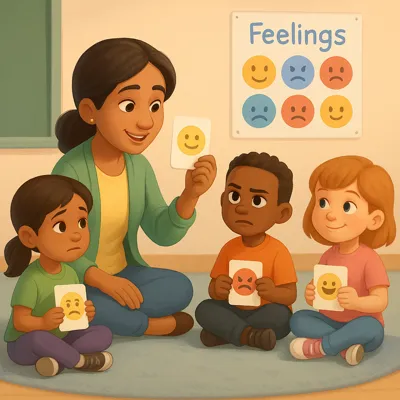
Labeling: Naming emotions like anger or sadness.
Triggers: Understanding the "why" behind the feeling.
Expression: Communicating feelings respectfully.
Technique: Using deep breathing or counting to 10.
Impulse Control
The ability to pause and consider consequences before acting immediately on an urge.
- 🔹 Delayed Gratification
- 🔹 Thinking Before Acting
- 🔹 Resisting Temptation
- 🔹 Self-Discipline
Stress Management
Recognising physical signs (like a fast heart rate) to take action before stress escalates.
Effective Techniques:
Building Self-Discipline
Self-discipline involves controlling impulses to stay focused on long-term goals. It requires accountability—taking ownership of tasks like chores or homework even when they are challenging.
Reflective Thinking
"What worked well today? What will I do differently next time?"
Laying the Foundation for Success
By teaching these four pillars of self-management, adults help children become independent and capable of overcoming challenges, creating a healthier relationship with their emotions for life.

Mark Else
My experience ranges from running playgroups for pre-schoolers to managing complex safeguarding caseloads within both mainstream and SEMH provisions. In addition to having worked within the education sector since 2018, I am currently studying for a Level 6 Youth Work degree.
References
- CASEL (Collaborative for Academic, Social, and Emotional Learning). (2020). What is SEL? Retrieved from https://casel.org/what-is-sel/
- Durlak, J. A., Weissberg, R. P., Dymnicki, A. B., Taylor, R. D., & Schellinger, K. B. (2011). The impact of enhancing students’ social and emotional learning: A meta-analysis of school-based universal interventions. Child Development, 82(1), 405-432.
- Moffitt, T. E., et al. (2011). A gradient of childhood self-control predicts health, wealth, and public safety. Proceedings of the National Academy of Sciences, 108(7), 2693-2698.
- Shanker, S. (2016). Self-Reg: How to Help Your Child (and You) Break the Stress Cycle and Successfully Engage with Life. Toronto: Penguin Canada.
- Denham, S. A., & Burton, R. (2003). Social and emotional prevention and intervention programming for preschoolers. New York: Kluwer Academic/Plenum.
- Rimm-Kaufman, S. E., & Hulleman, C. S. (2015). SEL in elementary school settings: Identifying mechanisms that matter. In J. A. Durlak, R. P. Weissberg, & T. P. Gullotta (Eds.), Handbook of Social and Emotional Learning: Research and Practice (pp. 151-165). New York: Guilford Press.