

Please Enter Your Email ID
Table of Contents
Emotionally Based School Avoidance (EBSA) can affect a young person’s learning, relationships, and well-being. Supporting children and families through this journey requires a clear, structured plan that recognises individual needs while building trust and resilience.
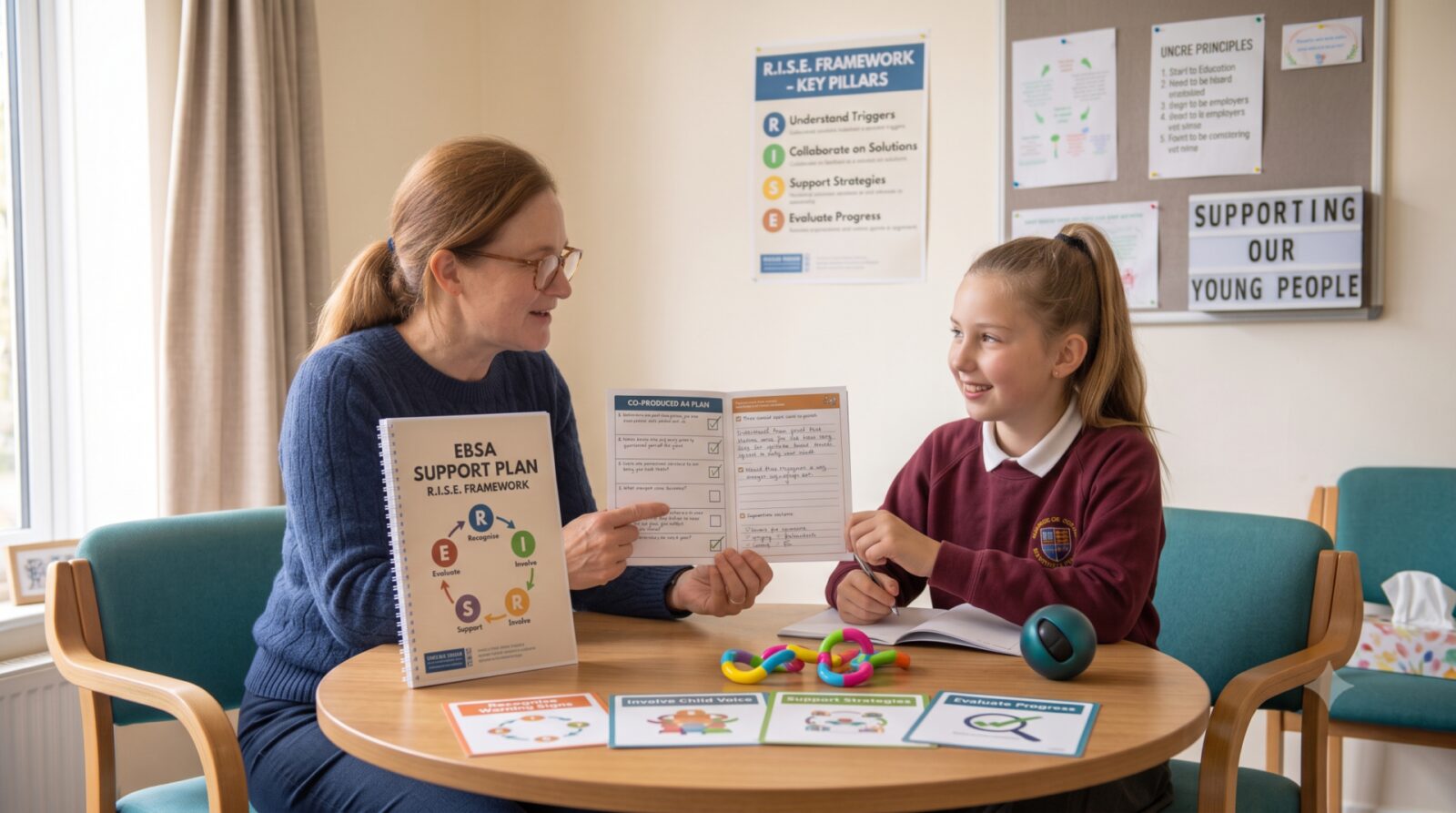
Our EBSA Support Plan Template, built around the R.I.S.E. framework, offers a practical way for schools and families to work together, following government advice on supporting mental health. It ensures early identification of needs, supportive strategies, and a collaborative approach that keeps the child at the centre.
What is the R.I.S.E. EBSA Framework?
The R.I.S.E. Framework is a structured, trauma-informed approach designed to support children and young people experiencing Emotionally Based School Avoidance (EBSA). Rather than focusing solely on compliance or attendance metrics, this framework prioritises relationship-based interventions, early identification, and collaborative problem-solving to help pupils reintegrate into the school environment sustainably.
Below is a detailed breakdown of how schools, SENCOs, and families can implement each stage of the framework:
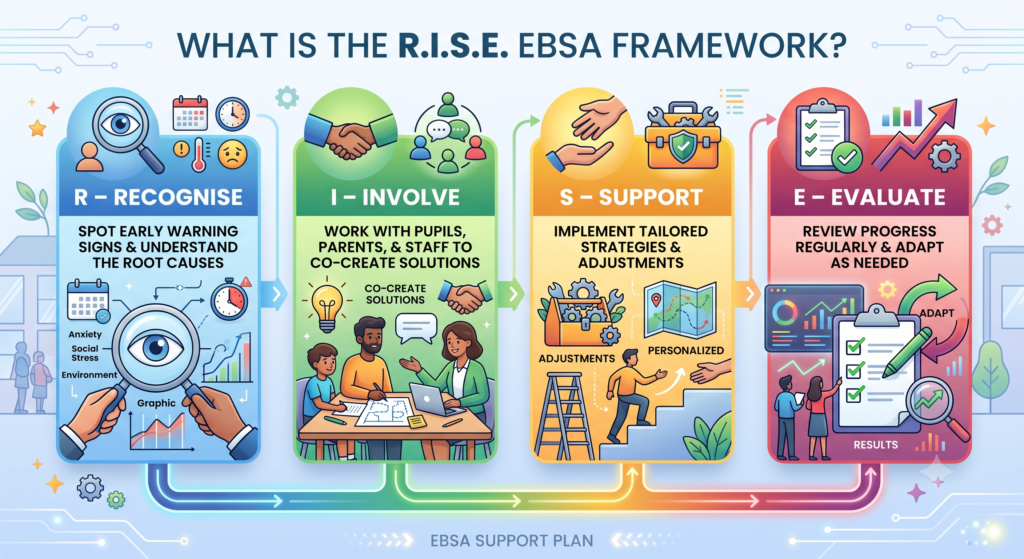
R – Recognise: Spot Early Warning Signs of School Avoidance
The first step in addressing EBSA is early identification. School avoidance rarely happens overnight; it is often the culmination of cumulative anxiety, sensory overload, or unaddressed additional learning needs.
- Spotting the Signs: Look for patterns such as frequent somatic symptoms (e.g., stomach aches or headaches in the morning), increased anxiety on Sunday evenings, changes in baseline behaviour, or a gradual decline in academic engagement.
- Understanding Root Causes: Move beyond treating the absence as simple non-compliance. Investigate underlying triggers, which may include bullying, academic performance anxiety, transitions (such as moving to secondary school), or difficulties within the home environment.
I – Involve: Co-Create Child-Centred Solutions
Effective EBSA interventions require a unified, multi-agency approach that places the young person’s perspective at the absolute centre.
- Capturing the Child’s Voice: Actively gather the pupil’s views using non-threatening, visual tools or structured scripts. Understand what safe spaces look like to them and what barriers feel insurmountable.
- Collaborating with Families: Parents and carers are vital partners, not passive observers. Establish transparent, blame-free communication channels with families to understand the child’s presentation at home and build a consistent bridge between home and school.
- Engaging School Teams: Ensure that all staff members interacting with the pupil—from class teachers to support staff—understand the agreed approach to guarantee consistency and predictability.
S – Support: Implement Tailored EBSA Strategies
Once the underlying barriers are understood, schools must implement highly individualised, actionable adjustments rather than generic attendance plans.
- Environmental Adjustments: Provide concrete support mechanisms, such as designated quiet zones, access to noise-cancelling headphones, or flexible arrival times to bypass the high-stress environment of crowded school gates.
- Relational Support: Assign a trusted adult or key worker within the setting who can provide regular check-ins and act as a safe anchor for the student throughout the school day.
- Phased Reintegration: Scaffold the return to school with a personalized, gradual timetable. This might begin with visiting the school outside of standard hours, attending for a single preferred subject, or participating in small-group interventions.
E – Evaluate: Review, Reflect, and Adapt
An EBSA support plan is a living, evolving document. Human needs fluctuate, and the strategies that work one week may require fine-tuning the next.
- Regular Progress Reviews: Establish structured, periodic review dates with the pupil, parents, and key staff to assess the impact of current adjustments.
- Tracking Qualitative Data: Measure success not just by attendance percentages, but by qualitative indicators such as reduced anxiety levels, increased participation in class, and growing social connections.
- Adapting to Shifting Needs: Be prepared to scale support up or down flexibly without judgment. Re-evaluating ensures the plan remains dynamic and responsive to the child’s ongoing emotional wellbeing.
Benefits of a Structured EBSA Support Plan Template
- Provides a structured, trauma-informed approach.
- Encourages meaningful pupil and parent voice.
- Builds consistency across staff teams.
- Helps track progress and identify what works.
How to Implement the EBSA Support Plan in Your School
When introducing an EBSA support plan template within a mainstream or specialist educational setting, clear implementation steps ensure consistency across staff teams:
1. Establish Baseline Information & Triggers
Before meeting with the family, gather qualitative observations from staff. Look for patterns such as panic symptoms during morning transitions, high anxiety prior to specific subjects (e.g., PE or unstructured break times), or frequent visits to the school medical room.
2. Capture the Child’s Voice Safely
Children experiencing severe school anxiety often struggle with direct, formal questioning. Use non-threatening tools—such as visual sorting cards, rating scales, or “Ideal School” drawing prompts—to understand what feels unsafe and what key support figures help them feel secure.
3. Agree on Environmental and Relational Adjustments
An effective EBSA plan must include tangible adaptations. Consider implementing:
- Safe Haven Access: A designated quiet area the pupil can access without needing to ask permission verbally in front of peers.
- Key Worker Anchor: A nominated trusted adult who meets the pupil at a designated entrance during flexible arrival times.
- Gradual Scaffolding: Reduced timetables that start with preferred subjects or low-sensory environments before building toward full attendance.
4. Review Progress Beyond Attendance Figures
School attendance percentages are a lagging indicator of recovery. Evaluate success using qualitative measures: reduced physiological distress at home during morning routines, increased willingness to enter the building, and growing engagement with key staff.
Download the Free EBSA Support Plan Template PDF
This resource can be used flexibly in schools, alternative provisions, and at home to create a personalised plan for children struggling with school attendance.