

Please Enter Your Email ID
Table of Contents
Introduction
The point at which children drop all of their barriers and trust in you enough to disclose abuse will be one that lives with you both forever.
Disclosures of abuse are among the most significant moments in a child’s life, and how adults respond can shape their healing journey (Allnock and Miller, 2013).
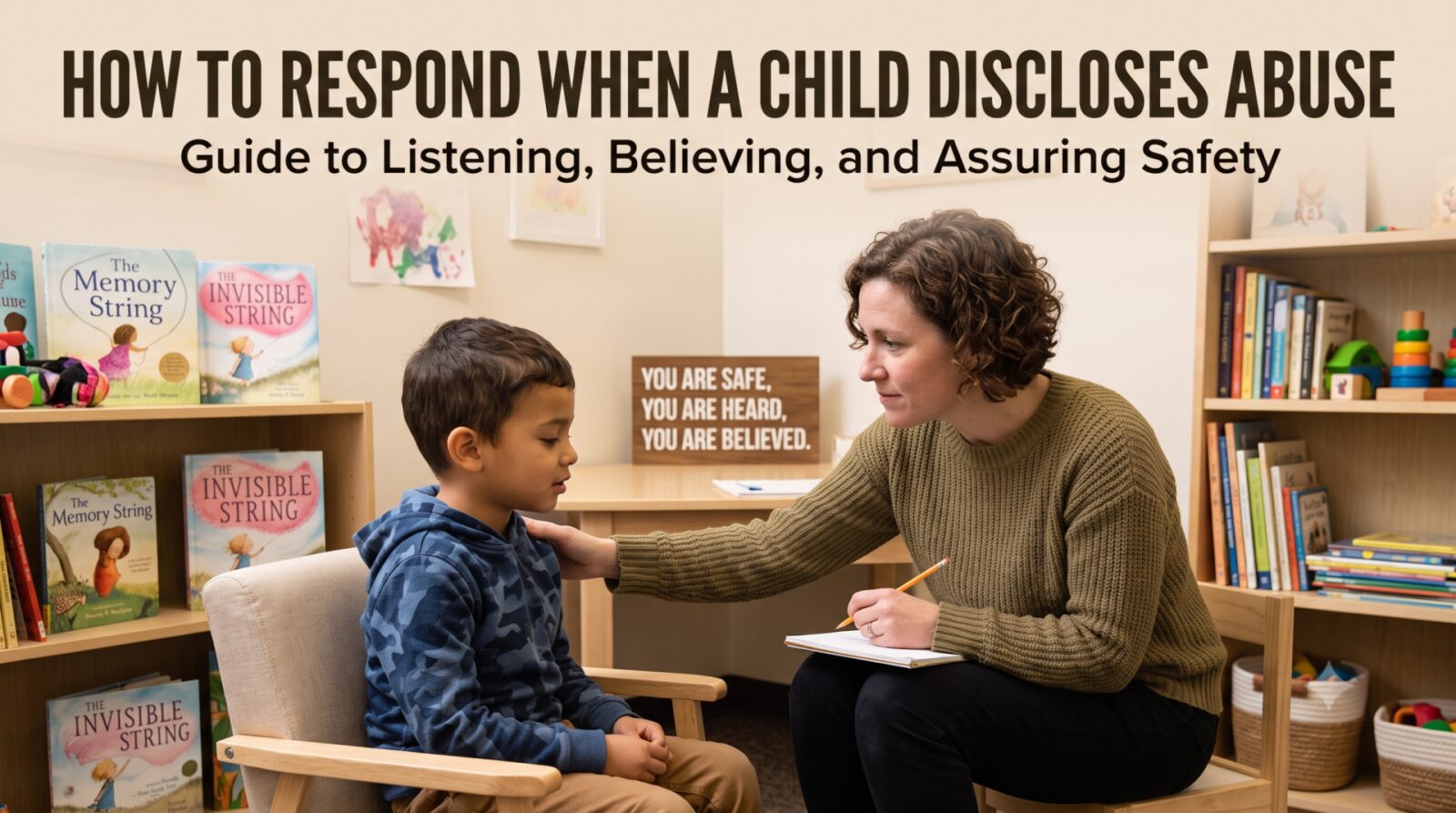
Whether you’re a parent, teacher, youth worker, or another trusted adult, knowing how to respond when a child discloses abuse is vital. I have created a calm, evidence-based guide on how to respond when a child discloses abuse. Learn what to say, what to avoid, and essential UK safeguarding procedures.
Recognising the Signs a Child May Disclose Abuse
Children may not always disclose abuse in a clear or direct way. It can come out in fragments, through behaviour, or in moments of quiet trust.
Disclosures are rarely spontaneous and can take days, months, or even years to surface. It is essential to recognise that the timing, method, and content of a disclosure can be influenced by numerous complex factors.
For some children they may come as a moment during play, or as a partial disclosure or even as through hypothetical questions and scenarios. Sometimes they will test the water with something that might seem small and insignificant where they are seeing understanding whether you care enough to be curious and ask for more details and reading how you react to what they are telling you.
Relational Safety and Unconditional Trust
Children almost never disclose harm to someone they find unpredictable or punitive. A young person is far more likely to open up to an adult they perceive as consistently kind, grounded, and emotionally available. Trust is the absolute foundation of relational safety (Beckett et al., 2013).
When an adult maintains predictable boundaries and demonstrates warm, low-arousal responses in daily interactions, they create a safe harbour where a child feels secure enough to drop their defenses and share painful experiences.
Moments of Emotional Overwhelm or Accidental Disclosures
Not all disclosures are planned. Often, a child reaches a sudden threshold of emotional overwhelm, what practitioners refer to as a crisis point. This can be triggered by:
- A classroom safeguarding or Personal, Social, Health and Economic (PSHE) education lesson that gives words to their experience.
- A recent change in home circumstances or an escalation in the abuser’s behaviour.
- A sensory or emotional trigger that activates a fight, flight, or freeze response.
In other instances, a child may make an accidental or unintentional disclosure. They might mention an event casually during play or conversation, completely unaware that what they are describing is abusive or abnormal, only realising its significance through the adult’s reaction.
Protective Instincts for Siblings and Peers
A powerful driver for disclosure is the urge to protect others. Children living with domestic abuse or extra-familial harm often endure personal suffering in silence, but will break that silence if they perceive that a younger sibling, a pet, or a close friend is in imminent danger.
Recognising that a disclosure may be motivated by an altruistic desire to protect peers can help professionals identify wider safeguarding risks, such as contextual safeguarding issues or child sexual exploitation (CSE).
Testing the Waters: The Gradual or Fragmented Disclosure
It is a common misconception that children reveal everything at once. In reality, disclosures are predominantly gradual, partial, and fragmented. A child will frequently “test the waters” by sharing a small, minimised piece of information to gauge the adult’s reaction:
- Will the adult panic or get angry?
- Will they blame me or dismiss what I say?
- Can they handle my pain without becoming overwhelmed themselves?
If the adult responds with calm belief and validation, the child gains the confidence to share further details over time. If met with shock, disbelief, or interrogation, the child will often retract the statement and shut down.
Cognitive and Developmental Understanding
A child’s ability to identify abuse depends heavily on their developmental stage. Younger children often lack the vocabulary or conceptual frameworks to understand that harm inflicted by a caregiver or trusted figure is wrong.
As children mature, often through relationships with peers, digital literacy, or statutory school curricula, they begin to reframe past or ongoing experiences. This evolving developmental awareness (Cossar, Brandon and Jordan, 2011) frequently acts as the catalyst for speaking out, as the young person begins to recognise that their experiences are not normal, healthy, or their fault.
The Core Need for Connection and Unburdening
At its heart, the decision to speak out is driven by a fundamental human need to be heard, validated, and unburdened. Carrying the weight of secret harm induces profound feelings of toxic shame, isolation, and confusion.
Disclosing is an act of incredible bravery. Even when a child cannot explicitly say “I need help,” their words, disclosures, or sudden changes in behaviour are direct bids for relational safety, adult protection, and emotional repair.
How to Respond When a Child Discloses Abuse: Step-by-Step
The initial moments following a child’s decision to disclose abuse are pivotal. Your immediate emotional regulation, body language, and verbal responses establish whether the child feels safe, validated, and protected. A measured, trauma-informed approach reduces panic, prevents re-traumatisation, and ensures that critical safeguarding details are preserved accurately for statutory reporting.
Below is a clear, step-by-step framework detailing what adults must do, say, and avoid during a safeguarding disclosure.
What to Do and Say During a Safeguarding Disclosure
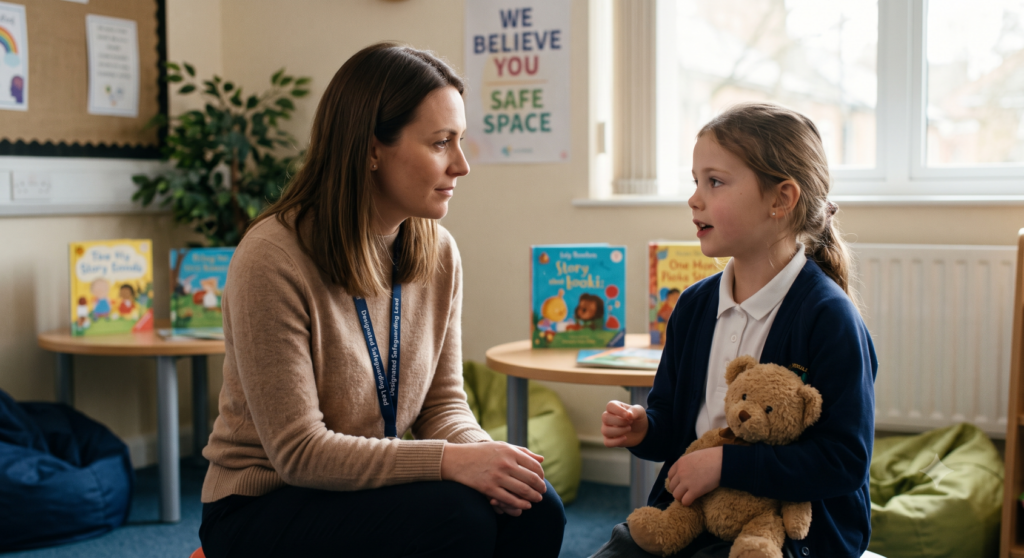
When a child begins to speak about harm, prioritise relational safety and active listening over gathering information.
Maintain Emotional Regulation and Steady Body Language
Even if the disclosure causes internal shock or distress, project a calm, reassuring presence. Children closely monitor adult facial expressions and voice tone to assess whether they are in trouble or if the adult is becoming overwhelmed.
Key Action: Lower your vocal pitch, slow your speaking tempo, and adopt an open, unhurried posture at the child’s eye level.
Practice Active Listening Without Leading
Allow the child to tell their story in their own time and using their own vocabulary. Refrain from interrupting, finishing their sentences, or filling quiet pauses. Silence often means the child is gathering the courage or processing the words to continue.
What to Say: Use minimal, non-directive encouragement such as “I’m listening,” “Take your time,” or “Thank you for telling me.”
Provide Immediate Validation and Belief
Children frequently delay disclosing due to fear that adults will dismiss their experience or accuse them of lying. Unconditional belief is essential for emotional safety.
What to Say: State clearly and calmly: “I believe you.”
Explicitly Remove Guilt and Blame
Abusers often manipulate children into believing that the harm is their fault or that they are being “bad” by speaking out. Reassure them immediately that they have done the right thing.
What to Say: “You are not in trouble, and none of this is your fault. You were very brave to speak to me today.”
Be Honest About Confidentiality and Next Steps
Never promise total secrecy. Children need to trust that you will manage the situation responsibly without making promises you cannot keep under UK statutory guidance (Keeping Children Safe in Education / Working Together to Safeguard Children).
What to Say: “I am so glad you told me. To make sure you stay safe, I need to speak to [Designated Safeguarding Lead ] who knows how to help us with this. I will keep you informed about what happens next.”
What NOT to Say When a Child Discloses Harm
Knowing what not to say is just as critical as knowing the right responses. Well-meaning attempts to gather facts can inadvertently contaminate evidence or cause the child to shut down.
Do Not Ask Leading or Closed Questions
Avoid suggesting details, names, or specific actions that the child has not explicitly mentioned (e.g., “Did they hit you with an object?” or “Was it your uncle?”). In legal and child protection proceedings, leading questions can compromise the child’s statement under Achieving Best Evidence (Ministry of Justice) guidelines.
Instead: Stick strictly to open-ended phrases if clarification is essential for immediate safety (e.g., “Is there anything else you want to tell me?”).
Do Not Express Visible Shock, Disgust, or Anger
Reacting with dramatic emotion, even if directed at the perpetrator, can intimidate the child. They may worry that your anger will escalate the situation or that their disclosure has caused harm to you.
Instead: Process your personal emotional reaction privately after the child is safe and you have briefed your Designated Safeguarding Lead (DSL).
Avoid Asking “Why” Questions
Asking questions like “Why didn’t you tell someone sooner?” or “Why did you go to their house?” can sound accusatory to a dysregulated child.
Why this matters: The word “why” implies that the child bears responsibility for the event or their delay in seeking help (Ministry of Justice, 2011).
Do Not Attempt an Internal Investigation
Never cross-examine the child, confront the alleged abuser, or attempt to gather physical evidence yourself. Interrogating a child can induce secondary trauma and disrupt official police or social care assessments.
Instead: Note down the child’s exact words factual details, and pass the record immediately to your DSL or local authority children’s social care service.
Key Takeaway: By remaining a calm, predictable anchor, you empower the child to step out of isolation. Your supportive response provides the foundational safety necessary for statutory protection and long-term therapeutic recovery to begin.
Safeguarding Recording and Reporting Procedures (UK Guidance)
When a child discloses abuse, accurate, objective, and timely record-keeping is a vital professional duty. A safeguarding record is not merely an internal administrative note—it is a formal legal document that may be used in statutory child protection investigations, multi-agency case conferences, and court proceedings (NSPCC Learning, n.d.).
All educational settings, youth organisations, and care providers in the UK are required to operate in accordance with statutory frameworks, including Keeping Children Safe in Education and Working Together to Safeguard Children.
Step-by-Step Reporting & Recording Protocol
Following a disclosure, follow this structured workflow to ensure the child’s voice is captured accurately and statutory reporting obligations are met.
Immediate Verbal Notification: Within minutes.
Inform your Designated Safeguarding Lead (DSL) or Deputy DSL verbally as soon as the child is safe and out of immediate danger. Do not wait until the end of the school or working day to report a disclosure.
Fact-Based Written Record: Same day / within hours.
Complete your written safeguarding log (e.g., via CPOMS, MyConcern, or your setting’s official record form) as soon as possible while the conversation is fresh in your memory.
3.Document Contextual Metadata: Precision details.
Record the precise date, time, location, and names of any other individuals present when the disclosure occurred. Explicitly state the context—for example, “During a quiet reading activity…” or “Following a PSHE lesson on personal boundaries…”
Capture Direct Quotes (‘Voice of the Child’): Verbatim accuracy.
Write down the child’s exact words using quotation marks. Preserve their unique language, colloquialisms, and terminology—including phonetic spellings if a young child mispronounces words. Never substitute their words with adult interpretations or clinical terms.
Record Physical Observations & Body Maps: Objective recording.
If visible injuries, bruising, or marks are observed, complete a standardised body map. Describe what you see objectively (size, colour, location, shape) without guessing the cause or mechanism of the injury.
Document Actions & Sign-Off: Chain of accountability.
Detail the exact actions you took immediately following the disclosure, confirm that the DSL was notified, sign, date, and timestamp the record.
Writing Style: Distinguishing Fact from Opinion
To ensure your record stands up to legal scrutiny, maintain absolute professional objectivity. Use the comparison table below as a guide when drafting your safeguarding notes:
| Standard / Incorrect Phrase (Subjective) | Best Practice / Correct Phrase (Objective) |
| “The child appeared frightened and lied about their dad.” | “The child had wide eyes, sat with hands clasped tightly, and stated: ‘My dad didn’t mean to hit me.'” |
| “Child has an abusive home life.” | “Child stated: ‘There is shouting and thrown objects at home every night.'” |
| “Child came to school looking neglected.” | “Child arrived at 08:45 wearing a dirty, torn jumper and unbrushed hair, stating they had not eaten breakfast.” |
Key Rule for Safeguarding Logs: Record facts, observable behaviours, and verbatim words. Avoid opinion, speculation, or diagnostic assumptions. If you include professional interpretation, explicitly label it as such (e.g., "In my opinion, based on [observation]...").
What Happens Next: Navigating UK Child Protection Frameworks
Once a disclosure has been recorded and submitted to your Designated Safeguarding Lead (DSL), formal statutory processes begin. As a practitioner or trusted adult, understanding what happens behind the scenes helps you support the child effectively while adhering to UK legal obligations.
The DSL will evaluate the information provided, consult relevant multi-agency partners, and determine whether the threshold for a formal referral to Local Authority Children’s Social Care (LA CSC) has been met under Section 17 (Child in Need) or Section 47 (Child Protection) of the Children Act 1989.
Key UK Statutory Guidance and Legislation
Every decision made following a safeguarding disclosure is governed by national framework documents and statutory legislation. Key references include:
- Keeping Children Safe in Education (KCSIE): Statutory guidance for all UK schools and colleges detailing staff duties, DSL responsibilities, and peer-on-peer abuse protocols.
- Working Together to Safeguard Children: Core multi-agency guidance establishing how local authorities, health services, and police coordinate to protect children.
- Information Sharing: Advice for Practitioners: Clarifies legal grounds for sharing confidential information without consent when a child is at risk of harm.
- The Children Act (1989 & 2004): The legal foundation of child protection in England and Wales, establishing the welfare of the child as paramount.
- Ofsted Safeguarding Expectations: Sets out inspection criteria for verifying that settings maintain an active culture of vigilance.
Understanding Your Role: The Boundaries of Responsibility
It is important to remember that non-safeguarding specialist staff are not expected to investigate, diagnose, or resolve child protection cases single-handedly. Your responsibility is to act as a vital link in the statutory safety net.
| Your Responsibility (What To Do) | Beyond Your Scope (What NOT To Do) |
| Respond calmly and reassure the child in the moment. | Investigate or ask probing, leading questions. |
| Record factually using exact words and pass notes to the DSL immediately. | Promise confidentiality or agree to keep secrets. |
| Remain emotionally available and maintain normal, predictable routines. | Contact parents/carers directly regarding abuse allegations. |
| Follow setting procedures and escalate if you feel action is delayed. | Attempt therapeutic intervention without specialist training. |
Crucial Safeguarding Principle: You do not need to prove that abuse has occurred. Your statutory duty is simply to identify concerns, document them accurately, and report them promptly so qualified professionals can assess the child's safety.
How to Support a Child After a Safeguarding Disclosure
A disclosure of abuse is not a single event—it is the beginning of an ongoing healing journey. The days, weeks, and months following a disclosure are often marked by uncertainty and heightened emotional vulnerability. How adults show up during this post-disclosure phase plays a critical role in helping the child re-establish safety, regain agency, and process trauma.
Below are core, evidence-based practices for maintaining relational stability and supporting a child after they have spoken out.
Offer Steady, Ongoing Reassurance
After disclosing, children frequently experience a “vulnerability hangover”—a wave of anxiety, guilt, or fear that they have disrupted their family or done something wrong. Continuous, quiet validation helps counter these feelings.
- Reaffirm Safety and Care: Regularly remind the child that they are safe, cared for, and that adults are handling the situation.
- Remove Guilt: Repeat key messages such as: “You did the right thing by telling me,” and “Nothing that happened is your fault.”
- Avoid Over-Focusing: Reassure them naturally without turning every interaction into a discussion about the disclosure.
Maintain Familiar Routines and Predictability
Trauma strips away a child’s sense of control. When statutory investigations or sudden life changes occur, maintaining predictable environments acts as a powerful buffer against distress.
- Keep Daily Structure Intact: Maintain regular school attendance, familiar classroom seating, extracurricular activities, and bedtime routines wherever possible.
- Prepare for Necessary Changes: If routines must change (e.g., meeting a social worker or attending a medical appointment), give the child clear, age-appropriate advance notice so they are not caught off guard.
Practice Emotional Availability and Co-Regulation
Children process trauma at their own pace. Rather than forcing formal conversations, focus on being a calm, predictable anchor.
- Low-Pressure Check-Ins: Use gentle, open-ended statements like: “I’m right here if you want to chat, but we can also just sit quietly.”
- Follow the Child’s Lead: Allow the child to guide the depth, timing, and topic of conversation. If they don’t want to talk about the disclosure, do not force the issue.
- Co-Regulation in Action: When a child displays heightened anxiety or dysregulation, use a low tone of voice, slow breathing, and grounded body language to help calm their nervous system.
Facilitate Multi-Agency and Pastoral Support Pathways
Supporting a child after a disclosure requires a collaborative approach. Ensure the child is connected to specialised professional resources tailored to their needs.
- School Pastoral Care: Coordinate with the school’s pastoral team or Designated Safeguarding Lead (DSL) to establish a “safe pass” system (allowing the child to visit a quiet pastoral space if overwhelmed during lessons).
- Therapeutic Services: Help families connect with child-centred counselling, play therapy, or local Child and Adolescent Mental Health Services (CAMHS).
- Independent Advocacy: Connect older children with independent young people’s advocates who can help them understand their rights during child protection proceedings.
Expect Fluctuations in Behaviour and Emotion
Healing is rarely linear. It is common for children to display sudden shifts in behaviour weeks or months after a disclosure as their brain processes past events.
- Recognise Dysregulation as Distress: Regression (e.g., bedwetting, clinginess), sudden emotional outbursts, or withdrawal are stress responses—not intentional defiance.
- Respond with Relational Empathy: Prioritise connection and regulation over punitive behaviour management. Ask: “What is this behaviour telling me about their stress level?”
Restore Agency and Empowerment
Abuse relies on powerlessness. Post-disclosure care must actively rebuild the child’s sense of autonomy and personal control.
- Offer Meaningful Choices: Give the child control over small, daily decisions (e.g., “Would you like to do your reading now or after break?”).
- Encourage Creative Expression: Provide outlets like art, journaling, music, or nature-based activities where they can express emotions without needing words.
- Celebrate Resilience: Acknowledge their strength and courage without defining them solely as a “victim.”
Supporting Yourself: Managing Vicarious Trauma and Practitioner Well-being
Receiving a disclosure of child abuse is one of the most emotionally demanding aspects of working with children and young people. It is completely natural to experience shock, distress, anger, or a profound sense of helplessness following a disclosure.
Safeguarding professionals often absorb the emotional weight of a child’s pain—a phenomenon known as vicarious trauma or secondary traumatic stress. Protecting your own mental health and psychological safety is not secondary to the work; it is an essential requirement for sustaining long-term, high-quality practice.
Below are core strategies for processing difficult disclosures, maintaining professional boundaries, and accessing appropriate wellbeing support.
Acknowledge and Validate Your Emotional Response
Hearing about harm inflicted on a child naturally triggers strong physiological and emotional reactions. Attempting to suppress these feelings can lead to emotional exhaustion, anxiety, or burnout.
- Normalise Your Feelings: Acknowledge that feeling shaken, tearful, or angry is a normal human response to an abnormal, distressing situation.
- Practice Self-Compassion: Avoid judging yourself for feeling impacted or wondering if you “could have done more.” Remind yourself that you acted as a safe adult and followed correct reporting procedures.
Utilise Reflective Supervision and Professional Networks
Do not carry the emotional burden of a disclosure alone. Professional isolation significantly increases the risk of secondary trauma.
- Debrief with Your Designated Safeguarding Lead (DSL): Request a formal or informal debrief with your DSL or safeguarding supervisor immediately after handing over your written report.
- Engage in Reflective Supervision: Utilise structured, reflective supervision sessions to process the emotional impact of the case in a confidential, professionally safe space.
- Connect with Trusted Peers: Talk through your general feelings with trusted colleagues without breaching child confidentiality or data protection guidelines (GDPR).
Practice Intentional Decompression and Emotional Boundaries
Transitioning out of a difficult safeguarding scenario requires deliberate, active strategies to restore your own nervous system.
- Create a Transition Ritual: Establish a physical or mental boundary between work and home. This might include a quiet walk, listening to music on your commute, or journaling to offload heavy thoughts.
- Set Clear Professional Boundaries: If you support multiple vulnerable children daily, recognise your capacity limits. Protect your non-working hours and avoid taking casework home.
- Engage Grounding Activities: Practice mindfulness, physical movement, or sensory grounding activities to help shift your body out of a sympathetic (fight/flight) stress state.
Recognise When to Seek Specialist Well-being Support
If feelings of anxiety, intrusive thoughts, persistent sadness, or sleep disturbances continue for several weeks after a disclosure, proactive support is essential.
- Employee Assistance Programmes (EAP): Contact your employer’s EAP for confidential, professional counselling sessions.
- Occupational Health and Primary Care: Speak to your GP or occupational health team if work-related stress begins to affect your daily functioning or health.
- Staff Well-being Services: Access specialised education or social care well-being platforms, such as the Education Support Partnership or local authority staff networks.
Key Safeguarding Resources and Emergency Support Services
If a child or young person is in immediate danger or requires urgent medical attention, act straight away.
Emergency Contacts (Immediate Harm)
- Emergency Services: Call 999 immediately if a child is at risk of significant, immediate harm or if a crime is in progress.
- Local Authority Children’s Social Care: Contact your local council’s Multi-Agency Safeguarding Hub (MASH) or Emergency Duty Team (EDT) for out-of-hours child protection referrals.
National Child Protection and Helpline Services
- NSPCC Helpline: Call 0808 800 5000 or email
help@nspcc.org.ukfor free, confidential advice from trained child protection professionals. - Childline: Call 0800 1111 (free 24/7 support for children and young people up to age 19).
- NSPCC Learning: Access evidence-based safeguarding research, training modules, and record-keeping guidance for education professionals.
Mental Health, Trauma, and Specialist Support
- YoungMinds: Dedicated mental health support for young people and a free Parents Helpline (0808 802 5544).
- Ann Craft Trust: Specialist guidance on safeguarding disabled children and adults at risk.
- NHS Mental Health Services: Find local urgent NHS mental health helplines across England, Wales, Scotland, and Northern Ireland.
Statutory Guidance and Professional Networks
- Keeping Children Safe in Education (KCSIE) (DfE): Statutory guidance governing child protection duties across UK schools and colleges.
- Safeguarding Network: Practical resources, policy updates, and training scenarios for Designated Safeguarding Leads (DSLs).
Final Thoughts: The Power of a Calm, Supportive Response
Receiving a disclosure of child abuse is a profound and life-changing moment for both the child and the adult involved. When a child chooses to break their silence, they are taking an extraordinary step of courage.
How you respond in those initial moments—with steady presence, belief, and immediate safeguarding action—creates the safe harbour that allows healing to begin. You do not need to have all the answers or resolve the situation single-handedly; your primary duty is to listen with compassion, provide relational safety, and follow statutory reporting procedures to ensure the child is protected.
Key Takeaways for Adults Receiving a Disclosure
- Your Presence Matters: A calm, low-arousal response signals to a dysregulated child that they are safe and believed.
- You Are Not Alone: Statutory frameworks (KCSIE, Working Together) and Designated Safeguarding Leads (DSLs) exist to support you and guide the next steps.
- Disclosures Take Courage: Speaking out against abuse requires immense strength. When adults meet that bravery with validation and action, we reinforce the child’s sense of self-worth and trust in others.
Remember: By remaining steady, keeping accurate records, and passing concerns promptly to your safeguarding team, you are taking the vital first step toward restoring safety, hope, and healing in a child’s life.
Frequently Asked Questions (FAQ)
What is the first thing you should do if a child discloses abuse?
A. The immediate priority when a child discloses abuse is to stay calm, listen without interrupting, and reassure the child that they are believed and not in trouble. Focus on providing immediate relational safety and emotional regulation. As soon as the child is safe and out of immediate danger, you must verbally inform your Designated Safeguarding Lead (DSL) and make a detailed, factual record of the disclosure using the child’s exact words.
Can you promise confidentiality to a child disclosing harm?
A. No, you must never promise absolute secrecy or confidentiality to a child disclosing abuse. Under UK statutory guidance (Keeping Children Safe in Education and Working Together to Safeguard Children), staff have a professional duty to share safeguarding concerns with the Designated Safeguarding Lead (DSL). Reassure the child by explaining calmly and honestly: “I am so glad you told me. To make sure you stay safe, I need to speak to someone who knows how to help us with this.”
What should you write in a safeguarding disclosure record?
A. A safeguarding record must be completed as soon as possible after the disclosure while details are fresh. It should include the precise date, time, location, and context of the disclosure, along with an accurate, verbatim account (“Voice of the Child”) using the child’s exact words and phrasing. Keep the record strictly factual, avoid speculation or opinion, document any physical observations on a body map, and record the exact actions taken, including the time the DSL was notified.
What UK statutory guidance governs child protection disclosures in schools?
Child protection disclosures in UK educational settings are primarily governed by Keeping Children Safe in Education (KCSIE) published by the Department for Education (DfE), alongside Working Together to Safeguard Children (HM Government) and the Children Act 1989 & 2004. These statutory frameworks set out legal requirements for staff reporting, DSL responsibilities, information sharing, and multi-agency working with local authority children’s social care.
References
- Allnock, D. and Miller, P., 2013. No one noticed, no one heard: A study of disclosures of childhood abuse. London: NSPCC.
- Bath, H., 2008. The three pillars of trauma-informed care: Safety, connection and emotional regulation. Reclaiming Children and Youth, 17(3), pp.17–21.
- Beckett, H. et al., 2013. ‘It’s wrong – but you get used to it’: A qualitative study of gang-associated sexual violence towards, and exploitation of, young people in England. London: University of Bedfordshire.
- Cossar, J., Brandon, M. and Jordan, P., 2011. Don’t make assumptions: Children’s and young people’s views of the child protection system. London: Children’s Commissioner for England.
- Department for Education, 2026. Keeping children safe in education: Statutory guidance for schools and colleges. [online] Available at: https://www.gov.uk/government/publications/keeping-children-safe-in-education.
- HM Government, 2018. Working together to safeguard children: A guide to inter-agency working to safeguard and promote the welfare of children. [online] Available at: https://www.gov.uk/government/publications/working-together-to-safeguard-children–2
- Ministry of Justice, 2011. Achieving best evidence in criminal proceedings: Guidance on interviewing victims and witnesses. [online] Available at: <https://www.cps.gov.uk/legal-guidance/achieving-best-evidence-criminal-proceedings> [Accessed 8 May 2025].
- NICE, 2018. Child abuse and neglect. NICE guideline [NG76]. [online] Available at: https://www.nice.org.uk/guidance/ng76
- NSPCC Learning, n.d. Writing a safeguarding report. [online] Available at: https://learning.nspcc.org.uk/safeguarding-child-protection/writing-records
- NSPCC, n.d. Reflective supervision in safeguarding. [online] Available at: https://learning.nspcc.org.uk/supervision/reflective-supervision
- United Nations, 1989. Convention on the Rights of the Child. [online] Available at: https://www.unicef.org.uk/what-we-do/un-convention-child-rights/