

Please Enter Your Email ID
Table of Contents
In modern educational and community contexts, practitioners frequently encounter young people whose lives are shaped by systemic inequality, social exclusion, and top-down institutional interventions. Historically, social welfare and youth services often operated from deficit-oriented or paternalistic perspectives: young people were viewed as vulnerabilities requiring protection, problems demanding correction, or future economic units awaiting training.
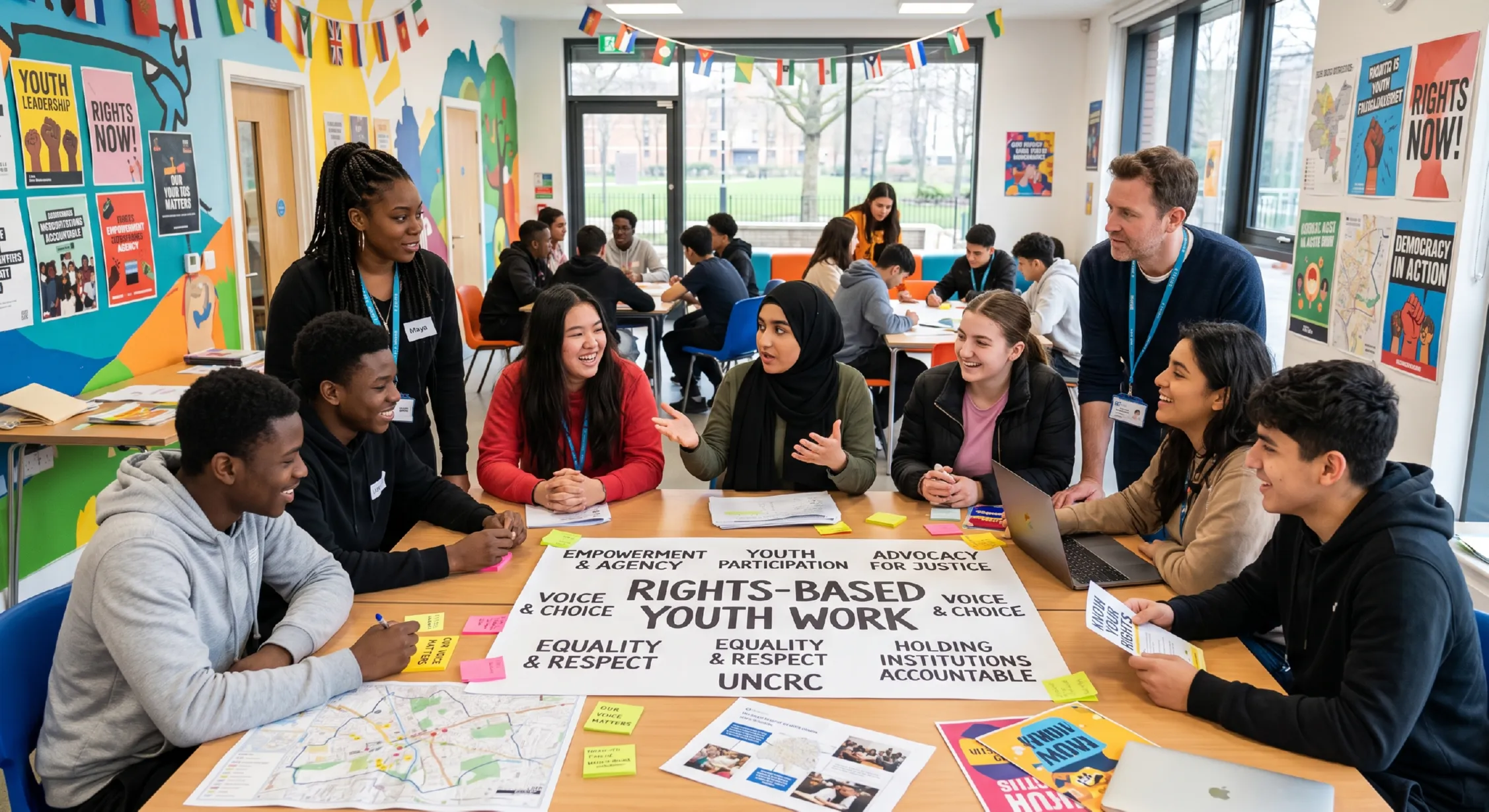
Rights-based youth work directly disrupts this paradigm. Grounded in the principles of human rights, international conventions, and informal education, a human rights-based approach positions young people not as passive beneficiaries of adult benevolence, but as active rights-holders. Concurrently, practitioners, local authorities, and institutions are understood not merely as service providers, but as duty-bearers with clear ethical, professional, and legal responsibilities to respect, protect, and fulfil those rights.
This comprehensive guide explores the theoretical foundations, international frameworks, operational models, and day-to-day methodologies that define authentic rights-based youth work.
Defining Rights-Based Youth Work
At its core, rights-based youth work is both an ideological stance and an applied practice model. It merges the relational, voluntary, and educational tenets of youth work with the legal and moral principles codified in international human rights instruments.
In traditional welfare regimes, support is frequently conditional or contingent upon “compliance,” “good behaviour,” or demonstrable distress. A rights-based methodology asserts that dignity, safety, expression, and developmental opportunities are inherent entitlements belonging to every young person by virtue of their humanity.
By restructuring the practitioner-participant dynamic, rights-based youth work operationalises critical consciousness (Freire, 1970). It creates spaces where young people interrogate the socio-political structures impacting their communities, recognise systemic inequities, and collectively organise to secure their entitlements.
Foundational Frameworks: The UNCRC and PANEL Principles
Authentic rights-based practice does not exist in an ethical vacuum; it is anchored in established international conventions and human rights operational frameworks.
The United Nations Convention on the Rights of the Child (UNCRC)
Adopted by the United Nations General Assembly in 1989 and ratified by the UK in 1991, the UNCRC represents the most complete statement of children’s civil, political, economic, social, and cultural rights in history. While applicable to individuals under 18, its tenets underpin broader youth work practice across the transition into adulthood.
Four core general principles govern the implementation of the UNCRC:
- Article 2 (Non-Discrimination): Rights apply equally to all young people, irrespective of race, colour, sex, language, religion, political opinion, national or social origin, property, disability, or birth status.
- Article 3 (Best Interests of the Child): In all actions concerning children and young people, whether undertaken by public or private social welfare institutions, courts of law, or administrative authorities, the best interests of the young person must be a primary consideration.
- Article 6 (Survival and Development): Recognition of the inherent right to life, accompanied by the duty-bearer’s obligation to ensure the maximum extent possible the survival and holistic development (physical, mental, spiritual, moral, and social) of the young person.
- Article 12 (Respect for the Views of the Child): The right of young people capable of forming their own views to express those views freely in all matters affecting them, with those views being given due weight in accordance with age and maturity.
In rights-based youth work, Article 12 is frequently highlighted, but it cannot be isolated from civil freedoms such as Article 13 (Freedom of Expression), Article 14 (Freedom of Thought, Conscience, and Religion), and Article 15 (Freedom of Association and Peaceful Assembly).
The PANEL Principles
To make human rights applicable to front-line service design, the Scottish Human Rights Commission and international developmental bodies standardise practice through the PANEL principles:
| Principle | Meaning in Youth Work Context |
| Participation | Young people must participate in all decisions affecting their lives. Participation is not a consultative tick-box, but an active, shared-governance dynamic. |
| Accountability | Organisations and individual practitioners are accountable to young people as duty-bearers. Transparent processes must exist for feedback, challenge, and redress. |
| Non-Discrimination | Youth work projects must proactively remove structural, cultural, physical, and financial barriers to guarantee equitable access for minoritised groups. |
| Empowerment | Interventions must develop the capacities, knowledge, and self-advocacy skills of young people so they can claim their rights independently. |
| Legality | Policies, programmatic decisions, and organisational frameworks must explicitly align with human rights legislation and statutory obligations. |
Models of Participation: Moving Beyond Tokenism
Participation is the operational engine of rights-based youth work. However, the term “youth voice” is frequently co-opted into performative exercises where young people are invited into adult spaces without genuine power or agency.
To maintain methodological integrity, youth workers utilise critical participation models to audit and enhance their delivery.
Hart’s Ladder of Children’s Participation
Roger Hart’s (1992) seminal model identifies eight rungs of participation. The bottom three rungs describe non-participation, while the top five outline degrees of genuine engagement:
- Rung 1: Manipulation: Adults use young people’s presence to advocate an adult agenda without the young person understanding the issues.
- Rung 2: Decoration: Young people participate in public events (e.g., wearing campaign t-shirts, performing on stage) without planning involvement or structural impact.
- Rung 3: Tokenism: Young people are given a prominent voice, but with zero choice about the subject or forum, and with negligible opportunity to formulate their own opinions.
- Rungs 4–8 (Genuine Participation): Progressing from informed participation up to initiatives originated by young people where decision-making power is shared collaboratively with adults on equal terms.
The Lundy Model of Child Participation
Developed by Professor Laura Lundy (2007) to unpack the legal obligations of UNCRC Article 12, the Lundy Model provides a modern, robust framework for human rights practitioners. It conceptualises participation through four non-negotiable, chronological quadrants:
- Space: Young people must be provided with safe, accessible, and inclusive environments where they can express their authentic thoughts without fear of rebuke, discipline, or social pressure.
- Voice: Expression is not natural without accessibility. Workers must facilitate varied modalities—including visual arts, drama, peer discussion, and digital channels—alongside providing digestible background information so young people can form considered perspectives.
- Audience: The view must be listened to directly by an identifiable individual or panel holding decision-making power. Voice without a structural audience is an empty exercise.
- Influence: Views must be given “due weight”. Where recommendations cannot be implemented due to legal or financial constraints, practitioners owe young people absolute transparency, offering written or verbal feedback explaining why the decision was taken and how their input informed the deliberation.
Operationalising Rights-Based Youth Work: Daily Practice
Transitioning from abstract human rights legal concepts to face-to-face practice in youth centres, schools, and detached street settings requires deliberate pedagogical translation.
Voluntary Engagement as a Precondition of Dignity
Unlike statutory educational settings where attendance is mandated by law, the defining hallmark of youth work is voluntary engagement (Davies, 1999; Ord, 2016). In a rights-based context, voluntary engagement is the physical embodiment of autonomy (Article 12 and Article 15). When a young person exercises their prerogative to enter, stay in, or walk away from an interaction, power begins with them.
Practitioners respect this boundary by:
- Negotiating relational contracts rather than imposing institutional behaviour policies.
- Respecting silence, disinterest, or refusal to participate without administering punitive sanctions.
- Ensuring that group activities, developmental programmes, and discussions operate with continuous, informed assent.
Informal Education and Critical Pedagogy
Rights-based youth work relies heavily on informal education—learning that takes place through conversation, shared activity, and reflection, rather than predetermined curricula (Jeffs & Smith, 2010).
When a young person expresses anger over local policing tactics, lack of mental health provision, or housing instability, the rights-based worker does not pathologise their emotional response. Instead, the practitioner uses dialogue to connect the individual experience to broader societal systems:
- Which rights are being compromised in this situation?
- Who is the duty-bearer responsible for upholding this right?
- What structural mechanisms exist for challenge, advocacy, or collective action?
Through this approach, individual frustration transforms into civic literacy, critical analysis, and collective empowerment.
Relational Safeguarding Within a Rights Framework
A common misconception is that human rights-based approaches conflict with safeguarding and child protection duties. In practice, they are fundamentally complementary. Article 19 of the UNCRC mandates state protection from violence, abuse, and neglect, while Article 3 requires prioritising best interests.
A rights-respecting approach rejects covert, punitive, or surveillance-based child protection mechanisms. Instead, it adopts relational safeguarding:
- Transparency: Workers are open with young people about safeguarding thresholds and mandatory reporting limits before deep disclosures happen.
- Co-Production of Safety: When a child protection referral is necessary, the worker involves the young person in the process, inviting them to read drafts, contribute their thoughts, and state what outcome they desire, preserving dignity and trust during moments of acute crisis.
Overcoming Sector Challenges and Institutional Resistance
Embedding rights-based practice across statutory and third-sector youth services presents significant systemic challenges.
The Friction Between “Needs” and “Rights”
Many grant bodies and statutory funders operate on deficit models, requiring youth services to measure outputs based on problem alleviation (e.g., “reduction in antisocial behaviour,” “truancy mitigation,” or “substance misuse prevention”).
Focusing solely on “needs” positions young people as broken entities dependent on external remediation. Rights-based workers counter this tension by:
- Reframing Monitoring Frameworks: Describing progress through the acquisition of rights-literacy, democratic participation milestones, and self-advocacy capacity.
- Educating Stakeholders: Actively challenging funders and multi-agency partners to recognize that social justice outcomes are sustainable when young people hold the power to shape their own environments.
Adult Hegemony and Institutional Bureaucracy
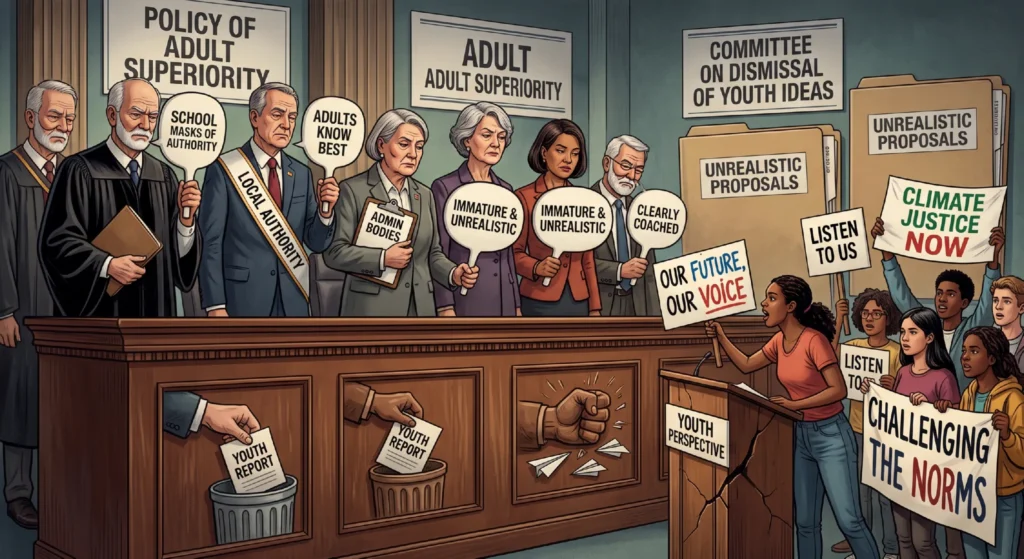
Adult hegemony—the institutional belief that adults always know what is best for young people—permeates schools, local authorities, and administrative bodies. When young people express perspectives that challenge political norms or organisational priorities, their views are often dismissed as “immature,” “unrealistic,” or “coached.”
Overcoming this requires youth organisations to formalise participation mechanisms. Informal consultation groups must be replaced by co-designed governance structures, seat allocations on management boards, and transparent accountability loops that require senior managers to explain policy decisions directly to youth cohorts.
Practical Implementation: A Step-by-Step Practitioner Framework
To integrate rights-based principles across programmes, youth services can implement this five-stage developmental model:
- Baseline Rights Audit: Conduct a participatory review of the current service alongside young people. Examine organisational policies, code of conducts, intake procedures, and physical premises against the UNCRC articles.
- Co-Design of Physical and Relational Space: Facilitate collaborative workshops where young people dictate the ground rules, safety agreements, and aesthetic design of the youth environment, establishing ownership over the physical space.
- Developing Multi-Modal Expression Channels: Build creative pathways for dialogue. Ensure non-verbal communicators, neurodivergent participants, and English-as-an-additional-language (EAL) individuals possess accessible platforms to share their priorities.
- Establishing Formal Accountability Loops: Create a concrete mechanism (e.g., a “You Said, We Did, Here’s Why” board or an open governance forum) where organizational leadership regularly answers to the youth cohort regarding programme changes and budget allocations.
- Evaluation of Transformative Impact: Assess interventions not merely by counting attendance, but by evaluating changes in agency, systemic awareness, self-advocacy, and community influence.
Conclusion: The Transformative Imperative
Rights-based youth work is not a specialized sub-discipline or a programmatic module to be completed during an annual campaign. It is an enduring professional and philosophical commitment. By reorienting practice around human rights, youth workers affirm that young people are not incomplete beings waiting for adulthood to earn respect, voice, and autonomy.
They are citizens today. When youth work systematically embraces young people as rights-holders and holds institutions accountable as duty-bearers, it steps into its true historical role: a powerful vehicle for informal learning, personal liberation, and social change.
Frequently Asked Questions (FAQ)
What is the core difference between needs-based and rights-based youth work?
Needs-based youth work views young people through the lens of deficits, problems, or vulnerabilities that require professional intervention and charitable support. Conversely, rights-based youth work recognizes young people as full human beings entitled to fundamental rights under international law. In a rights-based model, participation, dignity, and access to resources are moral and legal entitlements rather than gifts bestowed by adults.
How does UNCRC Article 12 apply to everyday youth work?
Article 12 establishes that young people have the right to freely express their opinions on all matters affecting them, and that their views must be given due weight in accordance with their age and maturity. In daily youth work, this means involving young people in program design, budget choices, policy creation, and center governance, ensuring their voices directly shape organizational operations.
Does a rights-based approach weaken safeguarding responsibilities?
No. Rights-based youth work strengthens safeguarding. The UNCRC explicitly protects young people from abuse, neglect, and harm (Articles 19 and 34). Rather than using surveillance and unilateral adult control, rights-based safeguarding emphasizes transparency, relational trust, and co-producing safety plans alongside young people whenever possible.
Which participation model is best suited for rights-based practice?
While Roger Hart’s Ladder of Participation remains foundational for identifying tokenistic traps, the Lundy Model is widely regarded as the most legally aligned operational framework. By focusing on Space, Voice, Audience, and Influence, the Lundy Model ensures youth participation moves beyond superficial consultations to achieve tangible impact on decision-making.
References
- Davies, B. (1999) From Voluntaryism to Welfare State: A History of the Youth Service in England. Leicester: Youth Work Press. Available via: ERIC Educational Resources Information Center (ED441094).
- Freire, P. (1970) Pedagogy of the Oppressed. New York: Continuum. Available via: Bloomsbury Academic.
- Hart, R. A. (1992) Children’s Participation: From Tokenism to Citizenship. Innocenti Essay No. 4. Florence: UNICEF International Child Development Centre. Available via: UNICEF Innocenti Publications.
- Jeffs, T. and Smith, M. K. (2010) Youth Work Practice. London: Palgrave Macmillan. Available via: SpringerLink / Palgrave.
- Lundy, L. (2007) ‘”Voice” is not enough: conceptualising Article 12 of the United Nations Convention on the Rights of the Child’, British Educational Research Journal, 33(6), pp. 927–942. Available via: Wiley Online Library DOI: 10.1080/01411920701657033.
- Ord, J. (2016) Youth Work Process, Product and Practice: Marking the Difference. 2nd edn. London: Routledge. Available via: Routledge Taylor & Francis Group.
- United Nations (1989) Convention on the Rights of the Child. Treaty Series, 1577. New York: United Nations. Full treaty text available via: UN Office of the High Commissioner for Human Rights (OHCHR).