

Please Enter Your Email ID
Table of Contents
What is Unresolved Trauma in Children?
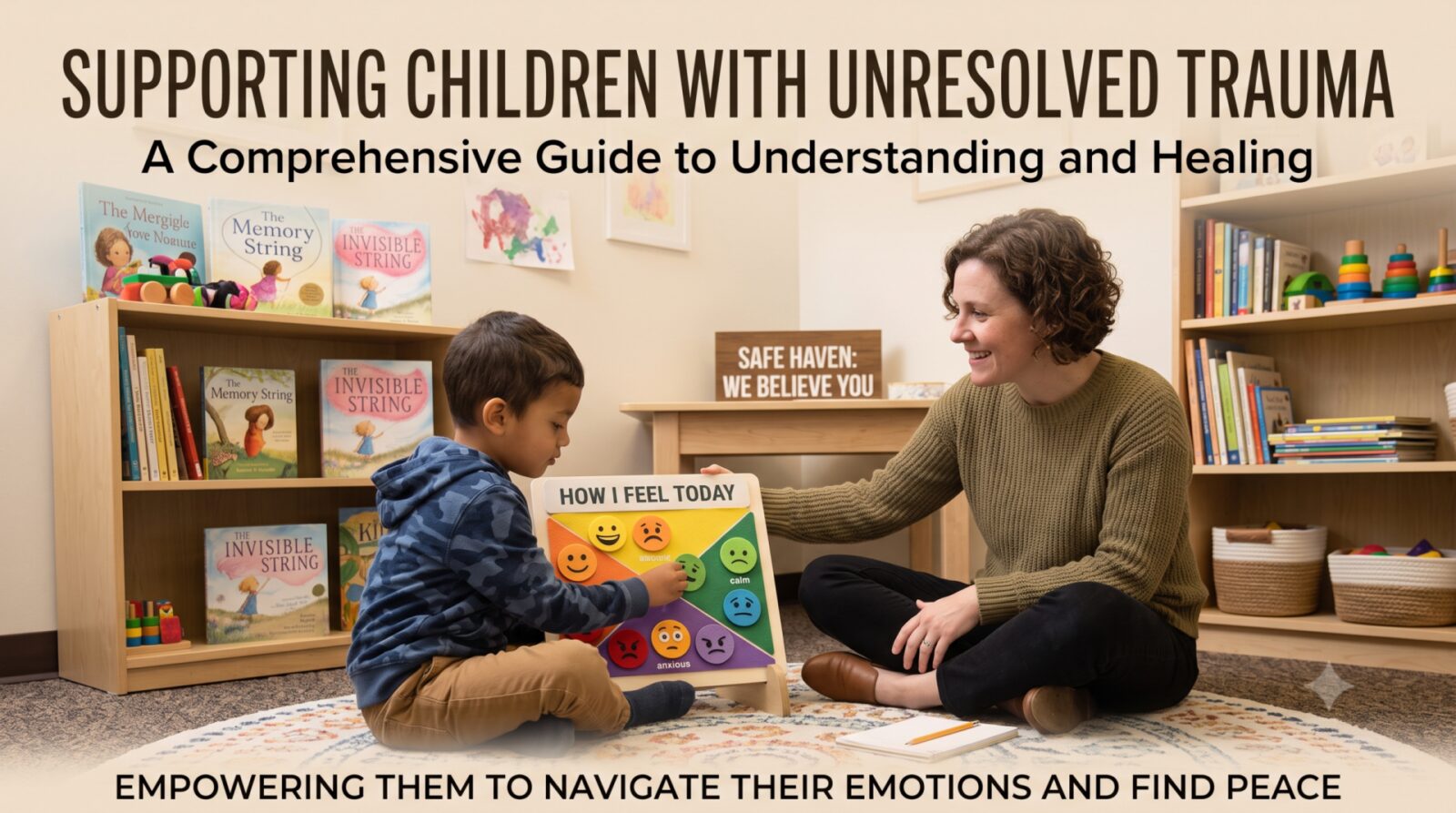
Unresolved trauma in children is a silent force which is often hidden in plain sight and expressed through behaviours that challenge, confuse, or concern adults. What may appear as defiance or avoidance is often the echo of past harm. This guide explores how we can recognise and support children affected by trauma, even when they cannot put their pain into words.
Unresolved trauma refers to adverse childhood experiences that have not been processed or integrated, and may be unknown even to the child. These experiences can leave a profound imprint on a child’s development, health, relationships, and learning potential.
Trauma-informed practice is not about fixing children, it’s about seeing them differently, responding with compassion, and creating conditions for healing. This article explores the origins of unresolved trauma, its behavioural and emotional manifestations, and how adults, whether parents, educators, youth workers, or clinicians, can provide safe, reparative relationships that promote recovery.
How Trauma Affects Children’s Development
What is Trauma?
Psychological trauma refers to a deeply distressing or disturbing experience that overwhelms an individual’s capacity to cope. Unresolved trauma in children can include abuse, neglect, loss, separation, domestic violence, medical trauma, or witnessing harm. Importantly, trauma is not defined solely by the event, but by the child’s perception of threat and their internal resources at the time (Van der Kolk, 2014).
A group of children might experience or witness the same event/traumatic incident and each be affected differently. How they are affected will largely depend on their life experiences, support systems and level of resilience that has been developed prior.
When Trauma Remains Unresolved
Trauma is “unresolved” when it has not been adequately processed through supportive relationships, therapeutic intervention, or developmental maturation. This may be because:
- The trauma occurred before the child had language (preverbal trauma)
- The child was too frightened, ashamed, or confused to speak about it
- Adults in the child’s life failed to recognise or respond
- The child dissociated or fragmented the memory as a coping mechanism
Over time, unresolved trauma in children may become buried in the subconscious, but its effects emerge through the body and behaviour.
Signs and Symptoms of Unresolved Childhood Trauma
As Van der Kolk (2014) powerfully outlines, trauma leaves its imprint on the body and brain. The stress response system which is designed to detect and respond to threat becomes hypersensitive, especially in children exposed to repeated or prolonged adversity. This can result in:
- A chronically activated fight-flight-freeze response
- Overproduction of stress hormones like cortisol and adrenaline
- Reduced activity in areas responsible for reflection and self-regulation
Even without conscious memory, the body remembers. A sound, smell, or facial expression may trigger survival responses long after the danger has passed.
Children may Communicate through Behaviour
When words fail, behaviour speaks. Children with unresolved trauma may:
- Lash out or become aggressive (fight)
- Run away or hide (flight)
- Shut down, withdraw, or dissociate (freeze)
- Appear compliant but disconnected (fawn)
These behaviours are not signs of badness or brokenness, they are signs of distress. As Perry (2006) states, “All behaviour is communication.”
Impact on Learning and Development
Unresolved trauma in children can often present as:
- Difficulty concentrating and retaining information
- Poor impulse control and emotional dysregulation
- Social difficulties and mistrust
- Delayed language or cognitive development
- Low self-esteem and shame
Schools and services that do not understand these signs risk misdiagnosing trauma as ADHD, oppositional behaviour, or conduct disorder (Fava, Hemnani & Manzi, 2024).
Why Childhood Trauma Remains Unresolved or Suppressed
Preverbal and Developmental Trauma
Trauma occurring in infancy or early childhood, before the development of narrative memory is stored somatically rather than verbally. Babies and toddlers exposed to abuse, neglect, or frightening experiences may not “remember” in words, but their bodies retain the emotional residue.
Dissociation as a Coping Mechanism
Children may unconsciously suppress memories that are too painful or terrifying to hold. Dissociation allows a child to psychologically escape when physical escape is not possible (Van der Hart et al., 2006). This often leads to fragmented memory, identity confusion, or emotional numbing.
Societal and Family Silence
Children may grow up in environments where trauma is normalised, minimised, or denied. They may receive unspoken messages that it is not safe to speak about their experiences. Some children even internalise blame, believing the trauma was their fault.
The Role of Attachment in Healing Unresolved Trauma in Children
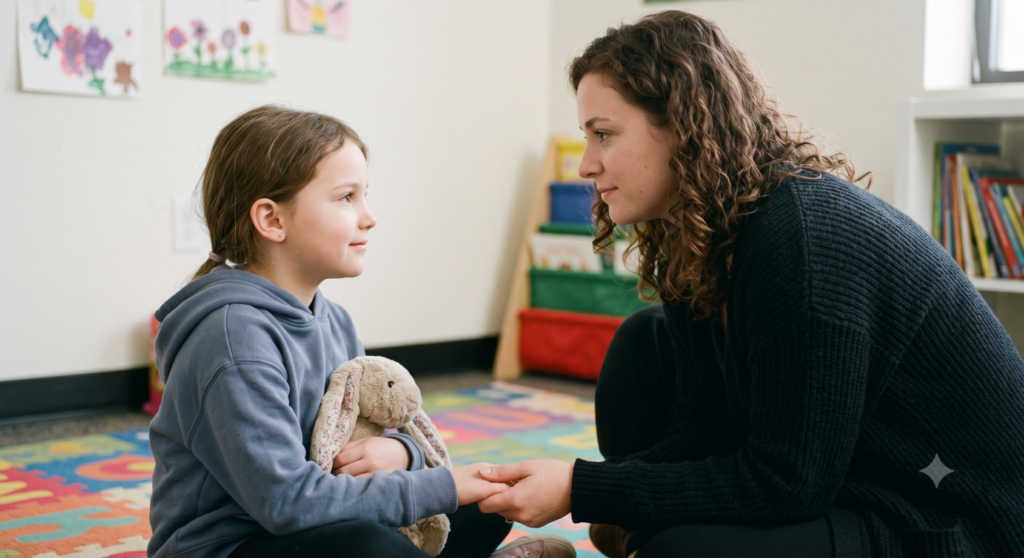
Bowlby’s Attachment theory teaches us that children’s early relationships shape their sense of self, safety, and others. When trauma disrupts care giving relationships, children may develop insecure or disorganised attachment patterns, these can be marked by ambivalence, fear, or avoidance.
According to Hughes (2011), healing from trauma begins in relationships. Children need attuned, consistent, emotionally available adults to rebuild trust and regulation.
“When children have experienced trauma, the relationship is the intervention.” — Bruce Perry
Attunement and Co-Regulation
Co-regulation is the process by which an adult helps a child to calm their nervous system through presence, empathy, and predictability. To help overcome unresolved trauma in children you might adapt:
- Using a calm tone of voice and body language
- Validating the child’s feelings without judgement
- Naming emotions and helping the child make sense of them
- Providing safe boundaries and consistency
Over time, these relational experiences become internalised, helping the child develop self-regulation and resilience.
Trauma-Informed Strategies for Parents and Educators
Safety First: Physical, Emotional, and Relational
Bath (2008) outlines three pillars of trauma-informed care: safety, connection, and regulation. Safety must come first. For children, this means:
- Predictable routines and clear expectations
- Low-arousal environments free from chaos and threat
- Adults who are calm, consistent, and non-punitive
- Opportunities to repair when ruptures occur
Children cannot learn or engage until they feel safe and therefore providing physical, emotional and relational safety is a key aspect of helping children to heal from trauma.
Understanding the Neurobiology of Behaviour
Trauma-informed adults know that dysregulated behaviour is not defiance, it’s communication due to stress. A child acting out may be stuck in “fight mode.” A child staring blankly may be frozen in shutdown.
Porges’ Polyvagal Theory (2011) explains how the vagus nerve influences whether a child is in a state of safety, mobilisation (fight/flight), or collapse (freeze). Understanding this helps us respond with compassion rather than punishment and in turn support the unresolved trauma in children in a way that reduces the risks of retraumatization.
Curiosity Over Control
Adopting a stance of curiosity allows adults to ask:
- “What is this behaviour trying to tell me?”
- “What unmet need might be driving it?”
- “How can I create connection in this moment?”
Replacing judgement with empathy opens the door to relational repair and growth.
Regulation Strategies
Adults need to support children in learning how to regulate their own nervous system as a calm nervous system will open the door for healing from unresolved trauma. Some effective approaches include:
- Movement and sensory activities (trampolining, fidget tools, weighted blankets)
- Creative outlets (art, music, drama)
- Nature-based play and grounding activities
- Mindfulness and breathing techniques (adapted for developmental level)
It’s important not to expect children to use these independently until they’ve had repeated co-regulation experiences.
Therapeutic and Multidisciplinary Support
Some children with complex trauma histories will need access to therapeutic interventions, including:
- Play therapy
- Dyadic developmental psychotherapy (DDP)
- Art or music therapy
- Cognitive-behavioural therapy (CBT) adapted for trauma
- EMDR (for older children)
Referral pathways should be clear and collaborative. Professionals should avoid pathologizing or medicalising trauma symptoms without first exploring the child’s life story.
Building Trauma-Informed Classrooms and Homes
Schools, alternative provisions, and youth services are often on the frontline of trauma exposure. Becoming trauma-informed means moving from behaviour management to relational safety. Key strategies include:
- Whole-staff training in trauma, attachment, and regulation
- Emotionally available adults assigned to vulnerable children
- Exclusion used only as a last resort
- Restorative approaches and relational repair
- Mental health support integrated with pastoral care
Supporting the Adults
Working with trauma-affected children is emotionally demanding. Adults need space to reflect, process, and regulate too. Supervision, training, and trauma-informed leadership are critical to sustaining this work.
Final Reflections: Seeing Beyond the Behaviour
Children with unresolved trauma do not need to be “fixed.” They need to be understood. The question is not “What’s wrong with this child?” but “What’s happened to them—and how can I help?”
By shifting our perspective, slowing down, and offering relational safety, we create conditions in which trauma can be healed—not through punishment or pressure, but through presence, patience, and connection.
We may never know the full story behind a child’s trauma. But by being the safe adult they didn’t have before, we become part of the story of their healing.
Reflect and Act
For professionals: “What is one policy or practice in your setting that could become more trauma-informed this term?”
For parents: “How might you bring more connection into moments of conflict?”
The good news is that healing is possible and it often begins with the smallest of things: a warm glance, a calm voice, a safe space. You don’t need to have all the answers. You just need to show up, stay curious, and offer what trauma once stole: safety, connection, and hope.
What are the main signs of unresolved trauma in children?
A. Unresolved trauma in children often presents as challenging or confusing behaviours rather than verbal complaints. Common signs include chronic emotional dysregulation (frequent outbursts or sudden withdrawal), difficulty concentrating in school, persistent sleep disturbances, hypervigilance (being easily startled or constantly on guard), and extreme separation anxiety. Because trauma affects the nervous system, children may also experience somatic symptoms such as unexplained stomach aches or headaches.
How does unresolved trauma affect a child’s learning and behaviour in school?
A. Unresolved trauma keeps a child’s brain in a constant state of survival (the fight, flight, freeze, or fawn response). When a child is hyper-focused on threat detection, the prefrontal cortex—the area responsible for concentration, memory, emotional regulation, and executive functioning—becomes under active. In the classroom, this often looks like poor impulse control, difficulty retaining information, social withdrawal, or sudden aggressive reactions to minor changes in routine.
What is the difference between childhood trauma responses and ADHD?
A. While childhood trauma responses and Attention Deficit Hyperactivity Disorder (ADHD) can share overlapping symptoms—such as restlessness, impulsivity, and difficulty paying attention—their underlying causes are different. ADHD is a neurodevelopmental condition involving executive function deficits, whereas trauma responses stem from a chronically activated stress response system. Misdiagnosing trauma as ADHD can lead to interventions that address external behaviour rather than the child’s underlying need for relational safety and emotional regulation.
How can adults use co-regulation to support a dysregulated child?
A. Co-regulation is the process where a calm, emotionally stable adult helps a child soothe their activated nervous system through presence, empathy, and predictability. Instead of reacting with punishment or immediate demands, an adult can co-regulate by maintaining a low, calm voice tone, offering a safe physical space, validating the child’s feelings without judgement, and engaging in rhythmic sensory activities (such as slow breathing or gentle movement). Over time, repeated co-regulation experiences help children build self-regulation skills.
- Bath, H. (2008). The three pillars of trauma-informed care: Safety, connection, and emotional regulation. Reclaiming Children and Youth, 17(3), 17–21. Read on ResearchGate
- Bloom, S. L. (1994). Creating Sanctuary: Toward the Evolution of Sane Societies. Routledge. View on Google Books
- Fava, C., Hemnani, K., & Manzi, S. (2024). Assessing ADHD when there is a history of trauma in children in care – a dimensional rather than categorical approach. Child & Family Clinical Psychology Review, 9(1), 42–47. Find on Google Scholar
- Hughes, D. A. (2011). Attachment-Focused Family Therapy. W. W. Norton & Company. View at W. W. Norton
- Perry, B. D. (2006). The Boy Who Was Raised as a Dog: And Other Stories from a Child Psychiatrist’s Notebook. Basic Books. View at Hachette Book Group
- Perry, B. D., & Szalavitz, M. (2017). The Boy Who Was Raised as a Dog (2nd ed.). Basic Books. View on Google Books
- Porges, S. W. (2011). The Polyvagal Theory: Neurophysiological Foundations of Emotions, Attachment, Communication, and Self-regulation. W. W. Norton & Company. View at W. W. Norton
- Van der Hart, O., Nijenhuis, E. R. S., & Steele, K. (2006). The Haunted Self: Structural Dissociation and the Treatment of Chronic Traumatization. W. W. Norton & Company. View at W. W. Norton
- Van der Kolk, B. A. (2014). The Body Keeps the Score: Brain, Mind, and Body in the Healing of Trauma. Viking. View at Penguin Random House