

Please Enter Your Email ID
Table of Contents
Why Trauma-Informed Care Training Matters for Schools and Practitioners
Trauma can have a profound and lasting impact on individuals, especially children and young people. As awareness grows, many professionals, educators, and caregivers are seeking ways to adopt a trauma-informed approach in their work.
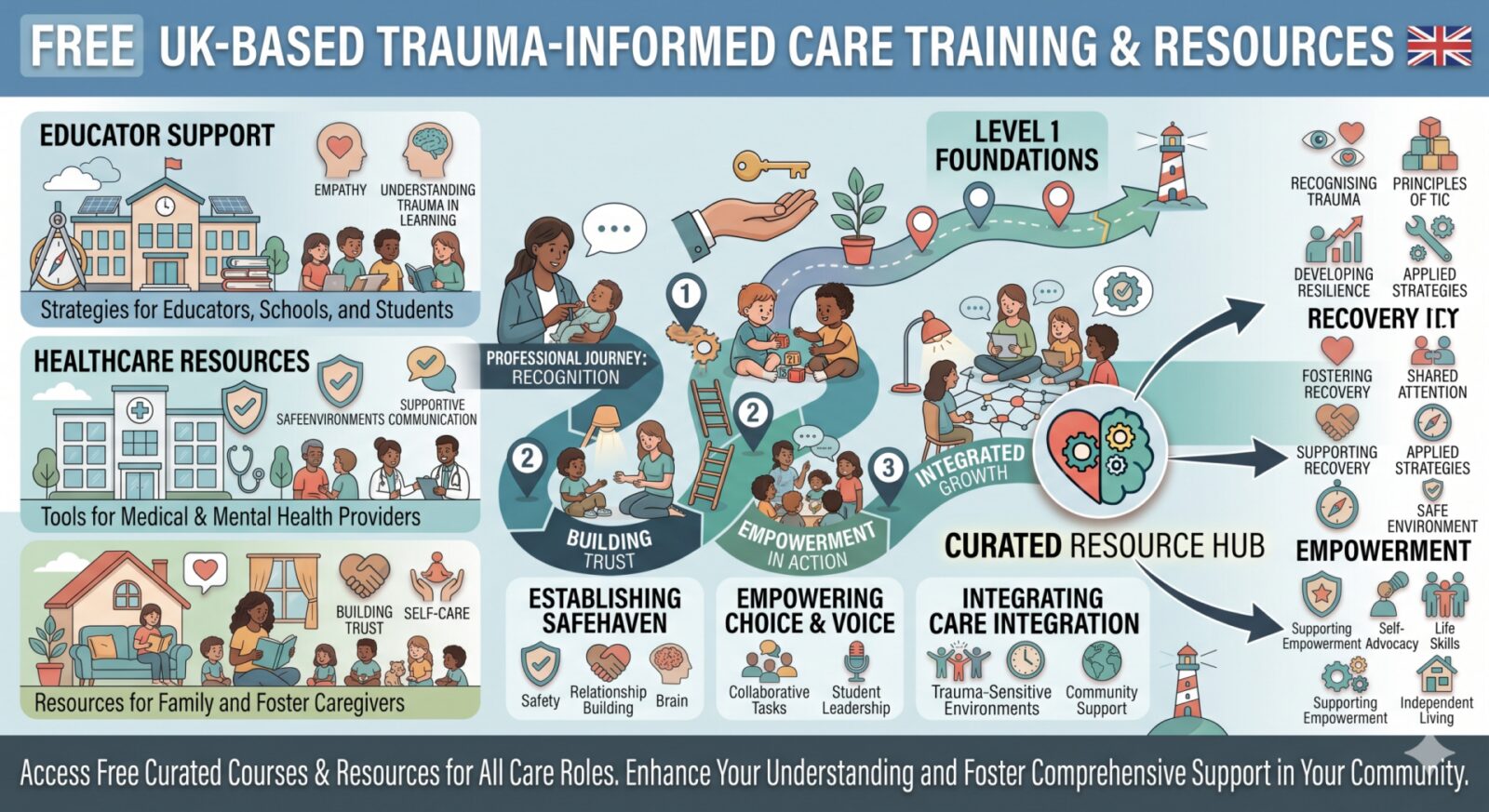
Whether you’re in education, healthcare, social care, or community services, understanding the principles of trauma-informed care is essential. This guide brings together some of the best free trauma-informed care training courses and resources available in the UK and internationally — helping you build skills, deepen understanding, and create safer, more supportive environments for those affected by trauma.
Trauma-informed care is an approach that recognises the widespread impact of trauma and integrates this understanding into practice. It aims to create safe, supportive environments that promote healing and empowerment for children, young people, and adults affected by trauma.
Trauma-informed care is essential in creating supportive environments for children and young people affected by trauma. This compilation offers free training courses and resources to equip professionals and caregivers with the necessary skills and knowledge.

Recommended Trauma-Informed Care Training Programs (UK)
Thrive LDN: The Gift of Reconnection: Trauma-Informed Practice training
Thrive LDN has partnered with Nicola Lester Psychological Trauma Consultancy to offer free, pre-recorded trauma-informed practice training to support individuals and organisations.
The Trauma Toolbox Online Certification
The Trauma Toolbox offers an online certification program with a range of resources designed to enhance trauma-informed practice for professionals across sectors.
MVRP: Trauma Informed Training
Merseyside’s Violence Reduction Partnership runs trauma informed training focused on supporting public sector organisations to understand how psychological trauma can impact individuals and ensure they consider the implications for their services.
Supporting children’s mental health and wellbeing
Start this free course now. Just create an account and sign in. Enrol and complete the course for a free statement of participation or digital badge if available.
Alison Free Online Trauma Courses
Alison’s free online trauma courses cover symptoms, diagnosis, and treatment of psychological trauma. Ideal for those looking to deepen their understanding of trauma and its impact.
Essential Trauma-Informed Care Resources & Toolkits
UK Trauma Council
Resources to support individuals and organisations working to nurture and protect children and young people following trauma. You will find articles, animations, videos, guidance, handouts, presentations and more — all created by the UK’s leading childhood trauma experts.
Research in Practice: Trauma
A trauma can be defined as a physical or emotional experience that has had an adverse impact on an adult, child or young person’s wellbeing. The effects of trauma may not always be significant or long-lasting. However, for some the impact stays with them throughout the life course. Trauma-informed approaches should be strengths-based and require practitioners to have an understanding of, and responsiveness to, the causes and effects of trauma.
Trauma Informed Lancashire
We have a range of resources available to support you on your trauma informed journey. Be sure to check back as our resources library grows and contact us if there are resources you would like to see included.
National Trauma Transformation Programme
The National Trauma Transformation Programme (NTTP) is funded by the Scottish Government and delivered in partnership with COSLA, NHS Education for Scotland (NES), the Improvement Service (IS) and the Resilience Learning Partnership (RLP).
National Child Traumatic Stress Network
NCTSN.org is a resource for the public, professionals, and others who care about children and are concerned about child traumatic stress.
Addressing trauma and adversity
We all face challenging situations during our childhood which is a normal part of growing up. However, some children grow up in environments and experiences that they are unable to cope with, which can have a long-lasting effect on their development, learning, health, and behaviour. These resources help you support those children and young people.
ACEs Aware: Trauma-Informed Care
Trauma-informed care recognises and responds to the signs, symptoms, and risks of trauma to better support the health needs of patients who have experienced Adverse Childhood Experiences (ACEs) and toxic stress.
By exploring these free trauma-informed care training courses and resources, you’re taking an important step toward embedding trauma-aware practices into your professional role. Whether you work in education, health, social care, or with families and communities, adopting a trauma-informed approach can make a meaningful difference in the lives of those you support. For more insights on trauma, safeguarding, and child development, browse our related articles below.
Frequently Asked Questions
Q1: What does trauma-informed care training cover?
A: Trauma-informed care training provides practitioners with an understanding of how adverse childhood experiences (ACEs) and relational trauma impact brain development, attachment, and behaviour. It teaches practical de-escalation strategies, emotional safety mapping, and methods to avoid re-traumatisation in educational and care settings.
Q2: Who should undertake trauma-informed practice training?
A: Training is essential for anyone working directly with children and young people, including teachers, Designated Safeguarding Leads (DSLs), pastoral support staff, social workers, foster carers, and youth workers.
Q3: What are some essential trauma-informed resources for schools?
A: Key resources include co-regulation toolkits, emotional check-in charts, trauma-informed safety plan booklets, staff vicarious trauma self-care guides, and relational behaviour policies that prioritise connection over punitive measures.