


Please Enter Your Email ID
Table of Contents
Social work practice never occurs in a vacuum and must be underpinned by social work theories and methods. Every assessment undertaken, every safeguarding threshold weighed, and every direct intervention delivered rests upon an underlying explanatory framework. When frontline practitioners work with vulnerable children and families navigating complex hardship, trauma, or systemic disadvantage, theory serves not as an academic luxury, but as an indispensable navigational compass. Without rigorous theoretical anchoring, practice risks collapsing into reactive proceduralism, institutional bias, or unexamined intuition.
Theory explains why circumstances occur, methods provide the blueprint for how to intervene, and values govern the ethical boundaries within which those interventions take place. Integrating these three elements allows social care professionals and school pastoral leaders to move beyond managing immediate symptoms and address root causes.
This guide provides an introduction to core social work theoretical frameworks, examining their epistemological roots, practical methods, and real-world application in child and family practice.
Bridging Social Work Theory, Models, and Methods: The Conceptual Continuum
Before examining specific frameworks, it is essential to distinguish between practice models, social work theories and methods.
- Formal Theories (Why it happens): Conceptual frameworks that explain human behaviour, neurobiology, social structures, and relationship formation. They help practitioners make sense of a child’s presentation or family dynamics (e.g., Bronfenbrenner’s Ecological Systems Theory or Bowlby’s Attachment Theory).
- Practice Models (How to organise the intervention): Systematic approaches that translate explanatory theories into structured assessment principles (e.g., Anti-Oppressive Practice, the Signs of Safety model, or Task-Centred practice).
- Practice Methods (Concrete techniques): Specific, tangible interventions and tools deployed during direct work (e.g., genograms, narrative life-story work, or motivational interviewing).
Applying an evidence-informed approach requires reflexivity: continuously testing whether a selected framework accurately illuminates the lived experience of the family, or whether it imposes a rigid lens that obscures unique cultural, structural, or relational realities.
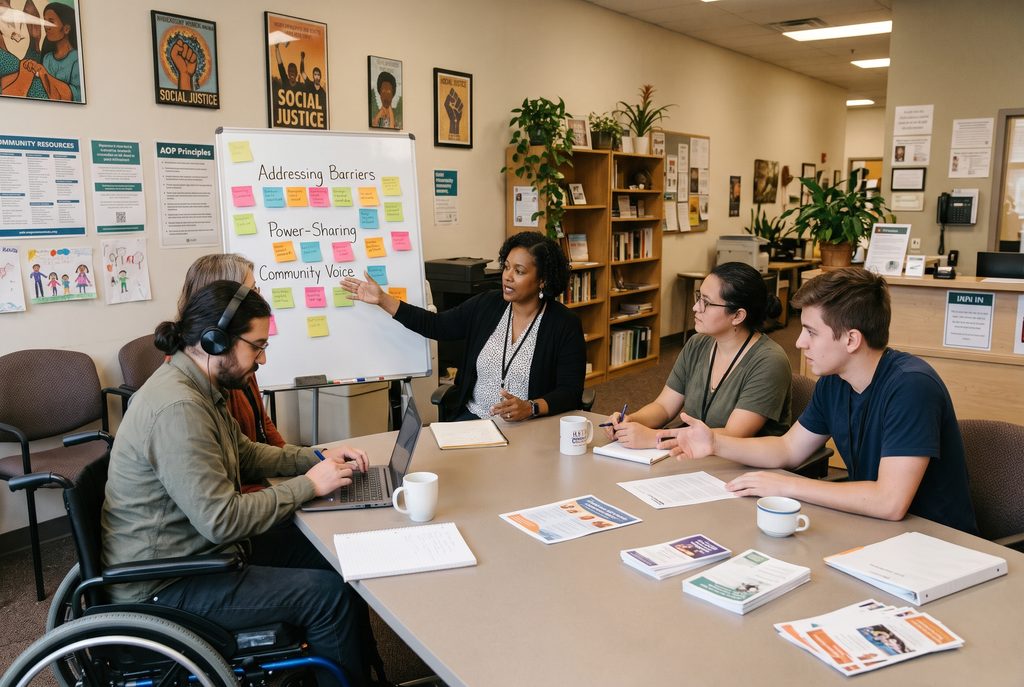
Anti-Oppressive Practice (AOP) and Critical Theory
Theoretical Foundations
Anti-Oppressive Practice emerged directly from critical social theory, feminist critique, and radical social work movements (Dominelli, 2002; Mullaly, 2007). Anti-Oppressive Practice posits that individual suffering, family distress, and parental struggles cannot be understood purely as psychological deficits or personal moral failures. Instead, they are deeply mediated by pervasive, intersecting structural oppressions: poverty, racism, patriarchy, disablism, class stratification, and adultism.
Anti-Oppressive Practice operationalises the concept of intersectionality, originally coined by Kimberlé Crenshaw (1989), recognising that systems of oppression do not operate independently. A lone mother navigating domestic abuse, racial minoritisation, and extreme material deprivation experiences compounding structural pressures that single-axis models fail to capture.
Neil Thompson’s widely utilised PCS Analysis Model (Thompson, 2016) conceptualises how discrimination functions across three continuous tiers:
- P (Personal): Individual thoughts, attitudes, personal biases, and face-to-face language used by practitioners.
- C (Cultural): Shared professional and social norms, assumptions of what constitutes ‘good parenting’, and institutional language that pathologises non-dominant cultures.
- S (Structural): Macro-level policies, legislative frameworks, economic resource distributions, and systemic institutional power.
Methods in Practice
In child and family welfare, practicing anti-oppressively requires deliberate strategies to challenge and rebalance power:
- Deconstructing Professional Hegemony: Practitioners actively interrogate professional jargon and institutional power dynamics. This involves transparent assessments, co-authoring reports where possible, and demystifying statutory thresholds.
- Differentiating Between Poverty and Neglect: Evidence shows an acute overlap between statutory child protection interventions and material deprivation (Bywaters et al., 2016). An Anti-Oppressive Practice lens prevents practitioners from misinterpreting the physical signs of deep poverty (e.g., inadequate clothing, damp housing, lack of heating) as intentional emotional or physical neglect. It shifts the primary intervention toward material advocacy, welfare rights support, and ecological aid.
- Child-Centred Rights Practice: Recognising ‘adultism’ as an unexamined oppression. Children’s voices are frequently sidelined in statutory processes under the guise of paternalistic protection. Anti-Oppressive Practice insists on validating children’s agency and authentic participation in decisions shaping their lives.
Systemic and Ecological Approaches
Theoretical Foundations
Systemic theory is rooted in cybernetics and General Systems Theory (von Bertalanffy, 1968), and was later adapted for family therapies (Minuchin, 1974; Palazzoli et al., 1980). Systemic approaches view the individual not as an isolated unit with internal dysfunction, but as an interconnected member of an open, dynamic relational system. A child’s challenging behaviour is understood as communication: a functional adaptation or symptom of wider relational tensions within the familial and institutional system.
Urie Bronfenbrenner’s (1979) Ecological Systems Theory expands this relational perspective into five nested environments:
| System Layer | Definition | Child Protection Example |
| Microsystem | The child’s immediate, direct daily interactions. | Immediate home environment, peer group, classroom, carers. |
| Mesosystem | Interconnections between different microsystems. | Relationship and communication quality between home and school. |
| Exosystem | External environments indirectly impacting the child. | Parental workplace stress, local service cuts, housing department decisions. |
| Macrosystem | Broad cultural values, economic systems, and laws. | Statutory child welfare legislation, socio-economic equality, societal attitudes to youth. |
| Chronosystem | The dimension of time and socio-historical context. | Cumulative historical family trauma, transitions, post-pandemic societal shifts. |
Methods in Practice
Systemic social work methods alter how assessments are formulated and how relational problems are addressed:
- Genograms with Relational Mapping: Moving beyond clinical medical pedigrees, modern systemic practitioners construct rich, multi-generational genograms using standard symbology. These trace patterns of relational attachment, unresolved trauma, resilience factors, and boundary dynamics across three or more generations (McGoldrick, Gerson, & Petry, 2020).
- Circular Questioning: Rather than asking linear, blame-attributing questions (“Why did you shout at your mother?”), practitioners employ circular questions that reveal interdependencies: “When your brother gets quiet and retreats to his room, what does your dad do, and how does your mum react to that?” This maps how behaviour cycles reinforce one another.
- Reframing: Systemic reframing shifts the definition of a problem from internal pathology to relational adaptation. For instance, reframing a young person’s emotional withdrawal not as ‘oppositional defiance’, but as a protective mechanism developed to avoid escalating family conflict.
- Hypothesising and Neutrality: Maintaining curiosity rather than rushing to premature cognitive closure during assessment, allowing multiple perspectives within the family to surface safely.
Psychosocial, Attachment, and Trauma-Informed Frameworks
Theoretical Foundations
Originally formulated by John Bowlby (1969/1982) and expanded by Mary Ainsworth (1978), Attachment Theory posits that human infants possess an innate psychobiological drive to seek proximity to a primary caregiver for safety, emotional regulation, and survival.
Repeated interactions with primary attachment figures form internal working models (IWMs): cognitive-affective representations of the self and others that shape expectations of trust, emotional safety, and relational dependability throughout the lifespan.
Contemporary attachment models are paired with Neurosequential and Polyvagal Frameworks (Porges, 2011; Perry, 2006). When vulnerable children experience chronic relational adversity, neglect, or relational unpredictability, their neuroception assesses the environment as perpetually threatening. Attachment adaptations that appear dysregulated or oppositional in classrooms or professional meetings (fight, flight, freeze, fawn) represent physiological strategies designed to preserve physical and emotional safety.
Methods in Practice
Applying attachment and trauma theory effectively requires moving beyond simplistic diagnostic labeling toward nuanced, relational direct work:
- Safety and Regulation Before Reflection: Practitioners work through Bruce Perry’s sequence: Regulate, Relate, Reason. A dysregulated child or crisis-hit parent cannot access higher cortical executive functions (reasoning, goal setting, verbal problem solving) while their autonomic nervous system resides in acute survival mode. Interventions must first establish environmental predictability and physiological regulation.
- The Dyadic Relational Stance (PACE): Developed by Dan Hughes (2009), the PACE model equips practitioners and foster carers with a mindset of Playfulness, Acceptance, Curiosity, and Empathy. By meeting emotional eruptions with curious exploration rather than punitive discipline, practitioners help down-regulate shame-based defensive loops.
- Therapeutic Life-Story Work: Using structured, narrative-based techniques to help children integrate fractured memories, placement breakdowns, and emotional discontinuities into a coherent personal narrative (Rose & Philpot, 2005). This process supports the internal reorganisation of secure internal working models.
Strengths-Based and Solution-Focused Approaches
Theoretical Foundations
Strengths-based approaches emerged in response to the deficit-saturated medical model historically prevalent in social services (Saleebey, 1992). The medical model often catalogued parental pathologies, family failures, and risk indicators while ignoring intrinsic resilience.
Developed by Steve de Shazer and Insoo Kim Berg (1997), Solution-Focused Brief Therapy (SFBT) operates on the premise that people possess inner resources, competencies, and informal networks necessary to build sustainable solutions. Change is not dependent upon exhaustive forensic analysis of historical problems; instead, it is catalysed by amplifying what is already working.
In child protection, this paradigm is exemplified by the Signs of Safety model (Turnell & Edwards, 1999). It creates a collaborative risk assessment framework balancing three foundational inquiries:
- What are we worried about? (Past harm, future danger, complicating factors)
- What is working well? (Strengths, existing protection, sustained safety)
- What needs to happen next? (Clear, plain-language family safety plans)
Methods in Practice
Strengths-based and solution-focused methods provide direct, practical tools for family meetings, multi-agency conferences, and school pastoral interventions:
- The Miracle Question: Asking: “Suppose that tonight, while you are sleeping, a miracle happens and this problem is resolved. Because you were sleeping, you didn’t know it happened. When you wake up tomorrow, what will be the very first small clue that lets you know life is different?” This bypasses despair, surfaces concrete goals, and builds hope.
- Scaling Questions: Using numerical scales (0 to 10) to quantify safety, hope, and perceived control. For example: “On a scale of 0 to 10, where 10 is that your child is completely safe from domestic arguments and 0 is that things are out of hand, where are you today? What makes it a 4 and not a 3? What would moving to a 5 look like?”
- Exception Seeking: Methodically exploring the moments when the problem could have occurred, but did not. This reveals hidden coping strategies and naturally occurring resilience factors.
Critical Analysis and Integration: The Dual Matrix
Relying upon any single theory creates dangerous diagnostic blind spots. A practitioner who exclusively applies Attachment Theory risks psychologising and pathologising a family whose primary stressor is deep material deprivation or institutional racism. Conversely, a practitioner who applies only an Anti-Oppressive lens risks overlooking immediate neurobiological trauma, attachment disruption, or immediate physical safety risks.
Robust practice requires a Theory Integration Matrix, using complementary frameworks simultaneously to build an accurate, multidimensional assessment:
| Child Welfare Presentation | Primary Explanatory Lens | Complementary Structural Lens | Integrative Practice Method |
| Child showing chronic fight/flight behaviors in school | Attachment & Neurobiology: Threat appraisal, nervous system dysregulation, lack of secure base. | Anti-Oppressive Practice: Institutional school rules penalising trauma responses; school exclusions disproportionately impacting marginalised groups. | Relational regulation strategies combined with advocacy to prevent formal disciplinary exclusion. |
| Parent missing professional appointments, labelled “disengaged” | Systemic Theory: The home-agency mesosystem is ruptured; defensive circular feedback loops. | Critical Theory / AOP: Structural barriers (cost of transport, unmanaged shift work, institutional fear of child removal). | Moving meetings to neutral community spaces, addressing practical transit barriers, transparent power sharing. |
| Persistent low-level neglect concerns (poor diet, cold home) | Ecological Model: Deficits in exosystem resources (energy poverty, community welfare cuts). | AOP & Strengths-Based: Assessing family resilience while identifying economic injustice vs intentional harm. | Immediate fuel bank/welfare rights referral paired with Signs of Safety family network meeting. |
Implications for Safeguarding and Pastoral Leadership
For designated safeguarding leads, social care professionals, and school pastoral teams, theoretical competence directly informs day-to-day decisions:
- Combating Premature Cognitive Closure: Under heavy caseloads and time constraints, professionals often grasp for quick explanations. Using multiple frameworks forces practitioners to hold contradictory hypotheses, testing assumptions against evidence rather than institutional bias.
- Defensible, Evidenced Decision-Making: When presenting evidence in legal statements, family courts, or child-protection conferences, grounding observations in validated theory separates professional assessments from subjective value judgments.
- Preventing Professional Burnout: Relational and trauma-informed systemic theory reminds workers that challenging dynamics are systemic feedback mechanisms, not personal failures. This helps teams maintain professional compassion and boundaries.
Theory in social work is an ethical obligation. By continually refining our conceptual understanding, we ensure that vulnerable children and their families are met with dignity, analytical clarity, and genuinely effective interventions.
Frequently Asked Questions (FAQ)
What are the main social work theories and methods?
The primary theoretical frameworks used in modern social work include:
Anti-Oppressive Practice (AOP) and Critical Theory (focusing on systemic power, structural inequality, and intersectionality).
Systemic and Ecological Approaches (analysing how families, institutions, and environments influence human behavior).
Attachment and Trauma Theories (understanding early bonding, internal working models, and polyvagal neurobiology).
Strengths-Based and Solution-Focused Models (amplifying client competence, family safety networks, and exceptions to problems).
Psychosocial and Cognitive-Behavioural Theories (exploring the interplay between inner psychological processes and social environment).
What is the difference between a social work theories and methods?
A social work theory is an explanatory framework that helps professionals understand why human difficulties, relationships, and societal oppressions occur (e.g., Bronfenbrenner’s Ecological Systems Theory explaining the impact of community environment on development).
A social work method is a concrete intervention, model, or tool detailing how a practitioner intervenes to support change (e.g., using circular questions in family meetings, constructing genograms, or applying solution-focused scaling questions).
How does Anti-Oppressive Practice apply to child protection?
Anti-Oppressive Practice (AOP) applies to child protection by requiring practitioners to identify and challenge institutional imbalances of power between the statutory agency and the family. In practice, this means avoiding professional jargon, recognizing that structural poverty is distinct from intentional neglect, considering intersecting oppressions (such as racism, class, and disability), and actively upholding children’s rights and parental participation in statutory decision-making.
Why is attachment theory important in working with vulnerable children?
Attachment theory helps social care and educational professionals understand how children adapt to their caregiving environments. When children experience chronic relational unpredictability, trauma, or neglect, their internal working models view the world as unsafe. Recognising these behavioral reactions as self-protective neurobiological coping strategies enables workers to prioritise felt safety, emotional co-regulation, and stable therapeutic relationships before attempting cognitive or disciplinary interventions.
References
- Ainsworth, M. D. S., Blehar, M. C., Waters, E., & Wall, S. (1978). Patterns of attachment: A psychological study of the strange situation. Lawrence Erlbaum.
- Bowlby, J. (1982). Attachment and loss: Vol. 1. Attachment (2nd ed.). Basic Books. (Original work published 1969).
- Bronfenbrenner, U. (1979). The ecology of human development: Experiments by nature and design. Harvard University Press.
- Bywaters, P., Brady, G., Sparks, T., & Bos, E. (2016). Child welfare and social inequality: A scoping study. Joseph Rowntree Foundation.
- Crenshaw, K. (1989). Demarginalizing the intersection of race and sex: A black feminist critique of antidiscrimination doctrine, feminist theory and antiracist politics. University of Chicago Legal Forum, 1989(1), 139–167.
- de Shazer, S., & Berg, I. K. (1997). ‘What works?’ Remarks on project directed research in brief therapy. Journal of Family Therapy, 19(2), 121–124.
- Dominelli, L. (2002). Anti-oppressive social work theory and practice. Palgrave Macmillan.
- Hughes, D. A. (2009). Attachment-focused parenting: Effective strategies to care for children. W. W. Norton & Company.
- McGoldrick, M., Gerson, R., & Petry, S. (2020). Genograms: Assessment and intervention (4th ed.). W. W. Norton & Company.
- Minuchin, S. (1974). Families and family therapy. Harvard University Press.
- Mullaly, R. P. (2007). The new structural social work (3rd ed.). Oxford University Press.
- Palazzoli, M. S., Boscolo, L., Cecchin, G., & Prata, G. (1980). Hypothesizing – circularity – neutrality: Three guidelines for the conductor of the session. Family Process, 19(1), 3–12.
- Perry, B. D. (2006). Applying principles of neurodevelopment to clinical work with maltreated and traumatized children: The Neurosequential Model of Therapeutics. In N. B. Webb (Ed.), Working with traumatized youth in child welfare (pp. 27–52). The Guilford Press.
- Porges, S. W. (2011). The polyvagal theory: Neurophysiological foundations of emotions, attachment, communication, and self-regulation. W. W. Norton & Company.
- Rose, R., & Philpot, T. (2005). The child’s own story: Life story work with traumatized children. Jessica Kingsley Publishers.
- Saleebey, D. (1992). The strengths perspective in social work practice. Longman.
- Thompson, N. (2016). Anti-discriminatory practice: Equality, diversity and social justice (6th ed.). Palgrave Macmillan.
- Turnell, A., & Edwards, S. (1999). Signs of Safety: A solution and safety oriented approach to child protection casework. W. W. Norton & Company.
- von Bertalanffy, L. (1968). General system theory: Foundations, development, applications. George Braziller.