

Please Enter Your Email ID
Table of Contents
What is Trauma-Informed Practice in Schools?
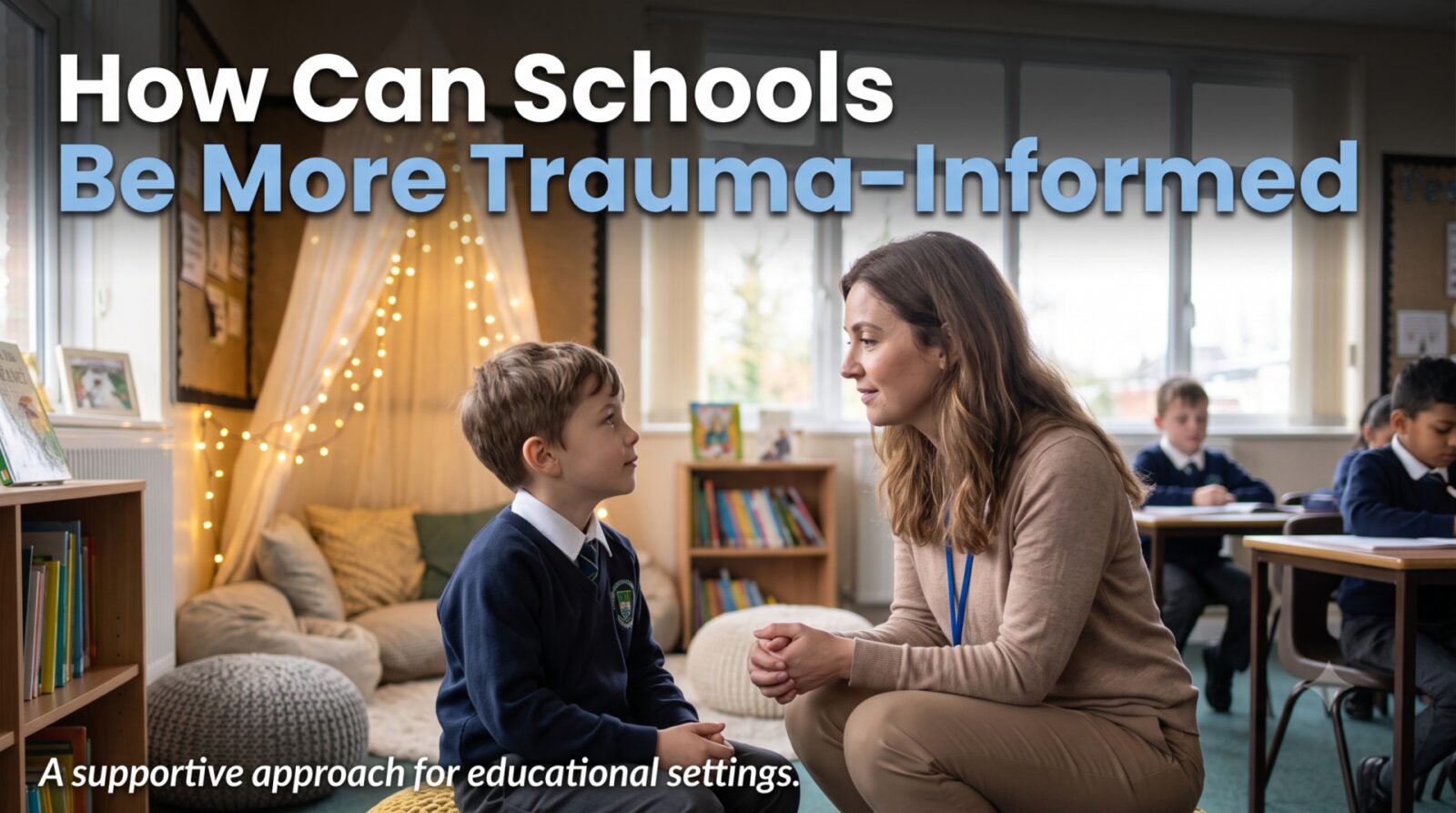
Implementing trauma-informed practice in schools is essential for creating learning environments where every child feels safe, supported, and ready to learn. When educational settings adopt a holistic framework—recognising and responding to the profound impact of developmental trauma and adversity—children are better equipped to thrive academically, socially, and emotionally (Craig, 2016).
This guide explores practical strategies for embedding trauma-informed principles across your whole-school environment, from classroom routines and sensory-friendly spaces to relational teaching and de-escalation techniques.
Core Pillars of Trauma-Informed Practice in Schools
Successfully embedding trauma-informed practice in schools requires moving beyond isolated interventions toward a whole-school culture shift. To build a supportive educational environment, school leadership and staff should focus on three fundamental pillars: comprehensive staff training, safe and supportive interactions, and intentional environmental design.
Whole-Staff Training and Trauma Awareness
Effective staff training and awareness are crucial for creating trauma-informed school environments. When school staff understand the impact of trauma on children, they can respond with empathy, reduce re-traumatisation, and foster a supportive learning environment (Blodgett & Dorado, 2016).
Key focus areas for professional development include:
- Recognising the Indicators of Trauma: Training helps staff to identify behavioural, emotional, and physical indicators of trauma, including anxiety, withdrawal, aggression, difficulty concentrating, or inconsistent attendance (Anda et al., 2006).
- Understanding Adverse Childhood Experiences (ACEs): Understanding Adverse Childhood Experiences (ACEs) and their long-term effects on child development strengthens trauma awareness (Felitti et al., 1998).
- Adopting a Non-Judgemental Lens: A non-judgemental approach allows staff to recognise that certain behaviours stem from trauma rather than defiance or disengagement (Perry, 2009).
Safe and Supportive Interactions

- De-Escalation Techniques: Staff should be trained in de-escalation techniques to respond calmly to emotional outbursts, reinforcing a sense of safety and trust (Van der Kolk, 2014).
- Trauma-Sensitive Communication: Building positive relationships with children and using trauma-sensitive language helps build a sense of safety and trust, preventing triggering anxiety or shame in children (Brunzell, Stokes, & Waters, 2016).
Designing Calming and Sensory-Friendly Spaces
- Welcoming Environments: Classrooms and school environments should be calm, welcoming, and non-threatening (Barrett et al., 2019).
- Self-Regulation Areas: Dedicated self-regulation areas allow children to take breaks when overwhelmed (Perry, 2009).
- Sensory-Friendly Spaces: Sensory-friendly spaces, such as soft seating, low lighting, and quiet areas, support children struggling with sensory overload (Souers & Hall, 2016).
Trauma-Informed Teaching & Classroom Strategies
- Predictable Routines: Predictable routines with calm and supportive responses help trauma-affected children feel safe (Herman et al., 2016).
- Flexible Discipline Policies: A flexible discipline policy acknowledges that punitive approaches can worsen trauma responses (Skiba et al., 2014).
- Regulating Activities: Brain breaks, sensory circuits, movement activities, and self-regulation techniques help children remain engaged and emotionally balanced (Souers & Hall, 2016).
Benefits of Trauma-Informed Practice in Schools
Implementing trauma-informed practice in schools creates a supportive environment that benefits both pupils and educational staff through co-regulation, emotional regulation techniques, and workforce wellbeing:
- Modelling Co-Regulation: Staff should model calming strategies and co-regulation techniques to support children in managing emotions (Jennings & Greenberg, 2009).
- Integrating Grounding Routines: Mindfulness and grounding techniques can be integrated into daily routines to support emotional regulation (Felver et al., 2016).
- Prioritising Staff Resilience and Self-Care: Self-care is essential—supporting traumatised children can be emotionally demanding, and staff should have strategies to build resilience (Hydon et al., 2015).
Practical Strategies for Trauma-Informed Implementation
To successfully embed trauma-informed approaches across the school day, leadership and educators should adopt structured, relational, and strengths-based practices.
1. Establishing Routines and Clear Expectations
- Structured Daily Routines: Structured daily routines help children feel secure and reduce anxiety (Porges, 2011).
- Visual Timetables: Visual timetables and verbal reminders assist with transitions and help children know what to expect (Cook et al., 2005).
- Positive Reinforcement: Clear, consistent behavioural expectations should focus on positive reinforcement rather than punishment (Skiba et al., 2014).
2. Building Trusting Relationships
- Daily Check-Ins: Daily check-ins and one-to-one interactions strengthen connections between staff and children (Jennings & Greenberg, 2009).
- Network of Trusted Adults: Every child should have at least one trusted adult (but ideally a network of supportive adults) to whom they can turn for support (Brunzell, Stokes, & Waters, 2016).
- Supportive Peer Relationships: Build supportive peer relationships to create a sense of belonging (Cook et al., 2005).
3. Using Restorative Approaches Instead of Punitive Discipline
- Repairing Harm: Replace punitive discipline with restorative practices focusing on understanding and repairing harm (Wachtel, 2016).
- Curiosity Over Condemnation: Respond to behaviour with curiosity, asking “What happened to you?” rather than “What’s wrong with you?” (Van der Kolk, 2014).
- Reflective Learning: Help children reflect, repair, and learn, rather than enforcing shame-based consequences (Craig, 2016).
4. Encouraging Student Voice and Choice
- Environmental Control: Provide children with some control over their environment, such as contributing to a classroom charter (Brunzell, Stokes, & Waters, 2016).
- Child-Led Problem-Solving: Encourage child-led problem-solving, helping them feel empowered rather than powerless (Felver et al., 2016).
5. Recognising Strengths Instead of Deficits
- Asset-Based Shift: Instead of asking, “What’s wrong with you?”, shift to “What strengths do you have?” (Perry, 2009).
- Leveraging Interests: Take an asset-based approach, using children’s interests, talents, and skills to engage and motivate them (Craig, 2016).
6. Giving Strength-Based Feedback
- Focusing on Progress: Recognise progress and resilience rather than focusing solely on outcomes (Dweck, 2006).
- Acknowledging Effort: Rather than saying, “You got the answer right,” acknowledge effort: “I can see how hard you worked on this” (Dweck, 2006).
Conclusion: Embedding Trauma-Informed Practice in Schools
A trauma-informed school provides a safe, stable, and empowering environment where children feel genuinely supported and valued. By integrating whole-staff training, predictable daily routines, restorative practices, and strengths-based approaches, educational settings can help pupils thrive academically, socially, and emotionally—regardless of their past experiences.
Embedding trauma-informed practice in schools is not a one-time initiative, but an ongoing commitment to whole-school culture change. By making these core principles part of everyday classroom practice, schools do more than support children affected by trauma and adversity—they create a healthier, more inclusive, and more compassionate learning environment for every pupil and member of staff.
What is trauma-informed practice in schools?
Trauma-informed practice in schools is an educational framework that recognises how trauma and adversity affect a child’s brain, emotional regulation, and learning. Instead of relying on purely punitive measures, staff focus on creating physical and psychological safety, building trust, and utilising co-regulation and relational support.
What are the core pillars of a trauma-informed school?
The core pillars include whole-staff trauma awareness training, safe and supportive relational interactions, intentional environment design (such as sensory-friendly spaces), predictable routines, and strengths-based, restorative approaches to behaviour.
Why is whole-staff training necessary for trauma-informed schools?
Whole-staff training ensures that every adult a pupil encounters—including teachers, teaching assistants, pastoral teams, and administrative staff—uses consistent, trauma-sensitive language and calm de-escalation strategies, establishing a predictable environment throughout the school day.
How do restorative approaches differ from traditional punitive discipline?
Restorative approaches focus on understanding the root cause of behaviour, repairing harm, and teaching self-regulation skills (‘What happened to you?’). Punitive discipline relies on shame and exclusion (‘What is wrong with you?’), which can trigger or exacerbate trauma responses.
What are the key benefits of trauma-informed practice in education?
Key benefits include improved pupil emotional regulation, reduced behavioural disruptions, lower exclusion rates, and increased academic engagement. It also provides educators with practical de-escalation tools, reducing secondary traumatic stress and professional burnout.
- Anda, R. F., et al. (2006). The enduring effects of abuse and related adverse experiences in childhood on adult health status. European Archives of Psychiatry and Clinical Neuroscience, 256(3), 174–186.
- Barrett, P., et al. (2019). The impact of classroom design on pupils’ learning: Final results of a holistic, multi-level analysis. Building and Environment, 89, 118–133.
- Blodgett, C., & Dorado, J. (2016). A selected review of trauma-informed school practice and alignment with educational practice. Washington State University Area Health Education Center.
- Brunzell, T., Stokes, H., & Waters, L. (2016). Trauma-informed positive education: Using positive psychology to strengthen vulnerable students. Contemporary School Psychology, 20(3), 218–227.
- Cook, A., et al. (2005). Complex trauma in children and adolescents. Psychiatric Annals, 35(5), 390–398.
- Craig, S. E. (2016). Trauma-Sensitive Schools: Learning Strategies for Children Exposed to Behavioral Trauma. Teachers College Press.
- Dweck, C. S. (2006). Mindset: The New Psychology of Success. Random House.
- Felitti, V. J., et al. (1998). Relationship of childhood abuse and household dysfunction to many of the leading causes of death in adults. American Journal of Preventive Medicine, 14(4), 245–258.
- Felver, J. C., et al. (2016). The effects of mindfulness-based interventions on student behavior in school settings. Journal of School Psychology, 58, 159–171.
- Herman, J. L. (2016). Trauma and Recovery: The Aftermath of Violence—From Domestic Abuse to Political Terror. Basic Books.
- Hydon, S., et al. (2015). Secondary traumatic stress and support in trauma-informed school environments. Journal of Loss and Trauma, 20(2), 160–173.
- Jennings, P. A., & Greenberg, M. T. (2009). The prosocial classroom: Teacher social and emotional competence in relation to child and classroom outcomes. Review of Educational Research, 79(1), 491–525.
- Perry, B. D. (2009). Examining child trauma, child development, and neurodevelopmental impacts. Psychiatric Clinics of North America, 32(1), 129–147.
- Porges, S. W. (2011). The Polyvagal Theory: Neurophysiological Foundations of Emotions, Attachment, Communication, and Self-regulation. W. W. Norton & Company.
- Skiba, R. J., et al. (2014). Are zero tolerance policies effective in the schools? An evidentiary review and recommendations. American Psychologist, 63(9), 852–862.
- Souers, K., & Hall, P. (2016). Fostering Resilient Learners: Strategies for Creating a Trauma-Sensitive Classroom Environment. ASCD.
- Van der Kolk, B. (2014). The Body Keeps the Score: Brain, Mind, and Body in the Healing of Trauma. Penguin Books.
- Wachtel, T. (2016). Defining Restorative: Restorative Justice in Everyday Life. International Institute for Restorative Practices.