

Please Enter Your Email ID
Table of Contents
Key Considerations Before Starting the Conversation
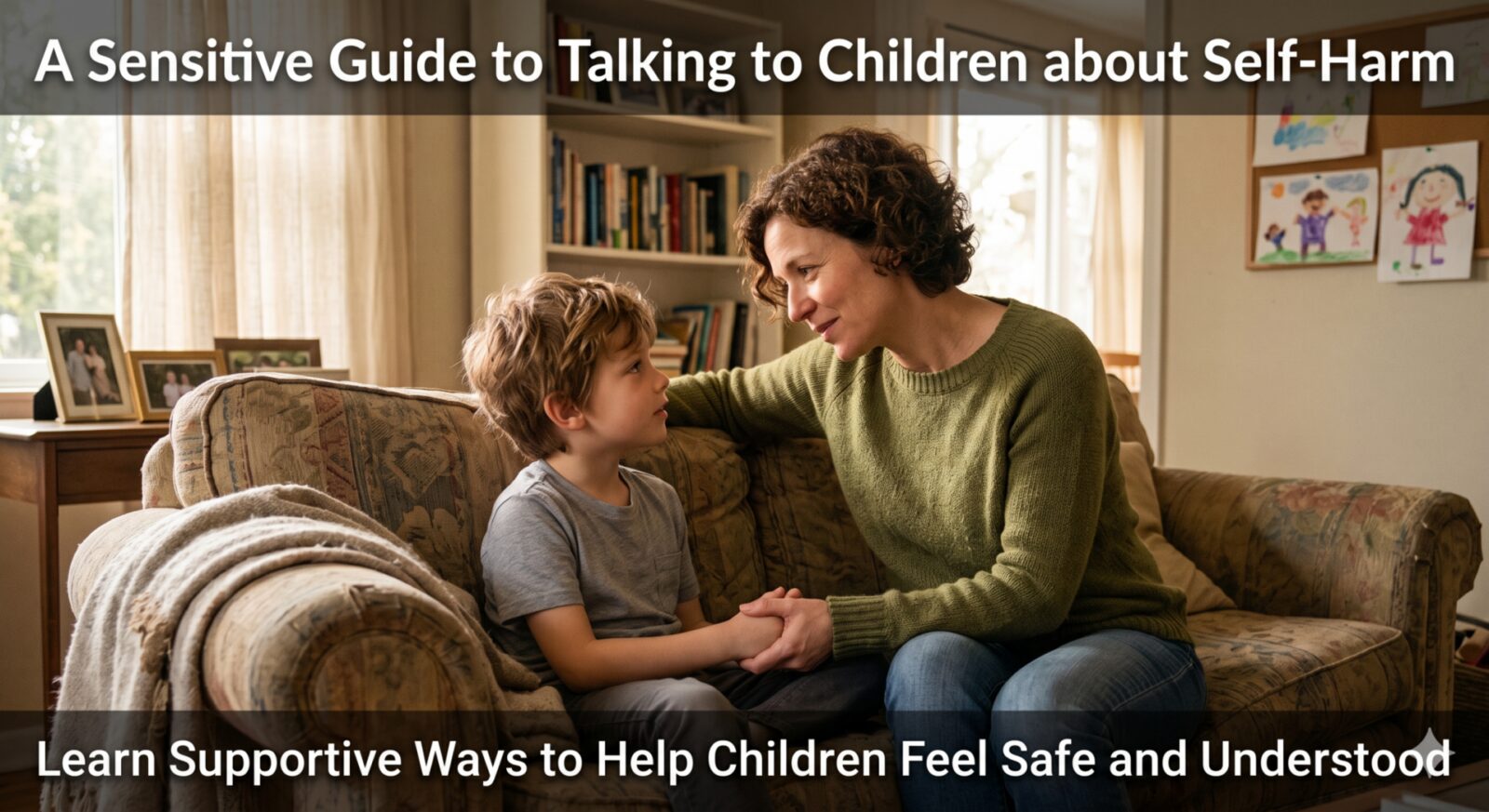
Talking to children about self-harm is an emotive topic and can often be seen as a taboo subject that we should not talk about, and while there are considerations that you should take before talking to a child about it, not talking children about self-harm is not a positive way forward.
When talking to children about self-harm, it’s essential to approach it with sensitivity, compassion, and understanding while providing appropriate guidance. This will help the child feel safe and supported.
The following steps can help facilitate a compassionate and supportive conversation about self-harm, paving the way for emotional healing and improved mental health.
Essential Steps When Talking to Children About Self-Harm
- Remain calm and non-judgemental – It is vital to remain calm, even if it makes you feel upset. You must avoid showing shock or anger, as this can cause the child to feel ashamed or even shut down altogether. Your calm demeanour will help the child feel in control and composed during this difficult conversation.
- Timing and environment – Choose a space where the child feels comfortable and safe enough to open up. The space should offer privacy and be done when neither you nor the child is distracted or stressed.
- Let there be silence – If you think that talking about self-harm is hard, imagine being the one who is self-harming. You should then be ready for silence, as children may not open up immediately. Be patient and give them time to respond. They might react with denial, anger, or fear, and it’s important to be prepared for these reactions.
- Be prepared – Knowing what services are available before starting a conversation is helpful so you can signpost/refer as needed.
- Avoid ultimatums – You should never try telling a child to “just stop” self-harming or that they should be able to get over their feelings. While this is unhelpful, it will also likely encourage the child to hide their behaviour in the future.
- Respect their privacy – Respect their privacy and emphasise that their safety is important. It should be clear that if you feel they are at risk of harm, you have a duty of care to them, which could include talking to parents about it (following your safeguarding policy). You can discuss this with the child before you take any action.
- Be patient – Children may not be ready to talk immediately, and healing from self-harm can take time. The chance of relapsing remains high while the underlying issues are managed. Patience is vital in this process, and it will reassure you that progress is being made, even if it’s not immediately visible.
Step 1: Open the Conversation with Supportive Questions
Step 1 to talking to children about self-harm is to start the conversation openly by asking general questions about their feelings. This approach should be used even if you know the child is self-harming.
Questions such as “I have noticed that you have been down lately. Can you tell me what has been going on?” will help to take a non-direct approach that allows the child to choose whether or not they wish to talk about their feelings.
Step 2: Validate and Acknowledge Their Emotions
Be sure to validate the child’s feelings by letting them know their emotions are valid.
Questions such as “I understand that you have been feeling overwhelmed today, and that is ok; I am here if you want to tell me about it.” will show the child that you are there if they need you, and they know that you.
Step 3: Gently Introduce the Subject of Self-Harm
Once the child has started to talk about their emotions (this could be the same day or even weeks down the line), you can begin to introduce self-harm with questions like “Sometimes, when people are feeling upset, they might hurt themselves as they do not know what else to do with what they are feeling. Has this happened to you?”
Step 4: Listen Active and Without Judgement
You do not have to understand the reasons why the child has self-harmed; what is essential at this point is that you listen without interruptions and judgement.
Let the child know that you are there to listen and that they can go at their desired pace. You may find that this is a gradual process over a period of time where each time you listen, they give you an additional piece of information, or it could be like an overload of information where they get everything off their chest all in one go – be prepared for both.
Step 5: Shift Focus to Underlying Emotional Pain
You should assure the child that they are not alone, that their feelings are valid and that you are there to help and support them.
This could be an excellent time to understand if they have spoken to anyone else about how they are feeling and have a look together at what internal and external support is available.
While self-harm is an emotive topic, we mustn’t focus on the behaviour (the act of self-harm) as usually, this behaviour is a coping mechanism for underlying emotional pain.
Now is the time to shift the focus from the harm to understanding those feelings. Asking to talk about what led to where they currently are or what made them feel how they are feeling is usually a good starting point.
Avoid asking why because asking why can come with an element of shame and can often be met with “I don’t know” as the child struggles to understand their feelings.
Supporting Long-Term Recovery and Healthy Coping Mechanisms
While talking to children about self-harm is an important first-step, further support is usually needed following these conversations. There are many alternatives to self-harm which can be used as healthier coping mechanisms; things such as pinging an elastic band or tearing up paper can sometimes provide the child with the emotional release that is needed without the risks that are associated with self-harm. Journaling can also help spot patterns or triggers.
Practical Alternatives to Self-Harm
Some additional healthy coping mechanisms include:
- Running an ice cube over your body
- Playing with clay, blu-tac, plasticine etc.
- Drawing, colouring or painting
- Grounding techniques
- Sensory distractions such as smells or tastes
- Professional support such as Cognitive-behavioural therapy (CBT) or dialectical behaviour therapy (DBT)
- Crisis helplines like Childline, Samaritans, or YoungMinds
- Apps such as Calm Harm, Headspace or Calm.
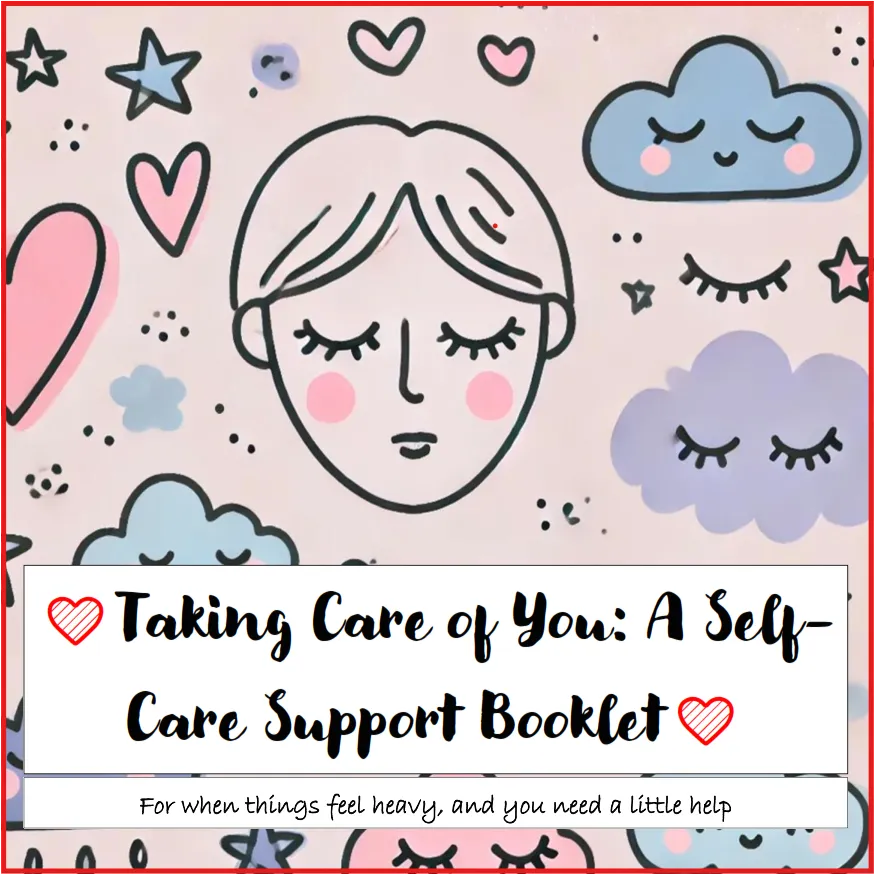
- Using our Self-Care Safety Planning Booklet
Signposting to Professional Safeguarding Support
When talking to children about self-harm be sure to let them know they are not alone and that professional help is available and that this support can help them understand their thoughts, feelings, and emotions.
This reassurance will make you feel supported and confident in your ability to guide the child towards the help they need. Professional help can include therapy or counselling services, which might be available at your place of work or within the child’s school or community network.
Additionally, the below support lines are available:
- Childline: A confidential helpline for children and young people. Available 24/7 at 0800 1111 or via their website for online support.
- YoungMinds: Provides information and support for young people dealing with mental health issues, including self-harm.
- Kooth: A judgement-free forum to get advice, help others and share your story.
Self-Care Safety Planning Booklet
One of the things we discovered in our work when talking to children about self-harm is that when they are calm and regulated they are able to reel-off a load of healthy coping mechanisms, however, when the urge to self-harm occurs they struggle to remember them.
In response to this, we have also developed a Self-Care Safety Planning Booklet that children have found very helpful.
Q1: How do I start talking to children about self-harm?
A: Start gently by focusing on their emotional state rather than the physical behaviour. Use open-ended, non-confrontational questions such as “I’ve noticed you seem overwhelmed lately—how are you feeling?” Ensure you choose a private, quiet space where the child feels safe and unhurried.
Q2: What should I avoid saying when talking to children about self-harm?
A: Avoid giving ultimatums, demanding that they “just stop,” or reacting with visible shock, anger, or disgust. Expressions of intense horror or frustration can induce shame, causing the young person to withdraw and hide their distress in the future.
Q3: What are some immediate healthy alternatives to self-harm for young people?
A: Sensory distraction techniques can help manage intense emotional distress safely. Examples include holding or running an ice cube over the skin, snapping an elastic band gently against the wrist, tearing up paper, journaling, or using grounding exercises like the 5-4-3-2-1 technique.
- How to support a child or young person who is self-harming – Place2Be
- Self-harm: A guide for parents and carers – Kirklees Keep in Mind
- Supporting a Young Person Struggling With Self-harm – YoungMinds
- Self-Harm & Mental Health | Guide For Parents – YoungMinds
- Understanding self-harm – British Psychological Society
- Understanding Child Self-Harm & Keep Them Safe – NSPCC