

Please Enter Your Email ID
Table of Contents
How to Talk So Children Will Listen
Engaging children in meaningful conversation is one of the most vital skills for teachers, support staff, and practitioners. Knowing how to talk so children will listen is about more than maintaining classroom order; it actively supports their language development, emotional expression, cognitive growth, and self-confidence.
When we communicate effectively with children, we create a safe environment where they feel heard, respected, and empowered to regulate their own behavior.
This guide equips practitioners and educators with six evidence-based communication techniques designed to capture attention, build trust, and foster positive relationships.ith communication techniques to engage children, keep their attention, promote respect, and leave them feeling heard.
Why Language Choices Matter in Educational Settings
The way adults frame instructions directly impacts a child’s neurological and emotional response. Vague commands, negative framing, or imposing adult body language can inadvertently trigger defensiveness or confusion.
By making subtle adjustments to our tone, positioning, and phrasing, we move from reactive management to proactive connection.
6 Proven Techniques to Engage Children
Get Down to Their Physical Level
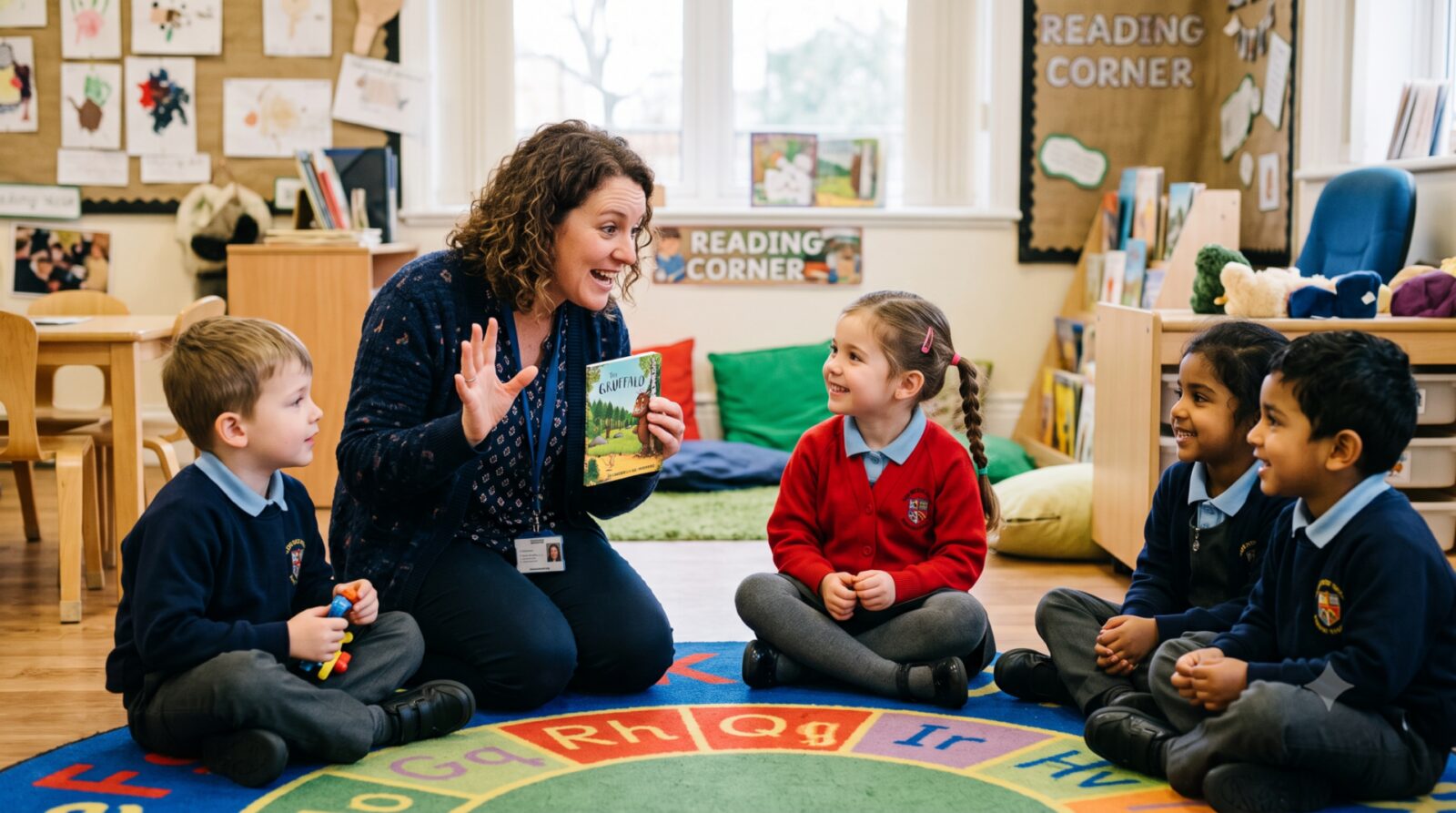
Adults naturally tower over children, which can feel unintentionally intimidating. Physically lowering yourself—by kneeling, sitting, or crouching down to eye level—instantly balances the visual power dynamic. This simple posture shift signals warmth, improves eye contact, and helps the child focus without feeling overwhelmed.
Use Clear, Direct, and Actionable Language
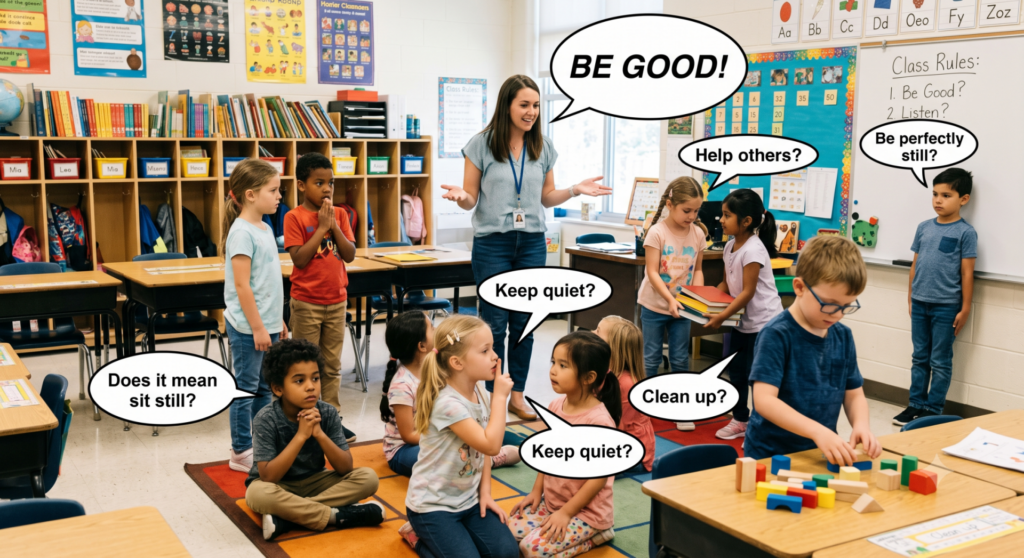
Children process complex or multi-layered instructions slowly. Avoid jargon, abstract rules, or vague demands like “be good” or “tidy up.” Instead, offer concrete, single-step directions:
- Instead of: “Stop being disruptive.”
- Say: “Please sit down on your cushion.”
- Instead of: “Tidy the area.”
- Say: “Please put the blue blocks back in the box.”
Focus on Positive Reinforcement over Negative Demands
When adults tell children what not to do (e.g., “Don’t run!”), the child’s brain must first picture the negative action before processing the alternative. Flip your phrasing to state the exact positive behaviour you wish to see:
- Instead of: “Don’t shout!”
- Say: “Please use your indoor speaking voice.”
Validate Emotions with Empathetic Phrasing
Behaviour is communication. Before correcting an action, validate the underlying feeling. When children feel understood, their nervous system calms down, making them far more receptive to guidance.
- Example: “I can see you feel frustrated because break time ended. It is tough to stop playing, but let’s walk back to class together.”
Offer Limited Choices to Build Autonomy
Power struggles often occur when children feel a complete loss of control. Offering two acceptable, adult-approved options gives the child a sense of agency while maintaining firm boundaries:
Example: “Would you like to put your coat on first, or put your bag away first?”
Maintain Gentle, Age-Appropriate Honesty
Children quickly sense when adults are masking the truth or avoiding topics. When addressing difficult or sensitive situations, maintain trust by delivering age-appropriate facts calmly and gently, without overwhelming them with unnecessary adult details.
Phrasing Comparison: Ineffective vs. Effective Communication
| Traditional/Vague Phrasing | Positive, Impact-Driven Alternative | Why This Strategy Works |
| “Be quiet and pay attention.” | “Eyes on me in 3… 2… 1.” | Sets a clear visual countdown and explicit physical expectation. |
| “Stop running in the corridor!” | “Please use your walking feet.” | Replaces the forbidden action with the required physical movement. |
| “You’re making a mess.” | “Let’s put the paints back on the tray.” | Directs focus toward cleaning up without placing shame on the child. |
| “Calm down right now.” | “I can see you’re upset. I’m right here with you.” | Validates emotional regulation rather than demanding an instant shutdown. |
Why is offering limited choices effective when talking to children?
Offering limited choices gives children a sense of autonomy and control, which significantly reduces resistance and frustration. By providing two acceptable options (e.g., “Would you like to tidy your coat or your bag first?”), you encourage co-operation while maintaining clear adult boundaries.
How does physical positioning affect how well a child listens?
Getting down to a child’s eye level reduces the intimidating physical imbalance between an adult and a child. This position promotes natural eye contact, signals empathy, and helps the child feel safe, making them far more receptive to conversation.
What is the difference between positive reinforcement and vague commands?
Vague commands like “be good” fail to give explicit instructions on expected behavior. Positive reinforcement clearly states the desired action—such as “please walk in the corridor”—giving the child actionable clarity while praising constructive choices.
- How to Talk So Kids Will Listen & Listen So Kids Will Talk by Adele Faber and Elaine Mazlish
- The Whole-Brain Child: 12 Revolutionary Strategies to Nurture Your Child’s Developing Mind by Daniel J. Siegel and Tina Payne Bryson
- Parenting with Love and Logic: Teaching Children Responsibility by Charles Fay and Jim Fay
- You Can’t Make Me (But I Can Be Persuaded) by Cynthia Ulrich Tobias
- Emotional Intelligence by Daniel Goleman
- Raising An Emotionally Intelligent Child by John Gottman