

Please Enter Your Email ID
Table of Contents
What is the 3 House Assessment Tool?
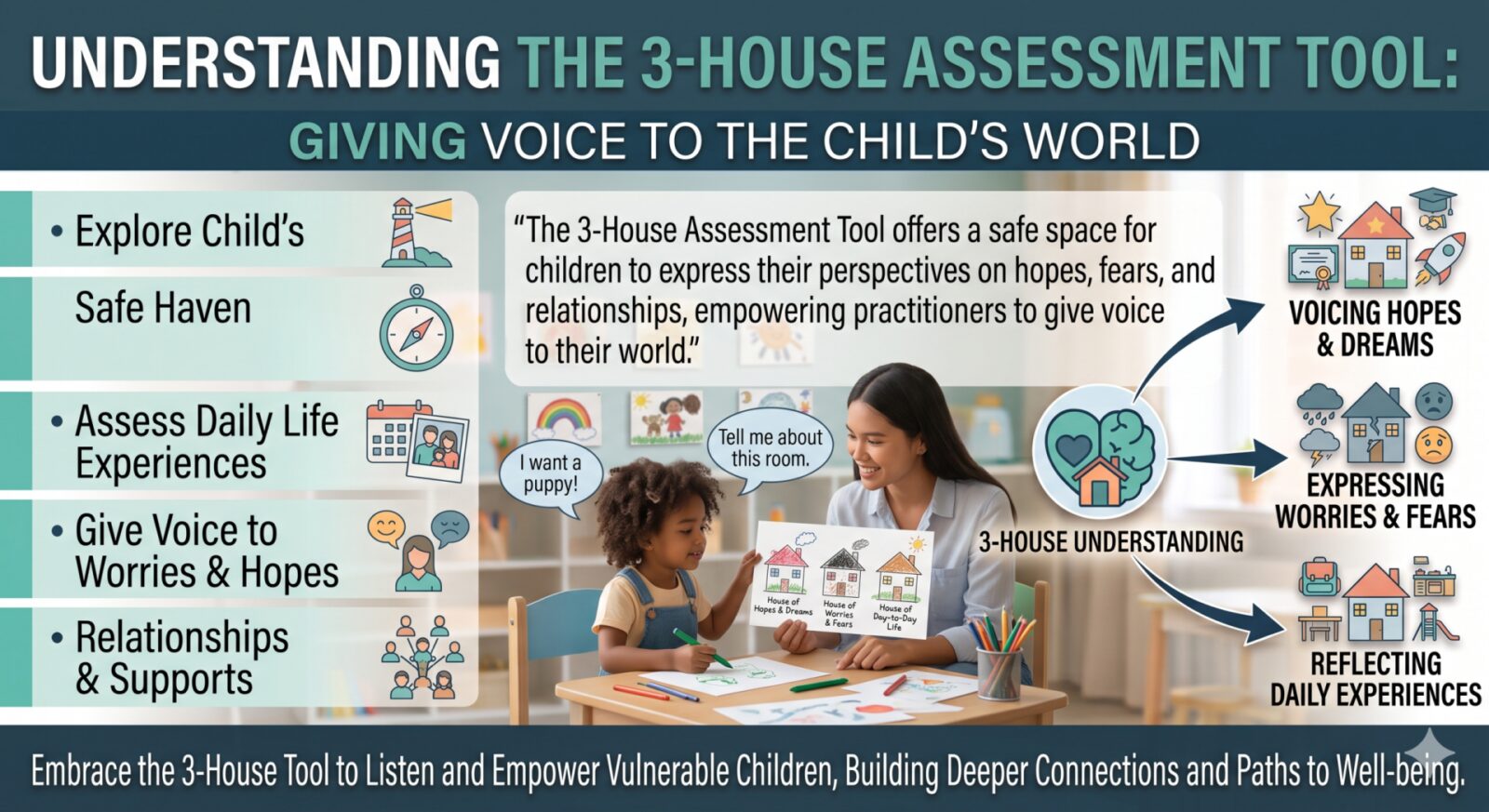
The 3 House Assessment Tool provides a structured way for children to share their lived experiences in a supportive environment, enabling adults to understand what matters most to them. The three-house tool helps build trust, enhance communication, and tailor support to suit each child’s unique needs.
The 3 House Assessment Tool is a creative and child-centred approach to understanding a child’s lived experience, the positive aspects they value, and their dreams for the future. This tool offers children a safe space to express themselves, allowing their thoughts and feelings to be highlighted in meetings or reviews, where adult perspectives can often overshadow theirs.
Using the The 3 House Assessment Tool, practitioners gather insights and actively foster trust, demonstrating to the child that their voice genuinely matters. When children see their input valued and incorporated into decision-making, they feel empowered, knowing their thoughts can bring about real change.
The Three Core Components Explained
There are 3 aspects to the 3 house assessment tool. The house of worries helps identify safeguarding concerns, the house of dreams can highlight aspirations, and the house of good things can uncover protective factors. Here’s how the 3 House assessment tool works:
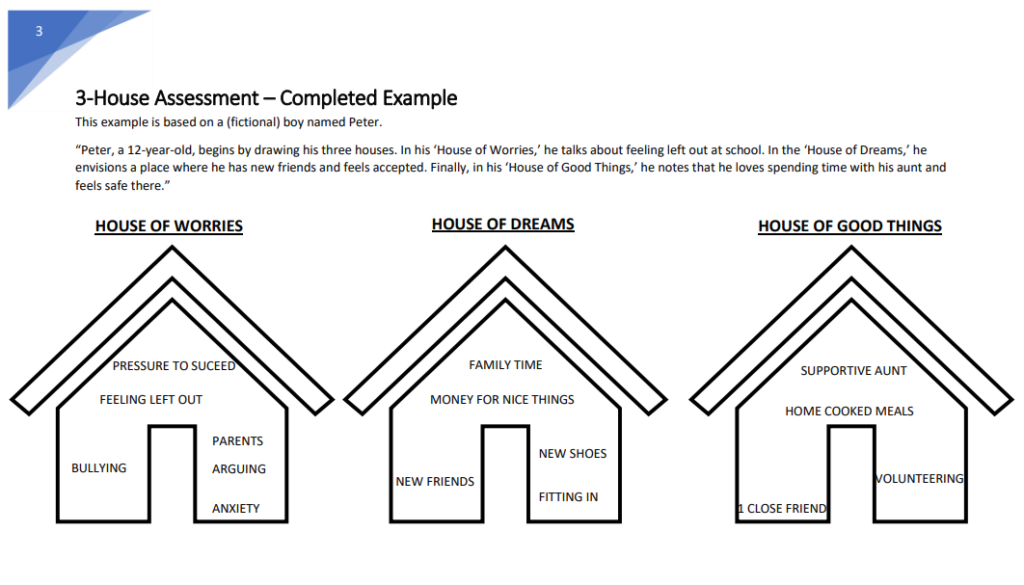
House of Worries (Identifying Safeguarding Concerns)
This house encourages children to openly share their concerns, aiding in recognising where support is required.
House of Good Things (Uncovering Protective Factors & Strengths)
Here, children can share their hopes and aspirations, highlighting the goals and changes they wish to see in their lives.
House of Dreams (Capturing Hopes & Future Aspirations)
This house encourages children to recognise and share the aspects of their lives that bring them joy and stability.
To tailor this experience, try using themes that match the child’s interests, such as islands, cars, or castles. This flexibility makes the process more engaging and relatable and can help you consider any cultural differences.
The 3-House Assessment Tool isn’t just a tool for listening; it’s a bridge to deeper understanding and meaningful advocacy, helping adults support the child’s journey towards a brighter future.
How to Implement the 3-House Tool in Direct Work
If you are working with a particular child over an extended period, consider creating a dedicated ‘3-House Notebook’ to record reflections and track progress over time. This tool also provides meaningful opportunities for reflective conversations. Asking questions like, ‘What might make this worry feel smaller?’ or ‘What steps can we take today to move closer to this dream?’ encourages the child to engage actively and deepens your connection with them.
Creative Adaptations for Neurodivergent & Younger Children
If the child prefers, you can use stickers or drawings instead of writing. Before concluding the activity, review what has been discussed. Make it a habit to revisit the 3-House Assessment regularly, allowing the child to reflect on changes, celebrate progress, and address new worries or dreams.
Using ‘3-House Notebooks’ for Ongoing Direct Work
Over time, this practice helps the child develop a sense of growth and achievement. You can allow children to cross out worries as they disappear and tick off goals as they are achieved. Additionally, you can include a section under the houses for your own notes and observations. This can serve as a reflective tool to review what went well and plan for future sessions.
Download the Free 3-House Assessment Tool Template (PDF)
Q: What is the 3-House Assessment Tool in child protection?
A: The 3-House Assessment Tool (originally developed by Nicki Weld and Maggie Greening in conjunction with the Signs of Safety framework) is a child-centred direct work resource. It uses three conceptual “houses”—the House of Worries, the House of Good Things, and the House of Dreams—to help children safely express their lived experiences, fears, protective factors, and hopes for the future.
Q: Which professionals use the 3-House model?
A: It is widely used across social care, education, and early help sectors, including by:
Children’s Social Workers
Designated Safeguarding Leads (DSLs) and Welfare Officers
Educational Psychologists and School Counsellors
Youth Workers and Family Support Practitioners
Q: How can I adapt the 3-House Tool for non-verbal or neurodivergent children?
A: By giving children a structured, non-confrontational medium to externalise their thoughts, adults can directly quote the child’s perspective in statutory reports, Child Protection (CP) conferences, and Looked After Children (LAC) reviews, ensuring their wishes and feelings are not overshadowed by adult narratives.