

Please Enter Your Email ID
Table of Contents
What Is a Daily Feelings Check In Activity?
Helping children recognise and understand their emotions is a crucial part of social-emotional learning (SEL) and the development of emotional well-being.
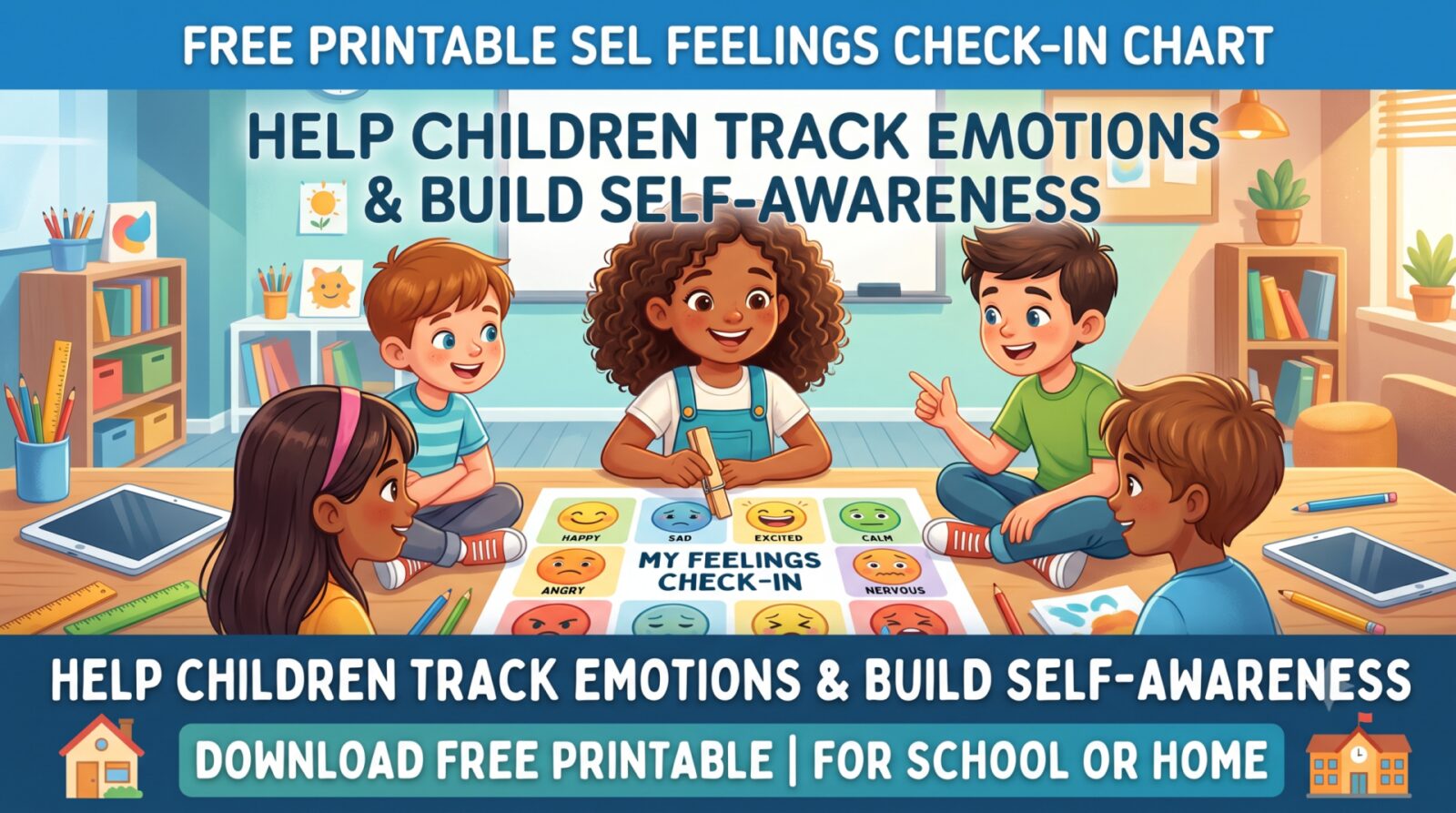
Simple, practical tools, such as this Feelings Check In activity, can help children develop self-awareness both in the classroom and at home.
Key Benefits of Using a Feelings Check In Activity Sheet
A feelings check-in activity provides children with space to pause, reflect, and connect with their emotions at critical moments throughout the day.
This free printable worksheet is designed to make that process simple, structured, and engaging.
Developing Emotional Literacy and Self-Awareness
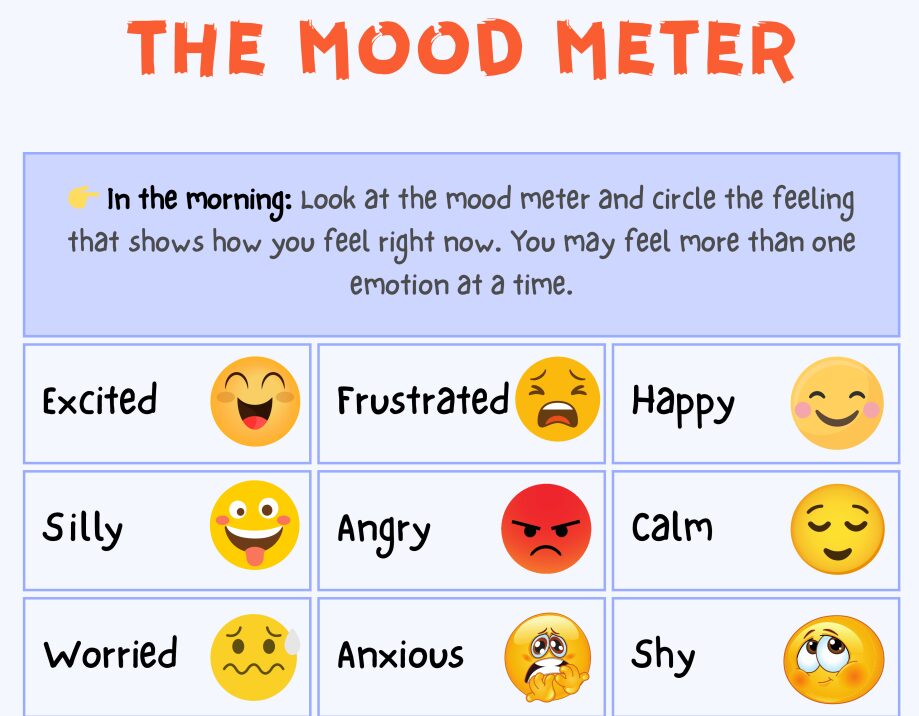
At its core, this SEL activity sheet helps children recognise a wide range of emotions, from excitement and happiness to anger and frustration, by presenting them in a visually engaging, colour-coded mood chart.
Each emotion is paired with a unique colour, making the activity visually appealing and aiding in memory and emotional identification. This approach empowers students to articulate their feelings more effectively, a key component of emotional literacy.
Building Practical Emotional Regulation Skills
The worksheet includes morning and evening check-in tables, encouraging children to reflect on how their mood changes throughout the day.
This regular practice helps them recognise emotional triggers, understand why their feelings shift, and develop healthy coping strategies—essential for long-term emotional regulation.
Fostering Reflection with Guided Prompts
Beyond simply tracking emotions, the activity includes a full reflection page with guided questions and writing space.
Children are invited to think about:
- What events influenced their feelings?
- How did their mood shift from morning to evening?
- What strategies helped them manage challenges?
This reflective process strengthens critical thinking and teaches children how to manage their emotions more effectively.
How to Use This Feelings Check In Activity in the Classroom
Integrating Check-Ins into Daily School Routines
The Feelings Check-In worksheet is a practical tool for teachers and caregivers to integrate SEL activities into daily routines.
Encouraging emotional expression and discussion helps children build empathy, resilience, and self-confidence—skills that benefit both learning and relationships.
Download Your Free Feelings Check In Activity Sheet
Building emotional literacy and regulation begins with providing children with consistent opportunities to reflect on their emotions.
👉 Download the Free Printable Feelings Check-In SEL Activity Sheet Today and use it at home or in the classroom to:
- Support children’s self-awareness
- Build healthy emotional regulation habits
- Encourage open conversations about feelings
This resource is simple, accessible, and effective for promoting children’s social-emotional growth.
Frequently Asked Questions
What age group is this feelings check in activity suitable for?
This printable activity is designed primarily for primary school children (EYFS, KS1, and KS2). It is also effective for older pupils requiring small-group intervention or social, emotional, and mental health (SEMH) support.
How often should children complete a feelings check in activity?
For the best results, use the activity twice daily: once in the morning to establish an emotional baseline, and once at the end of the day to reflect on mood changes and triggers.
How does a colour-coded feelings check in sheet support emotional literacy?
Colour-coding anchors complex feelings to visual cues. Pairing emotions like calm, excitement, or frustration with distinct colours simplifies identification, making it easier for children to articulate their internal states.
Is this feelings check in activity suitable for trauma-informed practice?
Yes. The sheet provides a predictable, low-pressure format that encourages autonomy, self-reflection, and open conversation without judgment—core principles of trauma-sensitive education.
References
- Education Endowment Foundation (EEF). (n.d.). Social and Emotional Learning: Guidance Report. EEF Evidence Store. Available at: https://educationendowmentfoundation.org.uk/education-evidence/guidance-reports/social-and-emotional-learning
- Collaborative for Academic, Social, and Emotional Learning (CASEL). (n.d.). The CASEL 5: Core Social and Emotional Learning Competencies. CASEL Framework. Available at: https://casel.org/fundamentals-of-sel/what-is-the-casel-framework/