

Please Enter Your Email ID
Table of Contents
Introducing the Self-Care Safety Planning Booklet
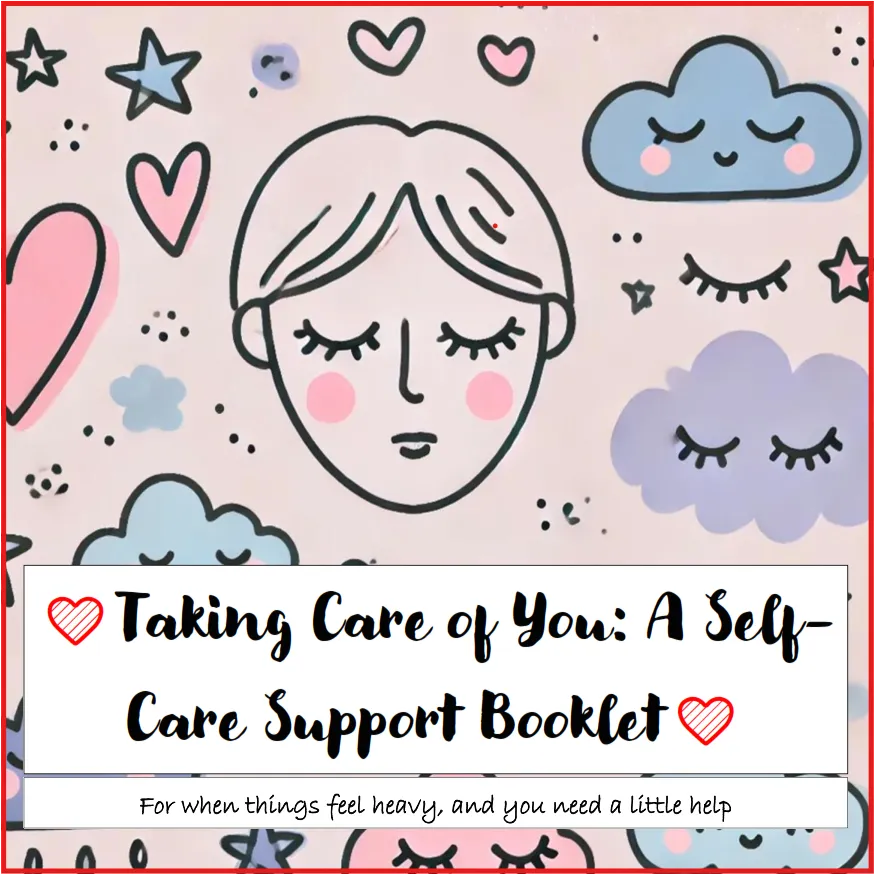
Supporting young people in managing their mental health and emotional well-being is vital. The Self-Care Safety Planning Booklet provides a structured, trauma-informed safety plan to help young people develop coping strategies, build resilience, and navigate emotional crises. This free resource is particularly helpful for those with SEMH needs, anxiety, ADHD, or neurodivergence.
For educators, welfare officers, and youth practitioners, having a reliable framework is essential. This booklet offers both young people and professionals a safe, accessible, and evidence-based way to navigate emotional challenges and distress.
What is the Self-Care Safety Planning Booklet?
This bespoke resource has been co-created with direct input from young people, mental health professionals, and educational practitioners.
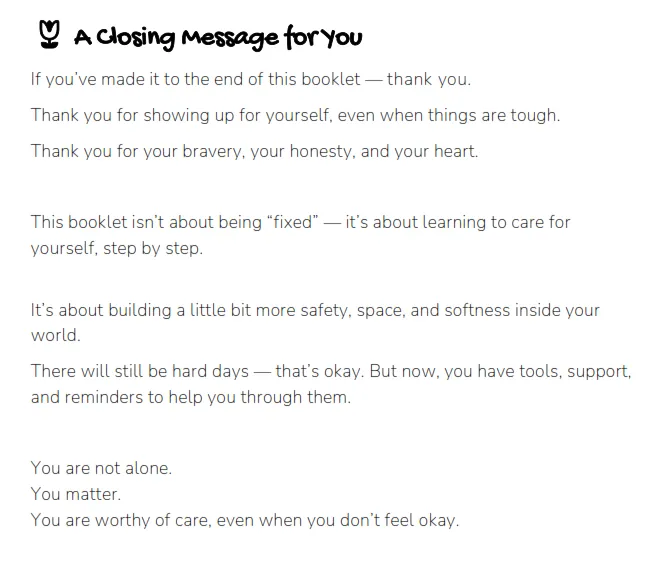
Its primary purpose is to help young people understand and manage their emotions, stay safe during times of distress, and reflect on practical strategies that support long-term mental well-being. By turning abstract emotional regulation concepts into concrete, written steps, it bridges the gap between clinical theory and daily pastoral support.
What is a Trauma-Informed Safety Plan?
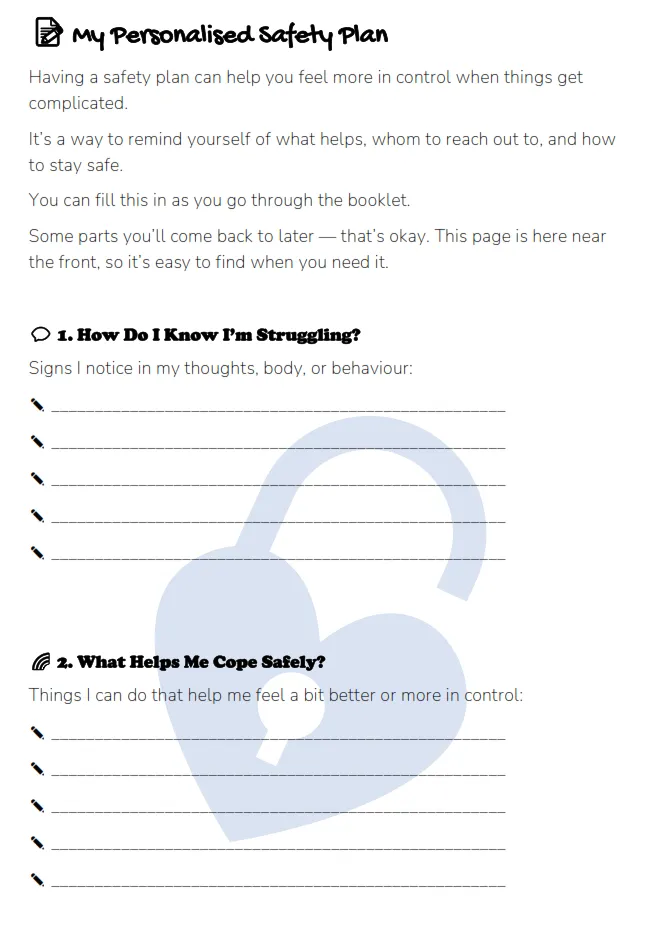
A trauma-informed safety plan is a personalised, proactive tool designed to support individuals before, during, and after an emotional crisis. Rather than imposing rigid behavioural controls, it honours a young person’s autonomy and lived experience. Key elements include:
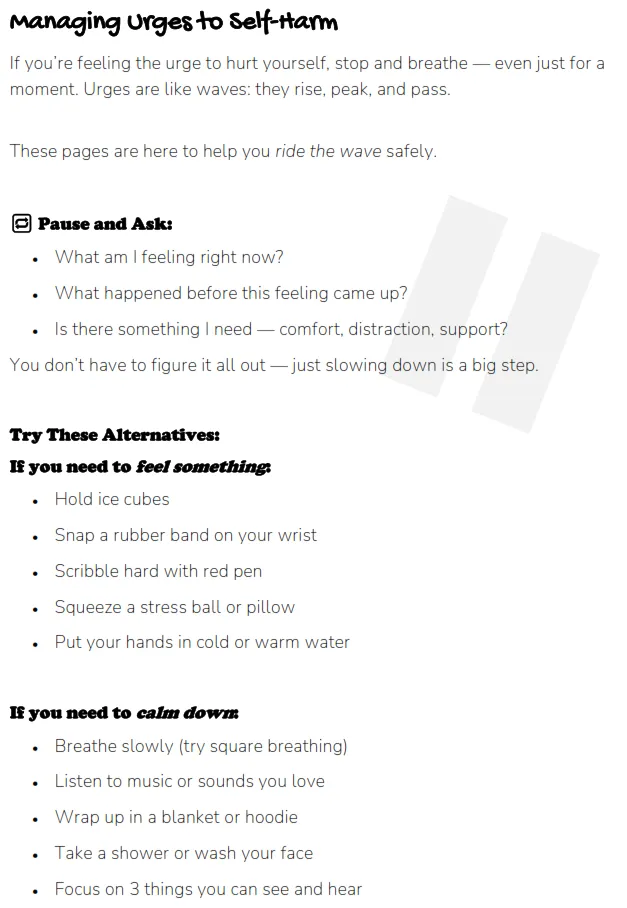
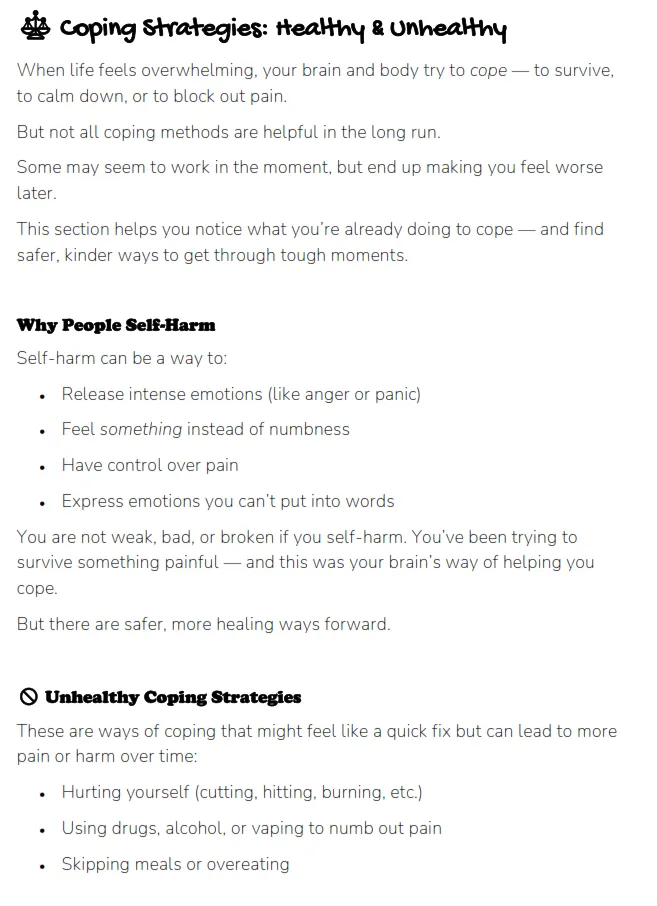
- Personalised Coping Strategies: Includes grounding exercises, sensory-based mindfulness activities, and safe alternatives to self-harm that meet a range of learning styles and sensory needs.
- Practical Tools for Crisis Management: Clear, simple techniques such as the 5-4-3-2-1 grounding method and distraction ideas that help reduce self-harm incidents.
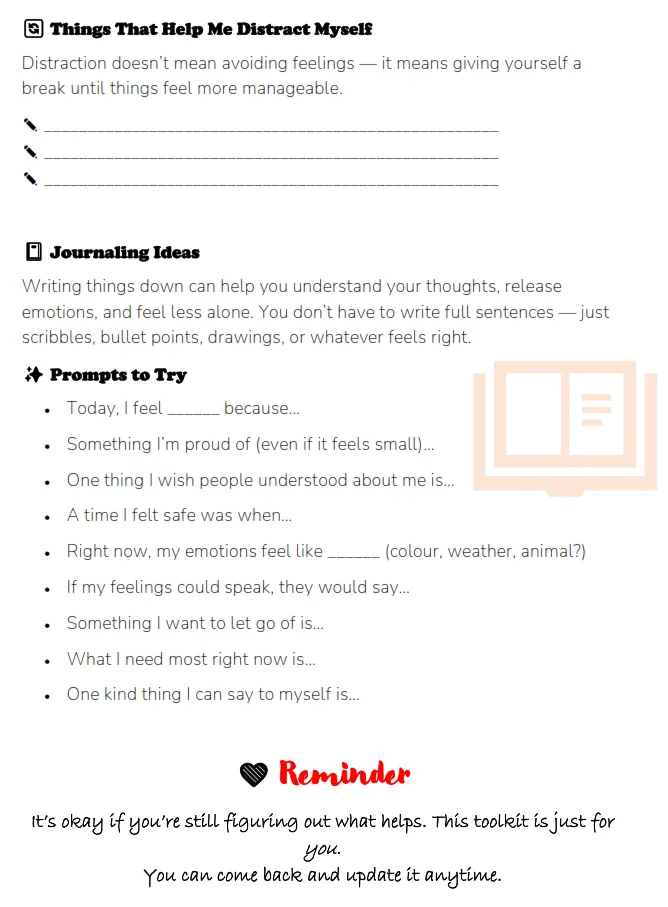
- Empowering and Reflective Content: Encourages self-reflection through activities, affirmations, and positive self-talk, promoting autonomy and resilience.
- Inclusive and Accessible Design: Features an A4 layout and uses the OpenDyslexia font to improve readability—adjusted based on direct feedback from young people.
Why Young People Need a Structured Safety Plan
Implementing a structured approach benefits both the young person and the wider support network:
- Supports Ethical Practice: Helps practitioners maintain safeguarding clarity, promote young people’s rights, and uphold reflective and trauma-informed approaches.
- Demonstrates Impact: Feedback indicates improved emotional regulation and a reduction in self-harm, supporting practitioners in demonstrating measurable outcomes in their work.
- Fosters Independence: Helps young people manage emotional overwhelm and crises independently.
- Builds Core Skills: Enhances emotional literacy, self-confidence, and self-advocacy.
- Creates a Personalised Toolkit: Gives them a tangible reference guide they can return to whenever needed.
- Promotes Shared Understanding: Encourages positive connections among peers and professionals facing similar challenges.
Impact, Outcomes, and Conclusion
Since its introduction, the trauma-informed safety plan booklet has helped young people develop emotional resilience, reduce harm, and feel empowered to engage with support networks. It fosters positive relationships between young people and practitioners, contributing to more inclusive, youth-led, and reflective practices in education and youth work settings.
This booklet isn’t just a resource—it’s a lifeline for young people navigating emotional difficulty, offering practical support, personalised strategies, and a sense of hope.
Download the Self-Care Safety Planning Booklet
Frequently Asked Questions (FAQ)
What is a trauma-informed safety plan for young people?
A trauma-informed safety plan is a personalised, proactive tool designed to help young people recognise emotional distress, identify personal triggers, and apply safe coping mechanisms before reaching a crisis point. Unlike traditional behaviour management plans, a trauma-informed approach priorities the young person’s emotional safety, autonomy, and lived experience, focusing on grounding, sensory regulation, and self-advocacy.
Who is the Self-Care Safety Planning Booklet suitable for?
This booklet is designed for children and young people navigating emotional challenges, anxiety, trauma, or self-harming behaviours. It is particularly beneficial for neurodivergent pupils and those with Social, Emotional, and Mental Health (SEMH) needs or ADHD. It can be used across primary and secondary school settings, alternative provision, youth work, and residential care.
How should schools and practitioners use this booklet with a pupil?
The booklet is designed to be completed collaboratively between a young person and a trusted adult—such as a Designated Safeguarding Lead (DSL), pastoral officer, youth worker, or SENCO. It should be introduced during a calm, low-stress moment rather than in the middle of a crisis, allowing the young person to reflect thoughtfully on their warning signs and choose coping strategies that work for them.
Is this safety plan booklet accessible for pupils with dyslexia?
Yes. Feedback from young people was central to the booklet’s design. It features a clean A4 layout and uses the OpenDyslexia font, which enhances readability and reduces visual stress for pupils with dyslexia, ADHD, or visual processing differences.