

Please Enter Your Email ID
Table of Contents
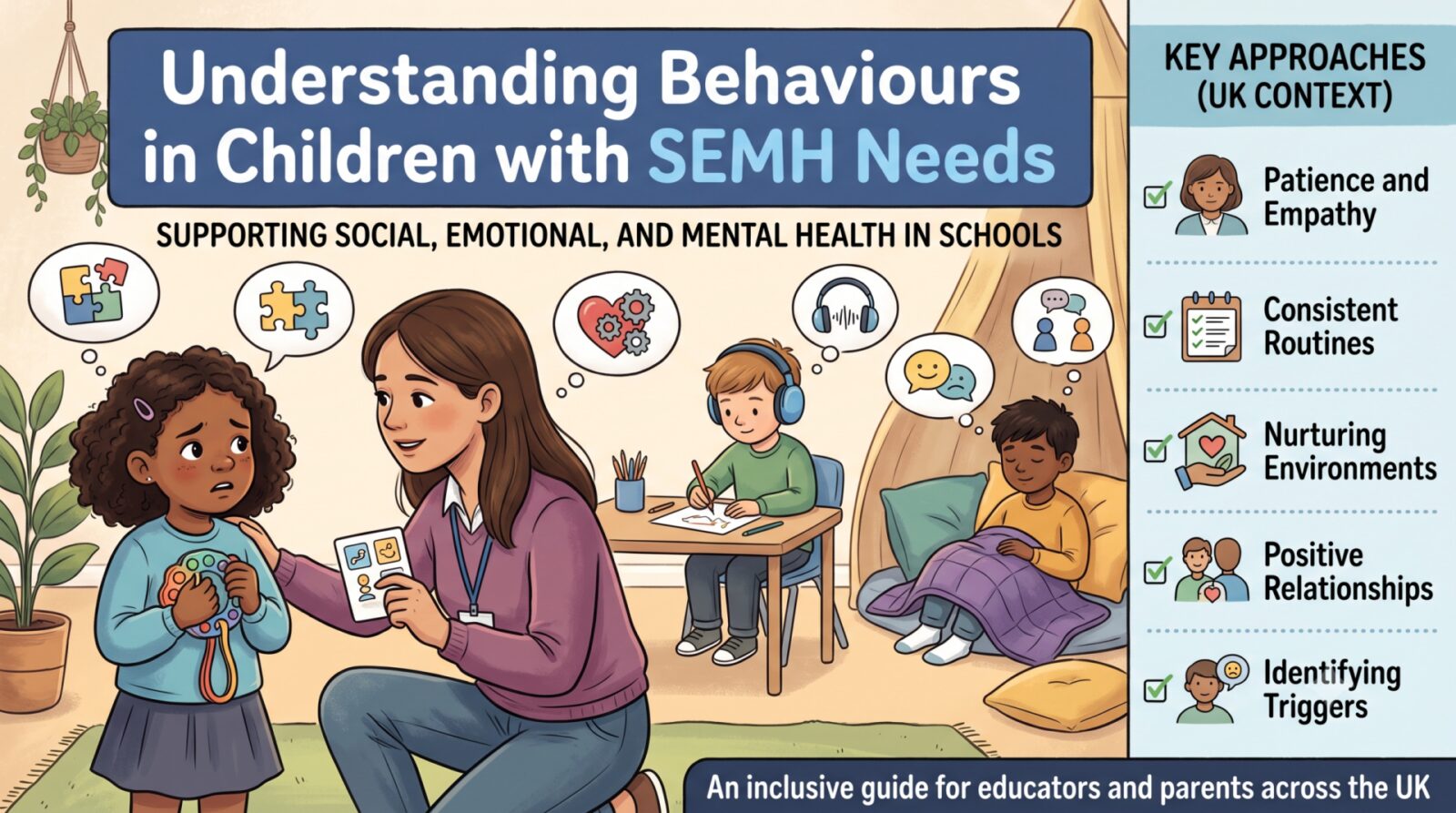
What Drives Behaviours in Children with SEMH Needs?
Children with Social, Emotional, and Mental Health (SEMH) needs often display behaviours that challenge adults’ expectations, disrupt learning environments, or mask deeper psychological distress.
These behaviours—such as aggression, withdrawal, hyperactivity, or anxiety—are not arbitrary or attention-seeking, but signals of unmet needs, past traumas, or difficulties with emotional regulation. By seeking to understand the function behind the behaviour, adults can respond with empathy, structure, and strategies that support both well-being and development.
Common Behaviours in Children with SEMH Needs and How They Present
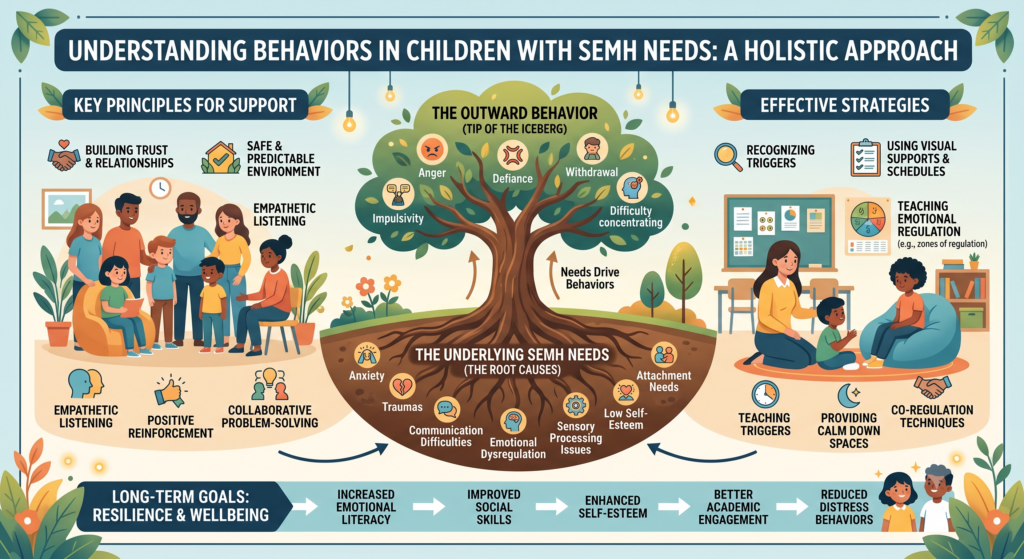
Children with SEMH needs display a broad spectrum of behaviours, which may seem confusing or disruptive to adults, but often reflect their internal emotional states.
These behaviours serve a function, whether it’s self-protection, communication, or a coping mechanism. Understanding how they present helps practitioners respond with compassion rather than control.
Withdrawn or Passive Behaviour
These children may sit alone, avoid eye contact, or seem disengaged during class activities. They might not volunteer answers or participate in group tasks. Often misunderstood as shy or disinterested, this behaviour can be a response to anxiety, low self-worth, or past trauma. For example, a child who has experienced emotional neglect may not expect adults to respond to their needs and, therefore, remain quiet to avoid further disappointment.
Oppositional and Defiant Behaviour
Seen as rule-breaking, talking back, or refusing to comply with adult instructions, these behaviours are labelled as ‘naughty’ or ‘disruptive’. However, defiance may stem from a lack of control in the child’s life, a history of inconsistent adult responses, or a protective mechanism against perceived vulnerability. Defiance can also be communication: a child expressing “I don’t feel safe enough to comply”.
Aggressive or Explosive Outbursts
Some children may react to stressors with physical aggression (hitting, throwing objects) or verbal aggression (shouting, swearing). These behaviours are often linked to emotional dysregulation, where the child’s nervous system may be in a heightened state of arousal, unable to tolerate distress. Such responses may be associated with hypervigilance resulting from trauma exposure, where the child is primed to respond to perceived threats quickly and intensely (Perry & Szalavitz, 2017).
Anxious, Obsessive, or Avoidant Behaviours
This may include excessive reassurance-seeking, perfectionism, task avoidance, or repetitive behaviours such as hand-washing or checking. These are often coping mechanisms used by children to reduce internal anxiety. An anxious child may refuse to enter a classroom not out of stubbornness, but because of overwhelming fear about making mistakes or being judged by peers.
Impulsive and Hyperactive Presentation
These children may appear constantly on the move, interrupt conversations, or struggle to complete tasks. Although commonly associated with ADHD, such behaviours can also emerge from chaotic early environments, where the child learned to act quickly or take risks to meet their needs. They may also reflect underdeveloped executive functioning skills, impacting attention, planning, and impulse control.
Somatic Complaints and Avoidance
Children may report headaches, stomachaches, or feeling unwell, particularly during transitions or stressful school periods. While these may have physical roots, they often reflect emotional distress. The body becomes a messenger when a child cannot express their emotional needs verbally.
Masking or ‘People-Pleasing’ Behaviour
Less recognised are children who internalise their distress, becoming overly compliant, perfectionistic, or overly helpful. These children may suppress their needs to avoid conflict or rejection, often flying under the radar. Over time, this can contribute to mental health difficulties, such as anxiety, depression, or identity confusion. Masking behaviours are particularly common among autistic girls and neurodivergent pupils who have learned to camouflage their difficulties to meet adult expectations.
Each of these behavioural presentations is a window into the child’s internal world. Recognising the diversity in SEMH behaviours ensures we do not overlook the ‘quietly struggling’ children or misinterpret those who act out as simply ‘badly behaved’.
Underlying Causes of Behaviours in Children with SEMH Needs
Understanding why a child behaves in a certain way is essential to offering meaningful support. Behaviours in children with SEMH needs are rarely random; they are shaped by a complex interplay of developmental history, relational experiences, environmental conditions, and internal emotional states.
When we pause to consider what a behaviour might be communicating, we move from reacting to responding. This shift allows us to meet the child’s needs more effectively, build trust, and support emotional healing and growth. Common underlying causes include:
Adverse Childhood Experiences (ACEs)
ACEs refer to traumatic events occurring in a child’s life before the age of 18, including physical or emotional abuse, neglect, household dysfunction, and witnessing domestic violence. These experiences have been linked to poor mental and physical health outcomes, including behavioural and emotional dysregulation (Felitti et al., 1998).
Attachment Disruptions
Early caregiving relationships shape a child’s sense of safety and self. When attachment is insecure or disorganised – due to inconsistent, neglectful, or frightening caregiving – children may struggle to trust others, regulate emotions, and manage stress (Hughes, 2011).
Neurodevelopmental Conditions
Children with conditions such as Attention Deficit Hyperactivity Disorder (ADHD), Autism Spectrum Disorder (ASD), or sensory processing difficulties may find school environments overwhelming, leading to frustration, impulsivity, or withdrawal. These conditions often co-occur with SEMH needs and require tailored support strategies (Fava et al., 2024).
Environmental Stressors
Poverty, housing instability, food insecurity, bereavement, and exposure to parental mental health challenges can cause chronic stress. Prolonged exposure to such stress without adequate support can lead to survival-oriented behaviours and emotional numbing.
School-Related Factors
A lack of differentiated instruction, rigid behaviour policies, or exclusionary practices can exacerbate SEMH behaviours. Bullying, unmet special educational needs, and a lack of inclusion may make children feel unsafe or unwelcome, contributing to school avoidance or acting-out behaviours.
Lack of Emotional Literacy Development
Some children have not had opportunities to develop the language or self-awareness to express emotions constructively. Without these tools, frustration and sadness may manifest as aggression, shutdowns, or social withdrawal.
Understanding the cause behind the behaviour is a vital first step toward supporting the child effectively. Once we can identify what is driving a behaviour, we can intervene in ways that are compassionate, attuned, and reparative.
Trauma-Informed Strategies for Supporting Pupils with SEMH Needs
Supporting children with SEMH needs involves moving beyond surface-level responses and embracing practices that promote safety, trust, and long-term development. These strategies must be embedded across educational, familial, and therapeutic contexts, grounded in consistency and empathy.
Relational Practice
At the heart of effective SEMH support is a strong, supportive relationship. Children who feel emotionally held are more able to regulate their emotions and take risks in learning. Practitioners should focus on attunement, reading the child’s cues and responding sensitively. This builds trust and co-regulation capacity over time (Hughes, 2011).
Trauma-Informed Approaches
Creating predictable, calm environments where children feel physically and emotionally safe is key. avoids punitive approaches and instead prioritises connection, regulation, and empowerment. Techniques such as predictable transitions, soft tones, and co-regulation support children in moments of distress (Bath, 2008).
Emotion Coaching and Regulation Tools
Children often lack the vocabulary and self-awareness to name what they are feeling. Adults can help by narrating observed emotions, validating them, and modelling regulation strategies. Tools such as feelings charts, mindfulness exercises, and calm corners empower children to express and manage their emotions effectively (Porges, 2011).
Implementing Positive Behaviour Support (PBS)
PBS involves identifying the function behind a behaviour and proactively meeting the child’s needs before behaviours escalate. Strategies include adapting the environment, offering choices, reinforcing positive behaviours, and reducing triggers. It is non-punitive and aims to build long-term skills rather than short-term compliance.
Restorative Practices
When harm occurs, restorative approaches invite children to reflect, repair, and reconnect rather than simply be punished. Circles, restorative conversations, and facilitated apologies teach responsibility, empathy, and relationship repair.
Individualised Support Plans
Tailored interventions should reflect the child’s strengths, needs, and triggers. Plans may include sensory breaks, communication aids, or access to a mentor. Reviewing these regularly with the child and key adults ensures they remain relevant and supportive.
Multi-Agency Collaboration
Many children with SEMH needs require coordinated support from education, health, and social care professionals. Regular Team Around the Child (TAC) meetings, open communication with families, and shared goals help ensure consistent and comprehensive care.
Staff Training and Supervision
Professionals need to feel equipped and emotionally supported to respond effectively to SEMH behaviours. Regular training in trauma, attachment, de-escalation, and self-care—alongside reflective supervision—helps sustain effective practice and reduces burnout.
By embedding these approaches, we create environments where children with SEMH needs are not just managed but understood and nurtured. This forms the foundation for emotional recovery, learning, and relational growth.
Conclusion
Understanding and supporting the behaviours in children with SEMH needs requires a shift in mindset—from managing behaviour to understanding it. These children are not deliberately disruptive or defiant; they are communicating their inner world in the only ways they know how. Every challenging moment is an opportunity for connection, guidance, and healing.
The work is not always easy—but it is essential. In choosing to look beyond the behaviour, we honour the whole child, offering them not just understanding, but hope, dignity, and the foundations for lifelong resilience.
Frequently Asked Questions (FAQ)
Q1: What are common behaviours associated with SEMH needs in children?
A: Behaviours in children with Social, Emotional, and Mental Health (SEMH) needs can present as withdrawal, anxiety, somatic complaints (such as stomachaches), emotional dysregulation, verbal or physical outbursts, hypervigilance, and task avoidance. These presentations often function as coping mechanisms or signals of underlying distress.
Q2: How does Positive Behaviour Support (PBS) help children with SEMH?
A: Positive Behaviour Support (PBS) focuses on understanding the primary function or trigger behind a child’s behaviour. By adapting the learning environment, teaching emotional regulation skills, and reinforcing positive interactions, PBS proactively reduces distress before dysregulation escalates.
Q3: Why is behaviour described as communication in SEMH practice?
A: Children with SEMH needs may lack the developmental language, executive functioning, or emotional safety to express feelings verbally. As a result, internal feelings of overwhelm, past trauma, or anxiety are expressed externally through behaviour.
References
- ath, H. (2008). The three pillars of trauma-informed care: Safety, connection, and emotional regulation. Reclaiming Children and Youth, 17(3), pp.17–21.
- Bloom, S. L. (1994). Creating Sanctuary: Toward the Evolution of Sane Societies. London: Routledge.
- Fava, C., Hemnani, K. & Manzi, S. (2024). Assessing ADHD when there is a history of trauma in children in care – a dimensional rather than categorical approach. Child & Family Clinical Psychology Review, 9(1), pp.42–47.
- Felitti, V.J., Anda, R.F., Nordenberg, D., Williamson, D.F., Spitz, A.M., Edwards, V., Koss, M.P. & Marks, J.S. (1998). Relationship of childhood abuse and household dysfunction to many of the leading causes of death in adults: The Adverse Childhood Experiences (ACE) Study. American Journal of Preventive Medicine, 14(4), pp.245–258.
- Hughes, D. A. (2011). Attachment-Focused Family Therapy. New York: Norton.
- Perry, B. D. & Szalavitz, M. (2017). The Boy Who Was Raised as a Dog: And Other Stories from a Child Psychiatrist’s Notebook. 2nd ed. New York: Basic Books.
- Porges, S. W. (2011). The Polyvagal Theory: Neurophysiological Foundations of Emotions, Attachment, Communication, and Self-regulation. New York: Norton.